Mukaishima Island
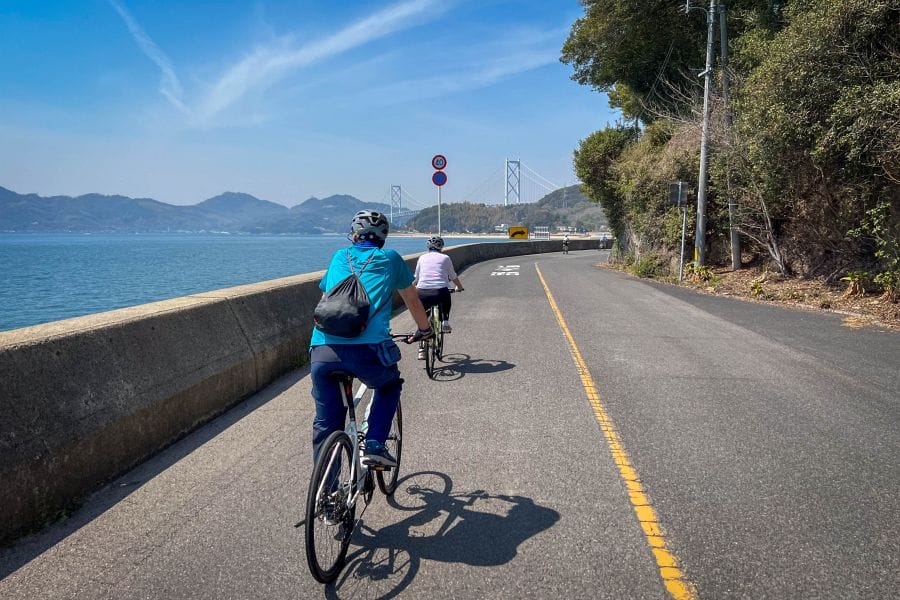
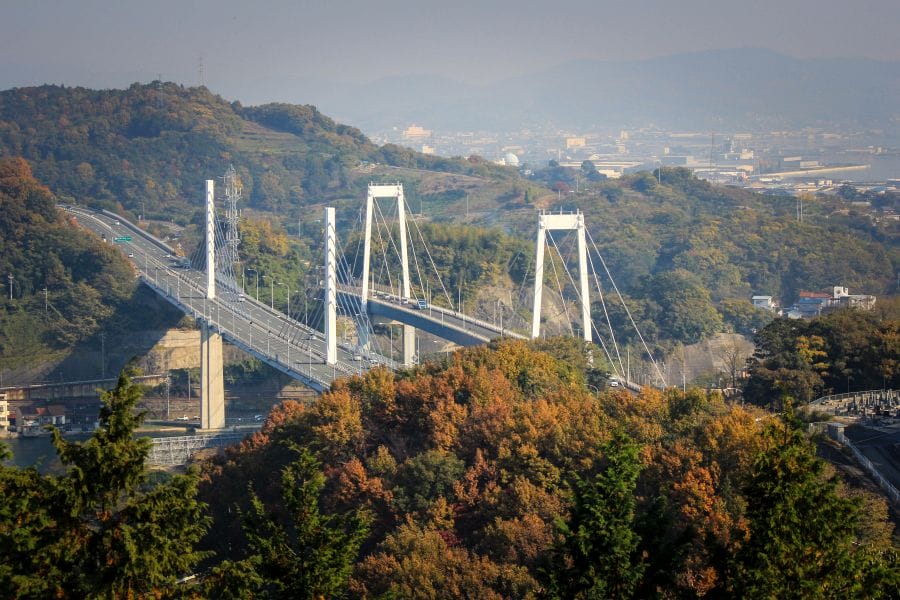
Mukaishima sits directly across the narrow Onomichi Channel from the mainland, the first stepping stone on the Shimanami Kaidō on the Hiroshima side. It’s connected to the mainland by the old Onomichi Bridge carrying Route 317, and the Shin-Onomichi Bridge carrying the expressway. Pedestrians and cyclists can cross the channel on little ferries.
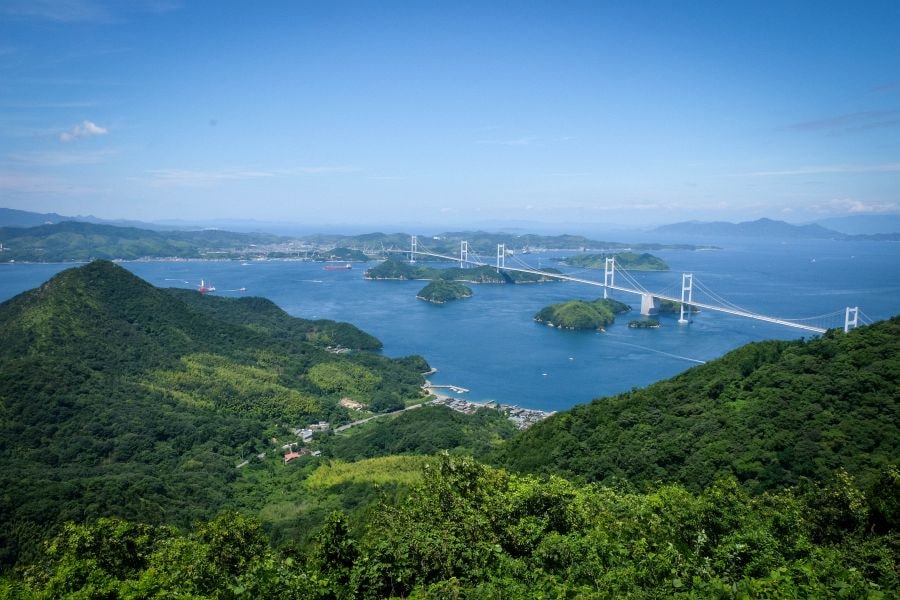
The island’s northern shoreline heavily industrialised, dominated by the cranes and dry docks of shipyards that have operated here for over a century. Away from the steel and noise of the coast, the island’s interior rises into steep, forested hills, notably Mount Takami. From the observation deck on the summit, the view reveals the complex geography of the Seto Inland Sea, where the tidal currents create visible swirling patterns around the surrounding islets. The landscape is a functional mix of fruit orchards, particularly figs and citrus, and small residential pockets connected by narrow, winding roads that follow the natural contours of the slopes.
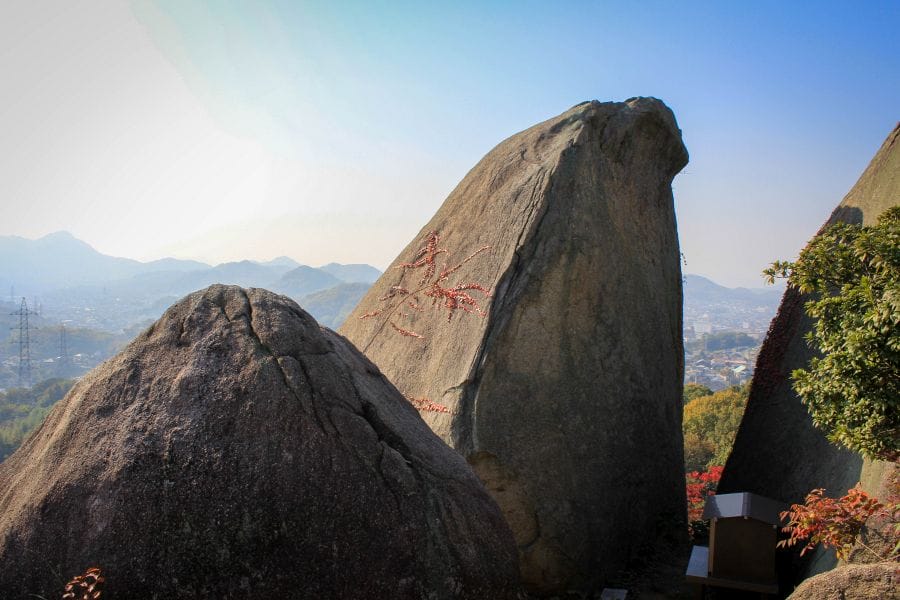
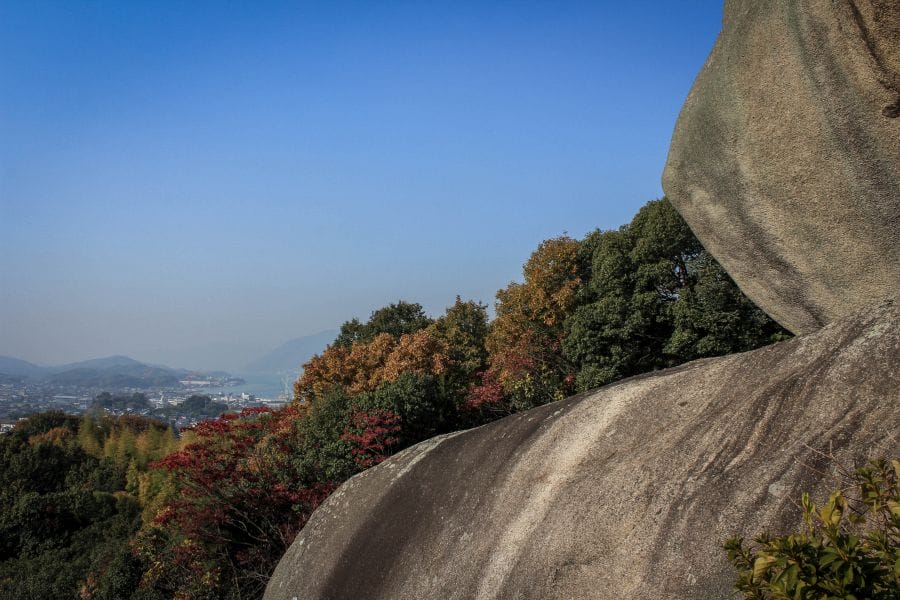
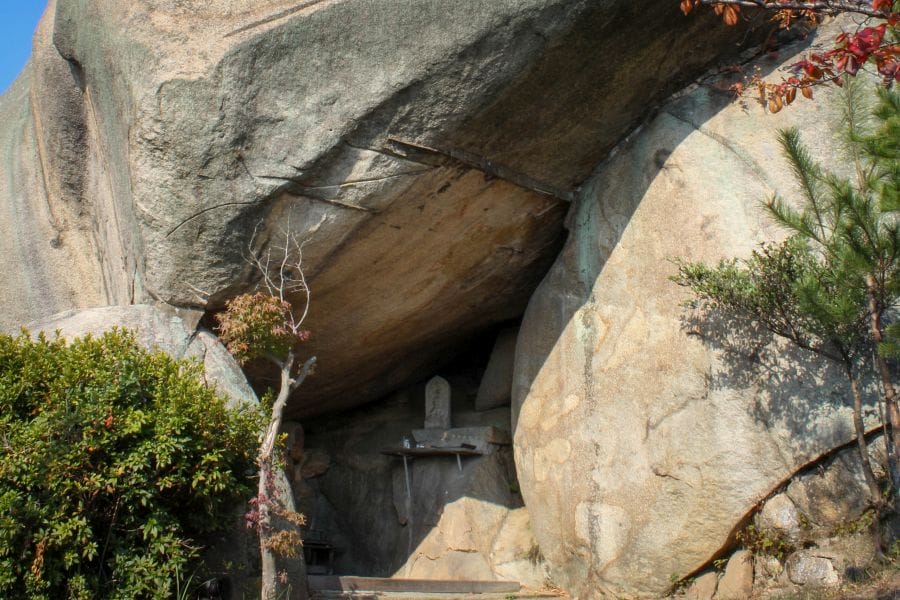
Near the summit of Mount Iwaya, you’ll find the Iwaya Kyoseki, a group of massive, weathered granite megaliths that dominate the ridge. These stones aren’t just natural formations; they bear clear marks of ancient masonry and were likely used as a ritual site for celestial observation. One specific arrangement, the Mirror Stone, features a flat, vertical surface that reflects the sun’s rays, while others contain precisely carved holes that align with the position of the sun during the winter solstice. Local archaeological research indicates these monoliths were part of a wider network of prehistoric sites across the Seto Inland Sea, serving as both spiritual landmarks and navigational aids for early maritime communities.
You can explore the island’s southern coast to find a quieter, more rural atmosphere compared to the industrial north. Tachibana Beach offers a strip of sand and clear water that stays relatively calm due to the protection of the surrounding islands. For a look at the island’s botanical history, the Mukaishima Orchid Centre maintains a large collection of tropical species, a nod to the island’s mild climate. If you cycle or drive the coastal perimeter, you’ll encounter the Mukaishima Bowling Alley—one of the few remaining examples of 1970s Shōwa period leisure architecture in the region—and various small-scale salt production sites that use traditional methods to draw minerals from the sea.
The island’s development was fundamentally altered in the early 20th century by the rise of the shipbuilding industry, which took advantage of the deep, sheltered waters of the channel. During the Second World War, Mukaishima became the site of a prisoner of war camp, known as Hiroshima No. 4 Branch Office. The prisoners, mostly British and American, were forced to work in the Hitachi Zōsen shipyards under harsh conditions. While much of the wartime infrastructure is gone, a memorial plaque near the former camp site provides a blunt record of this period. This industrial heritage continues to define the island’s economy, with the constant rhythmic clanging of metalwork from the yards providing a permanent background to life on the northern shore.
While most people associate the region with lemons, Mukaishima was actually the pioneer of Japanese soda water production. In 1930, a local businessman started producing a carbonated drink called Ramune using the island’s fresh spring water. The factory still operates today, using the same glass bottles and marble-sealing method. The island is also known for traditional salt making. Records from the Edo period indicate that Mukaishima’s salt was once considered so high in quality that it was specifically reserved for the Shōgun’s table in Edo. This history is preserved in the layout of the coastal villages, where the remnants of old stone walls and evaporation pools still dictate the placement of modern houses.
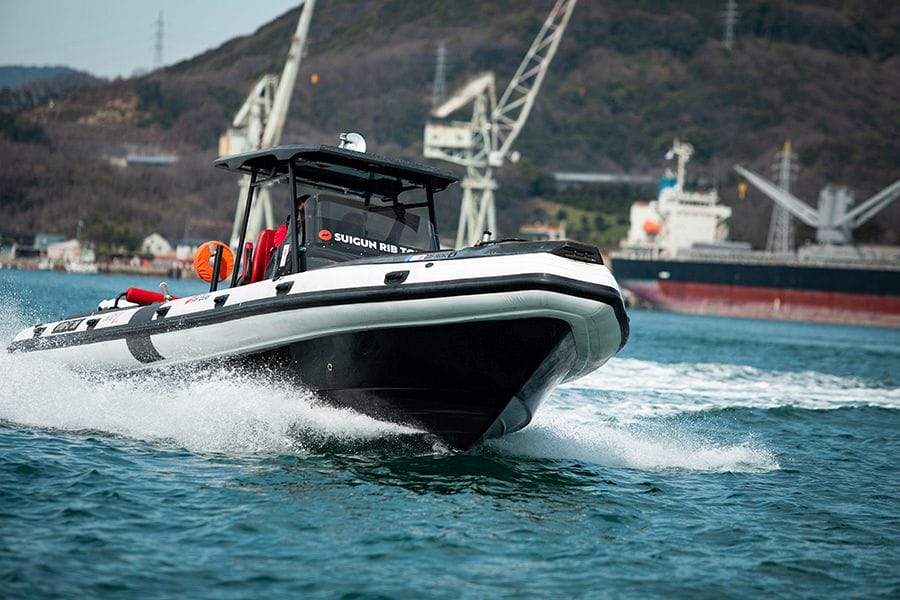
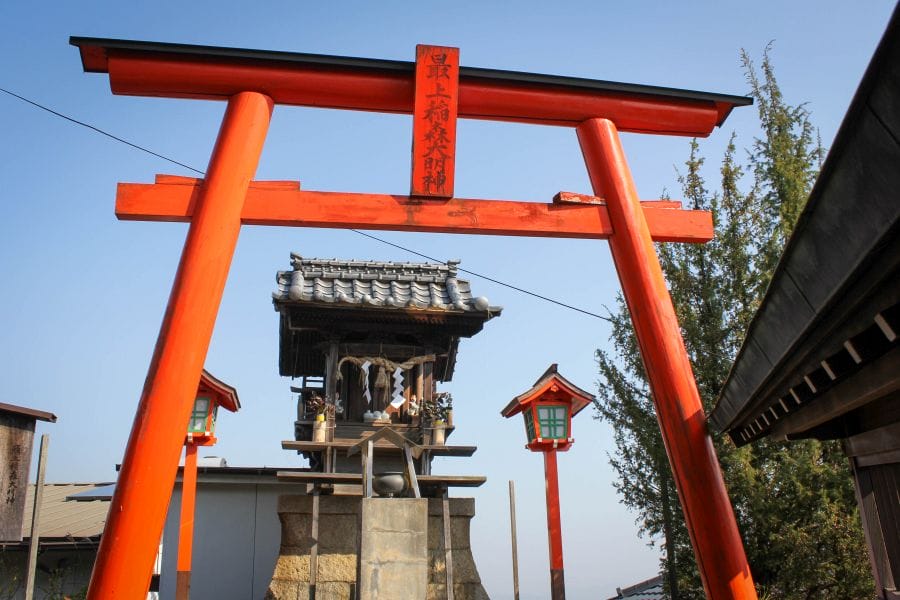
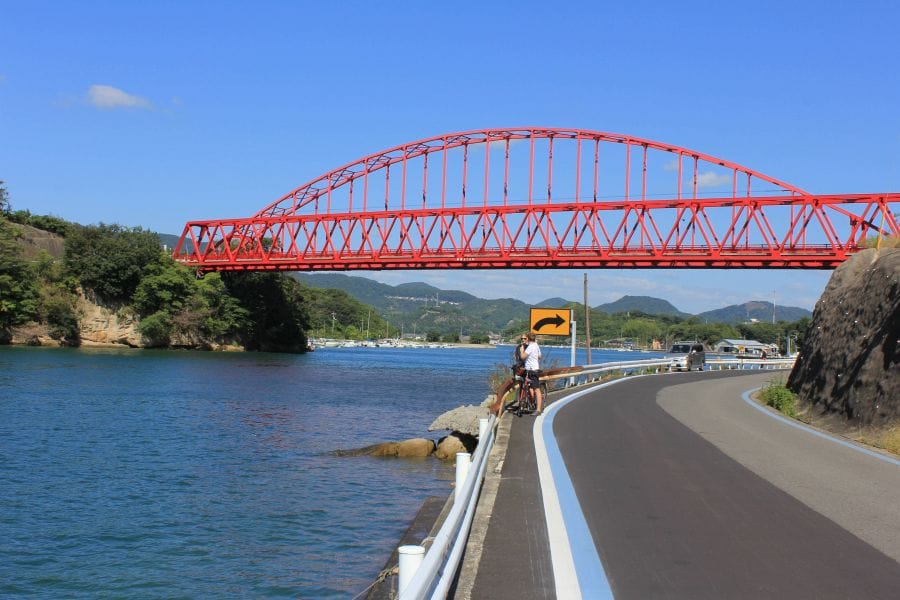
Mukaishima is linked to the smaller Iwashijima to the west by the Mukaishima Bridge. On the western shore stands Iwashijima Itsukushima Shrine with a smaller version of the famous torii gate found on Miyajima. This torii is best admired from a boat on our RIB Suigun tour.
Information
Name in Japanese: 向島
Pronunciation: mu-kai-sheema
Address: Mukaishima, Onomichi, Hiroshima