Asahikawa
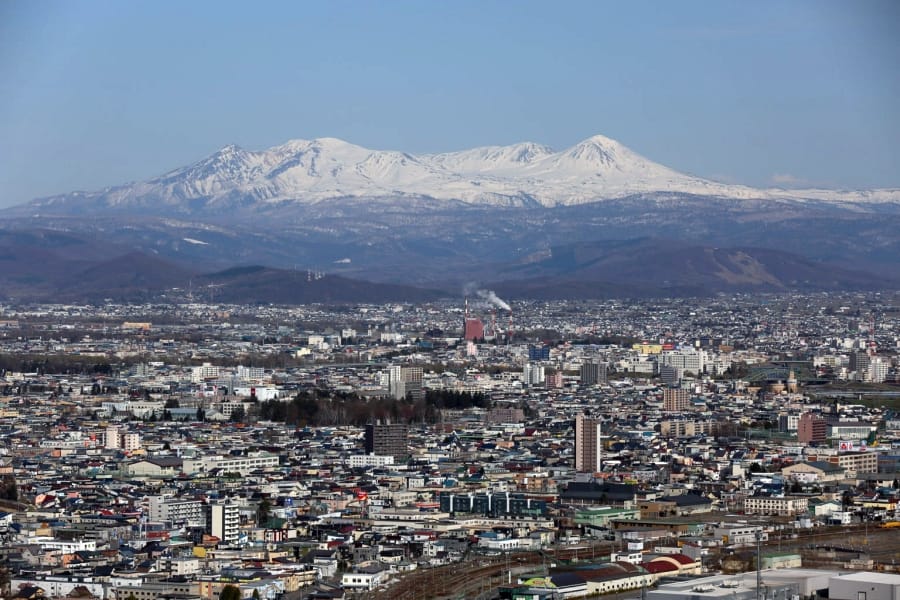
Asahikawa is a major inland city in the Kamikawa Basin of central Hokkaidō, serving as the primary urban gateway to the northern wilderness and the high peaks of Daisetsuzan National Park. Settled extensively during the Meiji period as a military base and agricultural hub, it remains an important centre for timber production, sake brewing, and regional trade.
Asahiyama Zoo
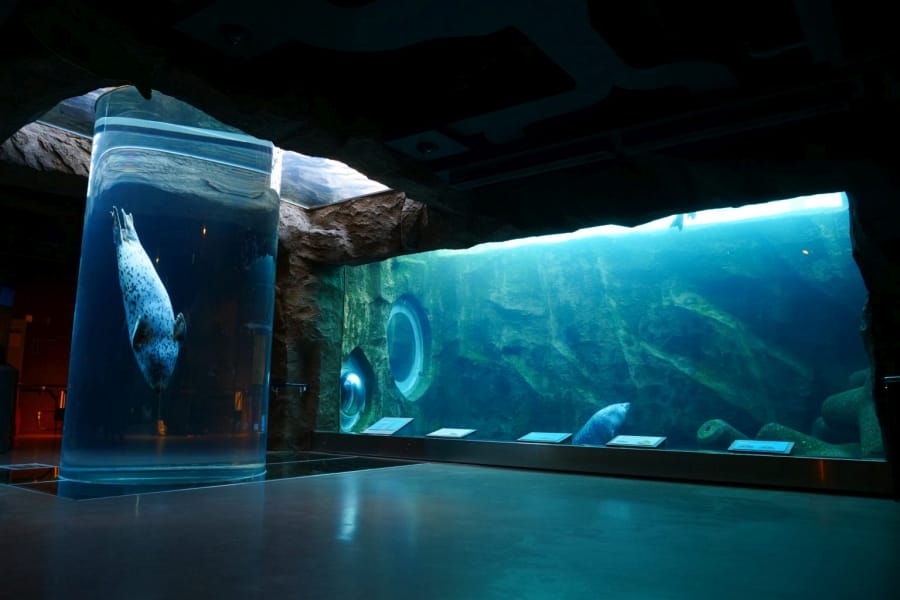
Asahiyama Zoo is a municipal zoological park on the slopes of Mount Asahi in the eastern district of Asahikawa. The grounds sit on a hillside overlooking the Ishikari Plain, arranged around steep paved pathways that connect specialized enclosures built into the natural topography. The zoo pioneered behavioural design concepts in Japan, constructing facilities that encourage animals to move according to their natural physical habits. Transparent glass domes set into the floor of the polar bear enclosure allow viewing from ground level, while a glass underwater tunnel inside the penguin enclosure reveals birds swimming in three dimensions. A suspended wooden bridge spans the red panda site, enabling animals to traverse overhead cables between trees. Native Hokkaidō fauna including the Hokkaidō brown bear, Ezo deer, and Blakiston’s fish owl occupy timber and stone compounds along the upper ridge. When heavy snow covers the pathways from December through March, king penguins undertake twice-daily walks along dedicated routes outside their enclosures to maintain exercise routines. This is widely regarded as the best zoo in Japan.
Mount Asahi and Daisetsuzan National Park
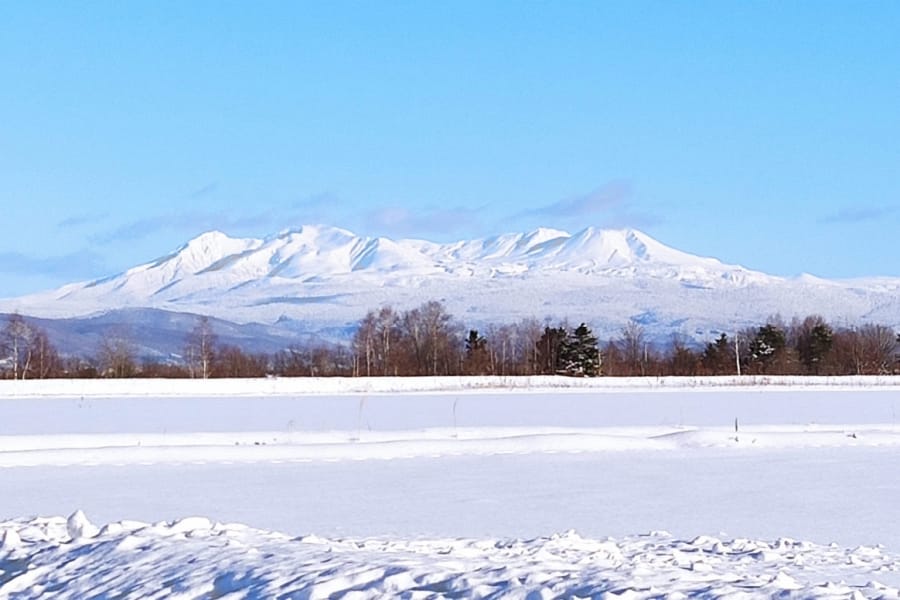
Mount Asahi is an active stratovolcano reaching 2,291 metres, standing as the highest peak in Hokkaidō within Daisetsuzan National Park, east of Asahikawa. The mountain is known to Indigenous Ainu people as Kamui-mintara, translating to the playground of the gods, reflecting its central place in regional oral traditions and spiritual geography. Steam and sulphurous gas vent continuously from active fumaroles across the western flank, leaving bright yellow deposits on dark basalt rock. The Asahidake Ropeway connects the base settlement of Asahidake Onsen to Sugatami Station at an elevation of 1,600 metres. A two-kilometre gravel loop trail leads from the upper terminal across alpine tundra, passing several volcanic ponds including Sugatami Pond, which mirrors the jagged profile of the summit crater. The alpine zone supports low-growing Hokkaidō heather and dense thickets of dwarf Siberian pine. Autumn colour appears across the high slopes in mid-September before snow buries the terrain under deep drifts until late June.
Kawamura Kaneto Ainu Museum
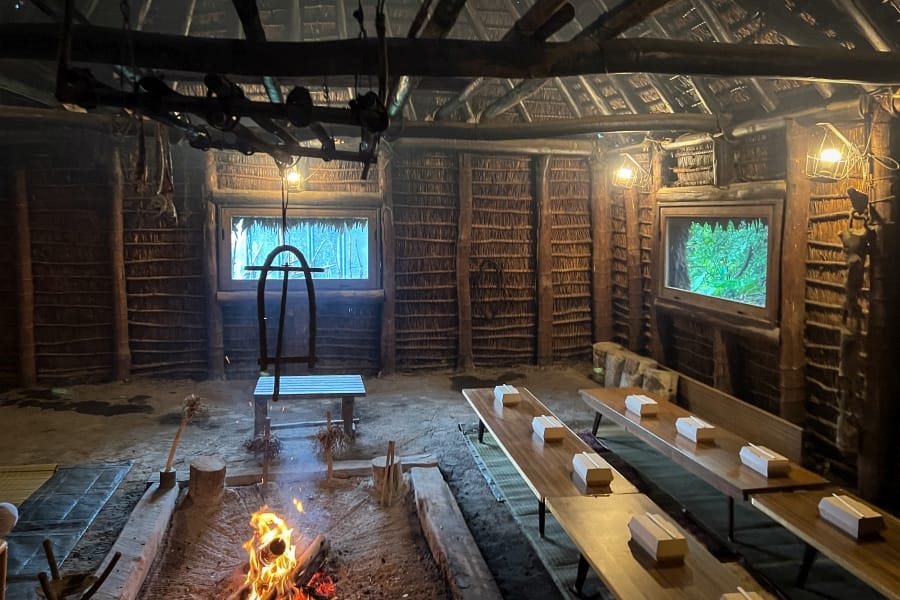
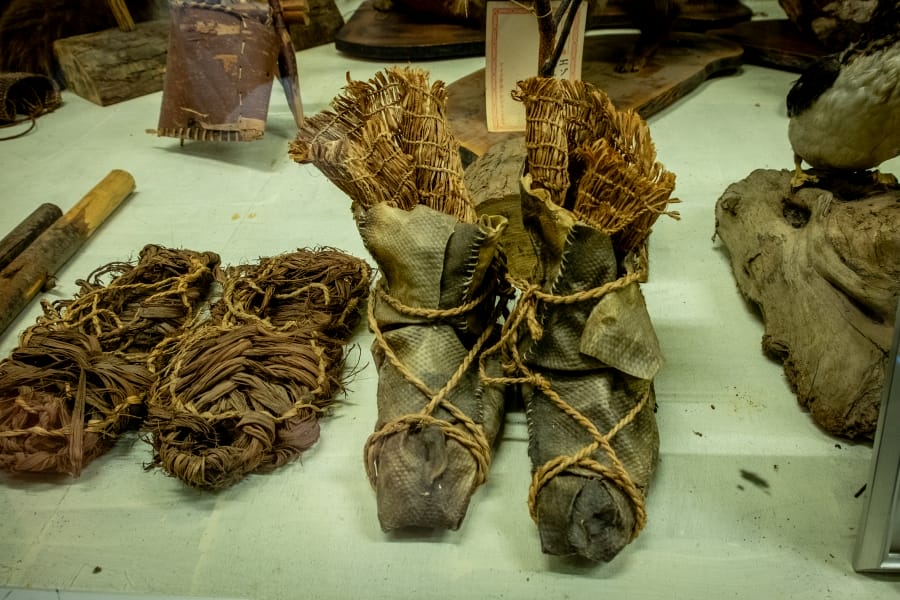
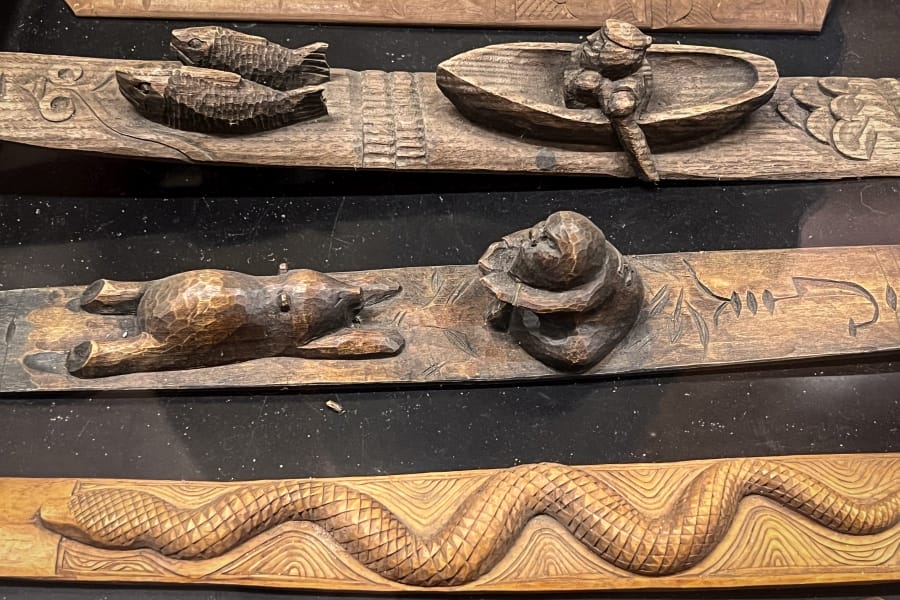
The Kawamura Kaneto Ainu Museum is a private cultural museum located in the Hokumon district of Asahikawa, dedicated to preserving and transmitting indigenous Ainu history and material culture. Established in 1916 by Kawamura Kaneto, an Ainu chief and chief surveyor for the Imperial Government Railways, it stands as Hokkaidō’s oldest continuous Ainu museum. The main display hall exhibits traditional wooden craft tools, woven elm-bark clothing, salmon-skin shoes, ceremonial swords, and carved prayer sticks. Outdoors, reconstructed thatched dwellings built from reeds and wooden poles demonstrate traditional construction techniques, interior hearth arrangements, and ceremonial altar placement. The collection documents the historical transition of the Kamikawa Ainu group through Japanese assimilation policies, displaying photographs, surveying equipment used by Kawamura during railway construction through Hokkaidō’s mountain passes, and audio recordings of oral epic poetry.
Otokoyama Sake Brewery and Park
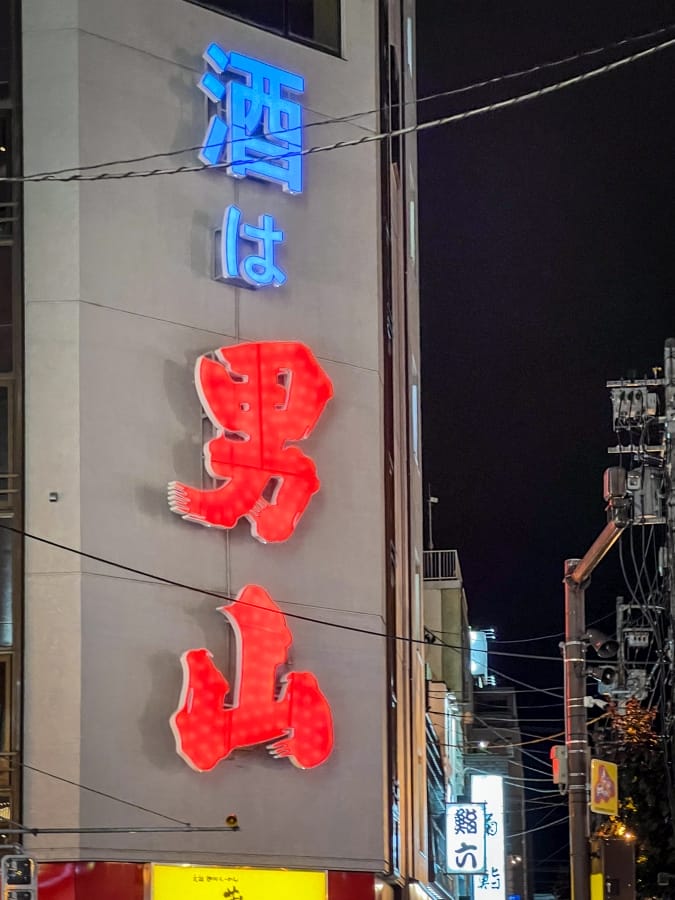
Otokoyama Sake Brewery is an active sake production facility and museum complex situated in the Nagayama district in northern Asahikawa. Operating under the Otokoyama brand since relocating from Itami in Hyōgo Prefecture during the mid-twentieth century, the brewery utilizes cold mountain snowmelt drawn from deep wells fed by the Daisetsuzan range. The main three-storey exhibition building displays Edo-period wooden fermentation vats, copper stills, and historical documents, including woodblock prints by artists such as Utagawa Hiroshige depicting Otokoyama sake being consumed in imperial and samurai households. Outside, Japanese gardens feature stone lanterns, koi ponds, and a public water station where untreated subterranean spring water flows continuously. Inside the tasting room, you can examine copper brewing apparatus while sampling unpasteurised draft sake, dry junmai, and aged daiginjō directly adjacent to the active cellar doors.
Asahikawa Ramen Village
Asahikawa Ramen Village is a commercial culinary complex in the Nagayama shopping precinct, housing eight independent, long-running local noodle shops under a single timber-framed roof. Asahikawa ramen uses a broth prepared by blending pork bone stock with sea kelp and dried seafood stock. The signature dish uses a soy sauce tare base and thin, wavy, low-moisture wheat noodles crafted to absorb broth rapidly. A thin layer of rendered lard covers the top of the soup to retain heat in sub-zero winter temperatures, a local technique developed in response to Asahikawa’s extreme cold. Each of the eight vendors operates an independent counter within the shared hall, serving proprietary variations of broth and tare accompanied by traditional toppings of slow-cooked pork belly, bamboo shoots, and sliced green onions.
Hokuchin Museum
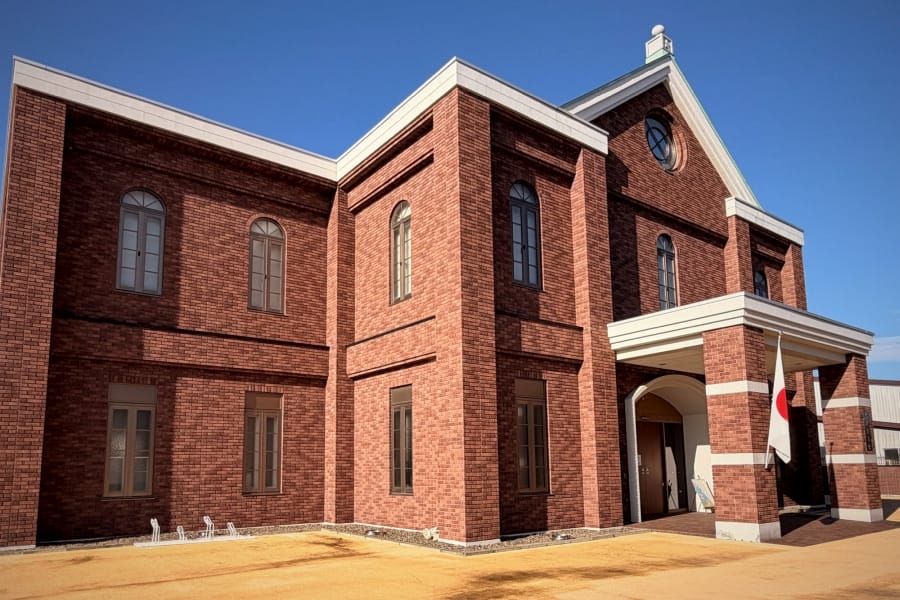
The Hokuchin Museum is a military history museum operated by the Japan Ground Self-Defence Force in the Shunkō district of northern Asahikawa. Located adjacent to the JGSDF Camp Asahikawa, the museum occupies a modern two-storey facility built to document the history of the Imperial Japanese Army’s 7th Division, historically tasked with the defence and development of Hokkaidō.
The exhibition galleries contain approximately 2,500 historical items, beginning with the late nineteenth-century Tondenhei—the military pioneer colonists who cleared Hokkaidō’s forests and established agricultural settlements while serving as a border defence force. Displays include original uniforms, farming implements, bolt-action rifles, personal diaries, and topographical maps from the early development period of central Hokkaidō.
The upper floors detail the operational history of the 7th Division through the Russo-Japanese War, the Siberian Intervention, and the Pacific War. Glass cases hold officer dress swords, battlefield gear, medals, and tactical documents detailing the division’s deployment in northern theatres. A section covers the defence of Hokkaidō during the final months of World War II and the post-war transition to the modern JSDF Northern Army.
Active-duty JGSDF personnel act as docents throughout the facility, providing contextual commentary on the military architecture and urban layout of Asahikawa, which grew around the garrison grounds. The museum grounds display light military vehicles, artillery pieces, and a preserved timber guardhouse from the original late-Meiji barracks complex.
Asahikawa Museum of Sculpture
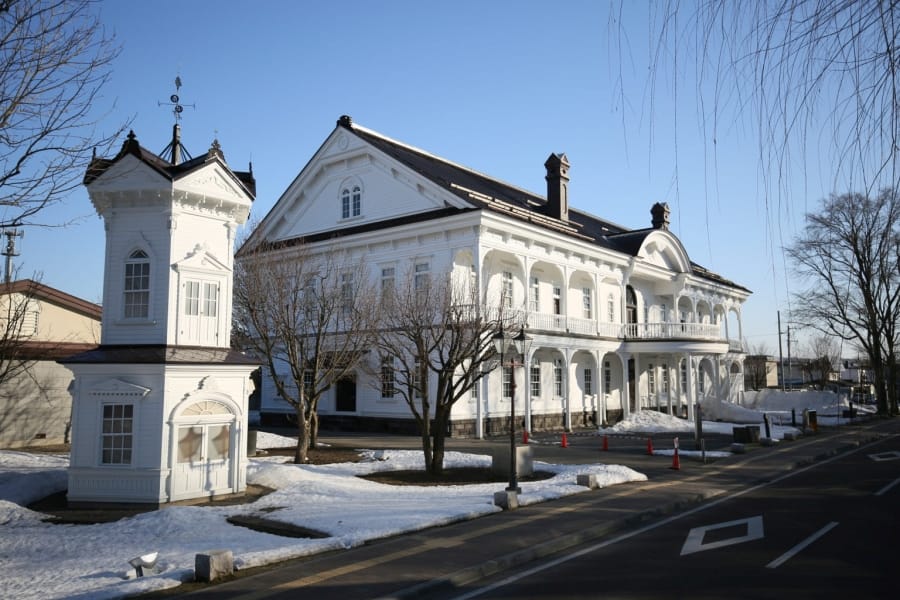
The Asahikawa Museum of Sculpture in Honor of Teijirō Nakahara is a public art institution situated in the Kasumi district of Asahikawa. The museum occupies the former Asahikawa Officers’ Club, an ornate two-storey Western-style wooden building constructed in 1902 for the Imperial Japanese Army 7th Division. Painted light green and cream with a hipped roof and an open balcony porch, the structure stands as one of the few surviving Meiji-period military residence buildings in Hokkaidō.
The institution honours Nakahara Teijirō, an influential early twentieth-century sculptor born in Hokkaidō who helped introduce modern European sculptural methods to Japan. The interior preserves original wooden staircases, plaster ceilings, and decorative mantelpieces, creating an architectural backdrop for plaster moulds, bronze busts, and preparatory sketches created by Nakahara during his career in Tōkyō.
Exhibition rooms trace the development of modern Japanese sculpture from the late Meiji era through the Taishō period, displaying figurative works, portrait studies, and abstract metal compositions by Nakahara’s contemporaries and recipients of the annual Nakahara Teijirō Prize. The collection highlights the transition from traditional wood carving techniques to Western rod-and-clay modeling methods.
The museum grounds incorporate a surrounding sculpture garden set among mature deciduous trees and lawns. Large-scale bronze and stone works line winding gravel paths, positioned to interact with the seasonal changes of the surrounding parkland, from summer greenery to winter snowscapes.
Kamuikotan
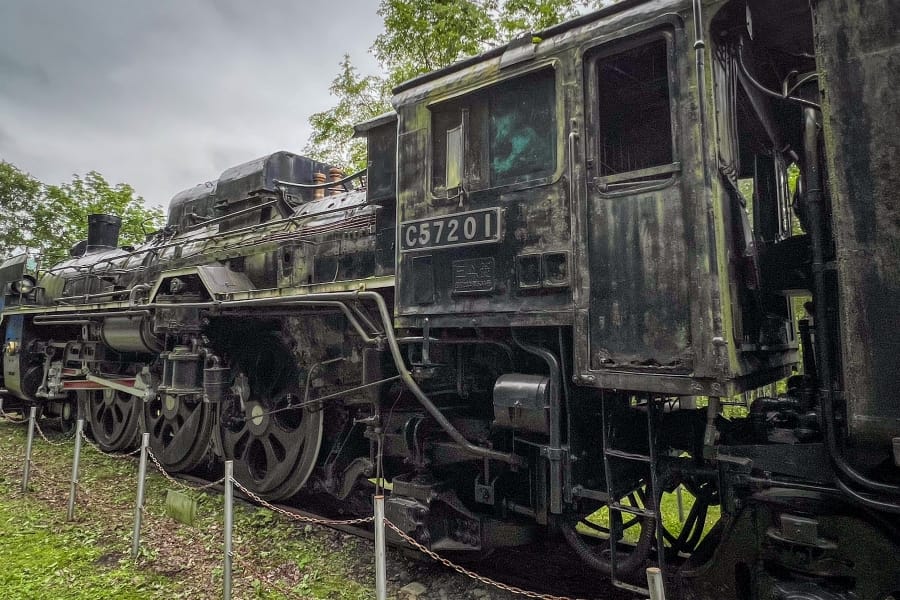
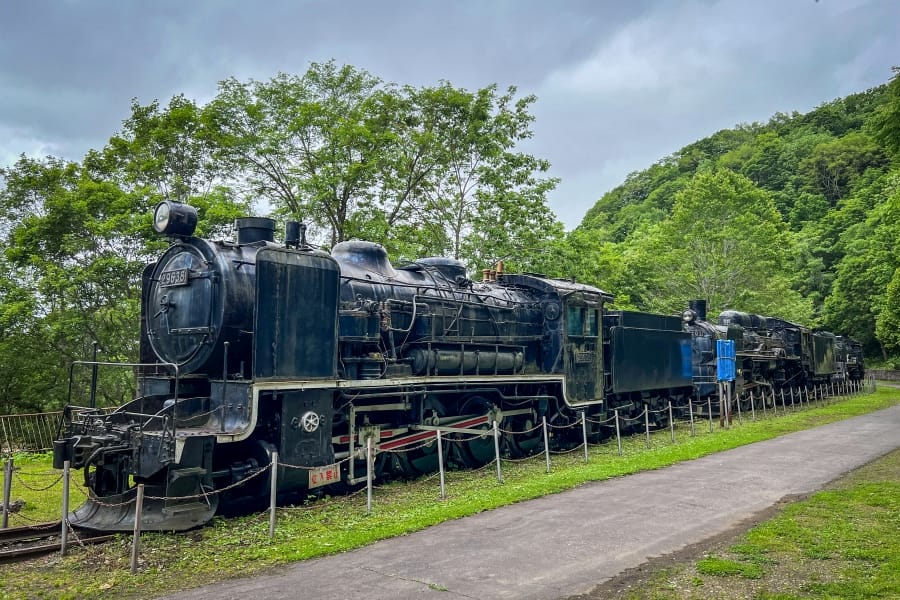
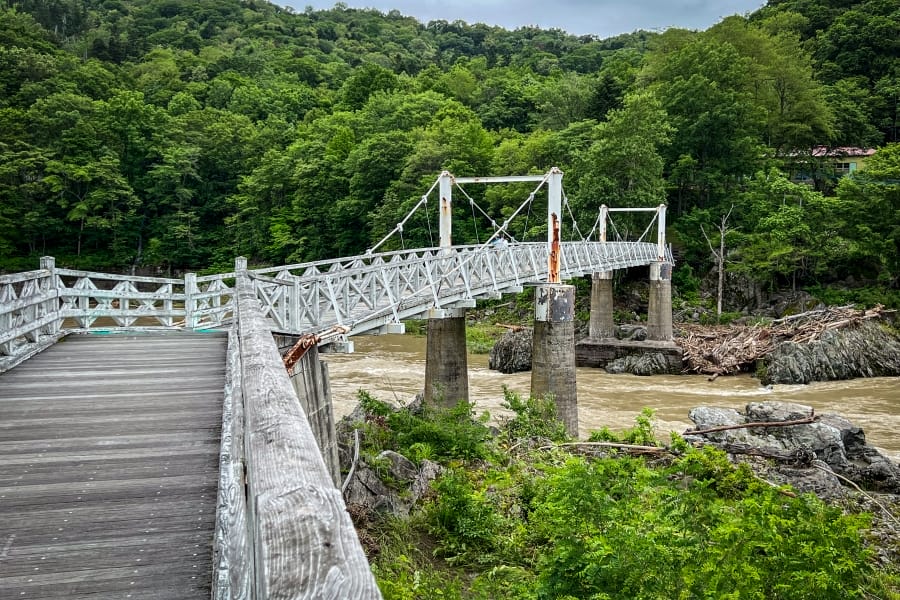
Kamuikotan is a narrow, scenic gorge situated along the Ishikari River, roughly twelve kilometres west of central Asahikawa. The name originates from the Ainu phrase kamuy-kotan, meaning “dwelling of the gods,” earned due to the treacherous, swirling river currents that posed significant dangers to traditional Ainu canoe travel. A distinctive white suspension bridge, the Kamui Bridge, spans the river gorge to connect the steep forested banks. Crossing the bridge leads to the preserved timber structure of the former Old Kamuikotan Station, built along the original railway line before a modern tunnel bypass was completed. Permanently displayed outdoors on the former platform tracks are three vintage steam locomotives—including a C57 class engine—set against the forested backdrop. The surrounding terrain is notable for its unusual rock formations, river potholes formed by millennia of swirling water, and dense deciduous woods that turn vivid red and gold during autumn.
Washū Kakuuchi Uedaya
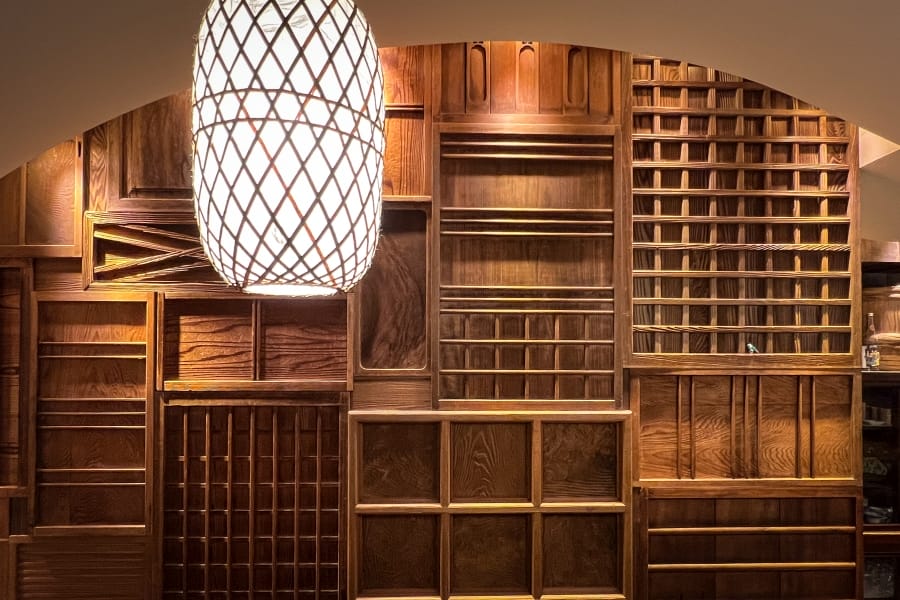
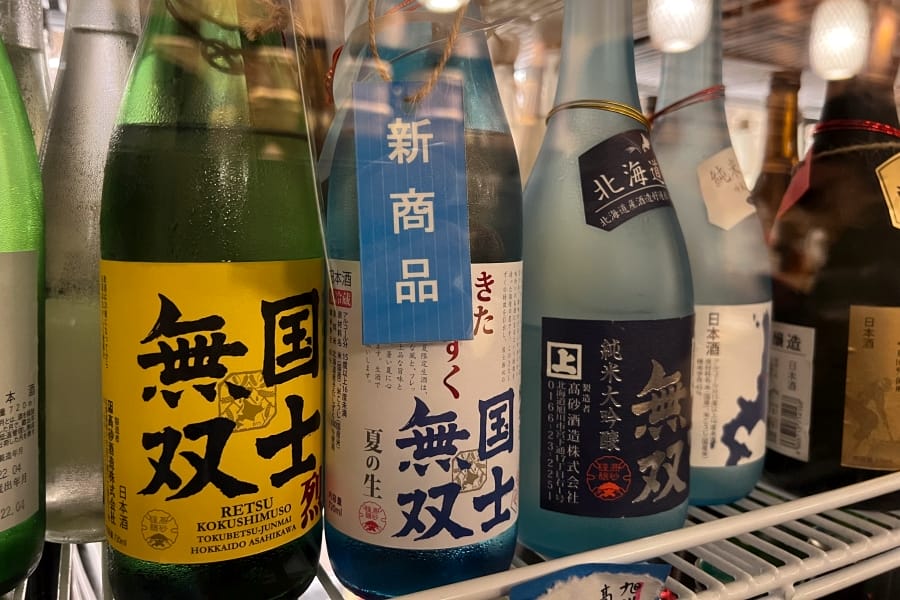
Washū Kakuuchi Uedaya is a specialized sake boutique and standing tasting bar located along the Heiwa-dōri Shopping Park pedestrian avenue in central Asahikawa. Operated by the long-established local liquor retailer Ueda, the modern establishment combines a curated retail storefront with an inner tasting room reached through a narrow timber-lined passage. The bar focuses heavily on regional Hokkaidō sake, showcasing expressions from local Asahikawa breweries alongside smaller craft producers across the island. Guests select refrigerated glasses marked by price tiers or order flight tastings designed around seasonal releases, unpasteurised draft sakes (namazake), and limited regional batches. Small food plates highlighting Hokkaidō ingredients—such as cured seafood, local cheeses, and fermented snacks—are prepared to accompany the drink offerings. The space features clean wooden finishes, warm lighting, and standing counters where staff provide detailed information regarding rice varieties and brewing methods.
Information
Name in Japanese: 旭川
Pronunciation: asa-hi-kawa
Address: Asahikawa, Hokkaidō