Temple 67, Daikō-ji
Daiko-ji is temple No. 67 on the Shikoku pilgrimage, or Henro. The temple stands on a low ridge in open countryside on the outskirts of Kannonji. It venerates both Kūkai and Saichō, founder of the Tendai sect.
What to see
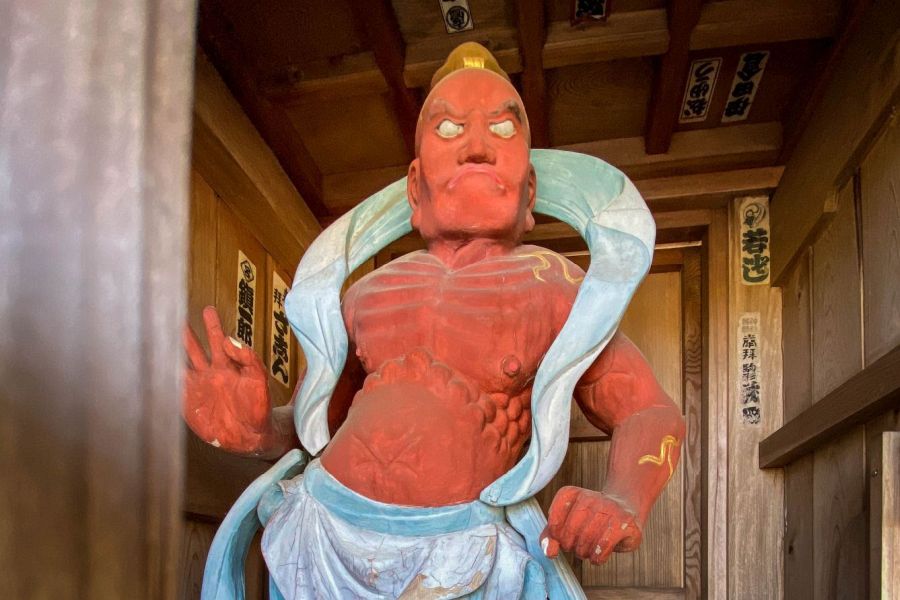
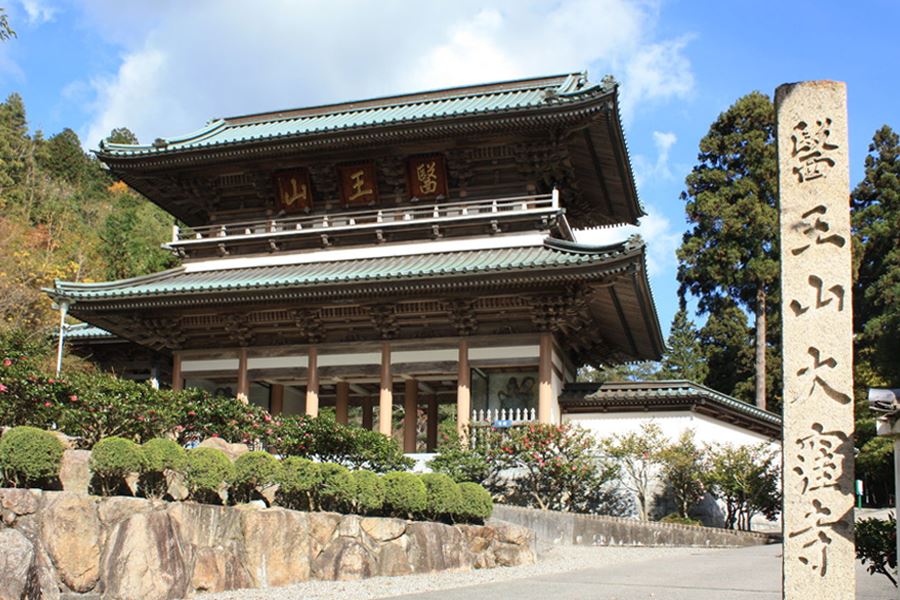
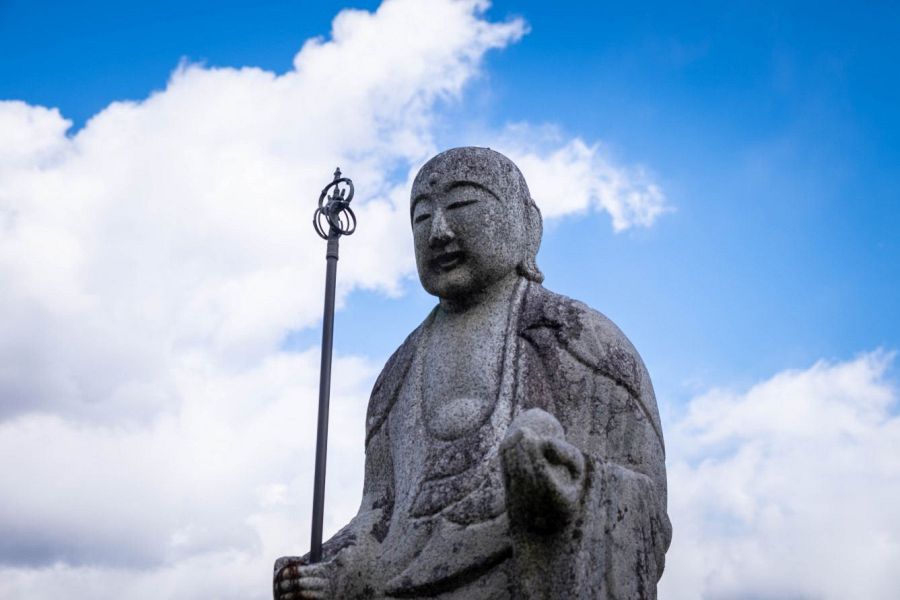
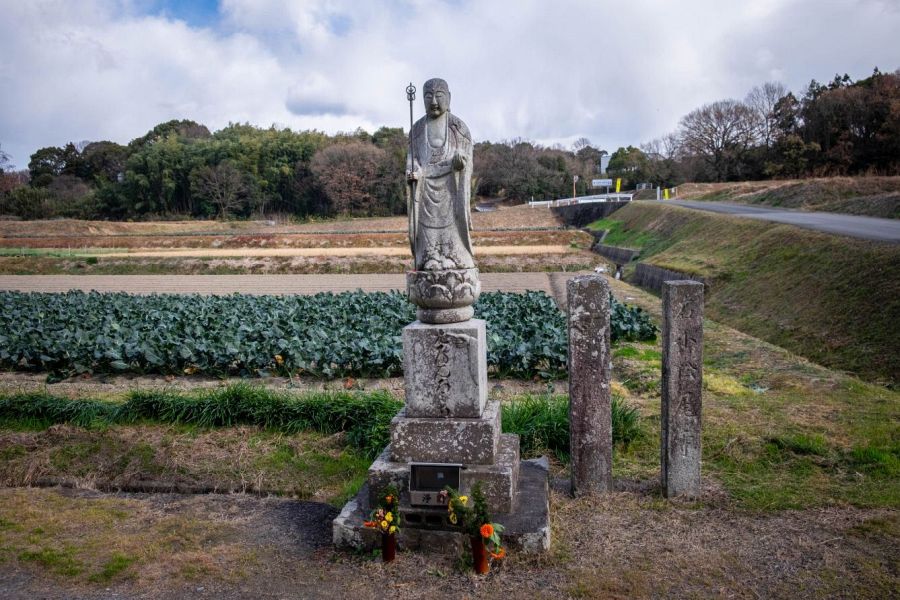
The temple is nestled in the trees and so the first thing you see is the stone Jizō statue standing in a field facing the main gate. A stone bridge crosses a small stream in front of the main gate with Niō guardians. The gate was first built in 1318 and was relocated to its present site in 1796. The Niō statues, created in the mid-Kamakura period and repainted in 1790, are the largest in Shikoku.
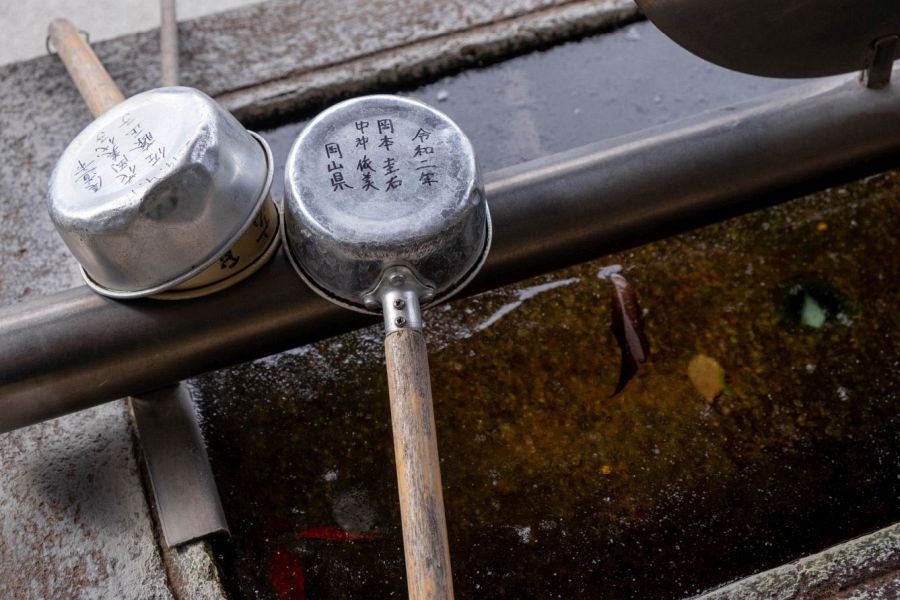
After the gate, climbing the ninety-four steps brings you to the temple precincts. There’s a belfry on the right and water basin on the left. A stone is carved with a haiku;
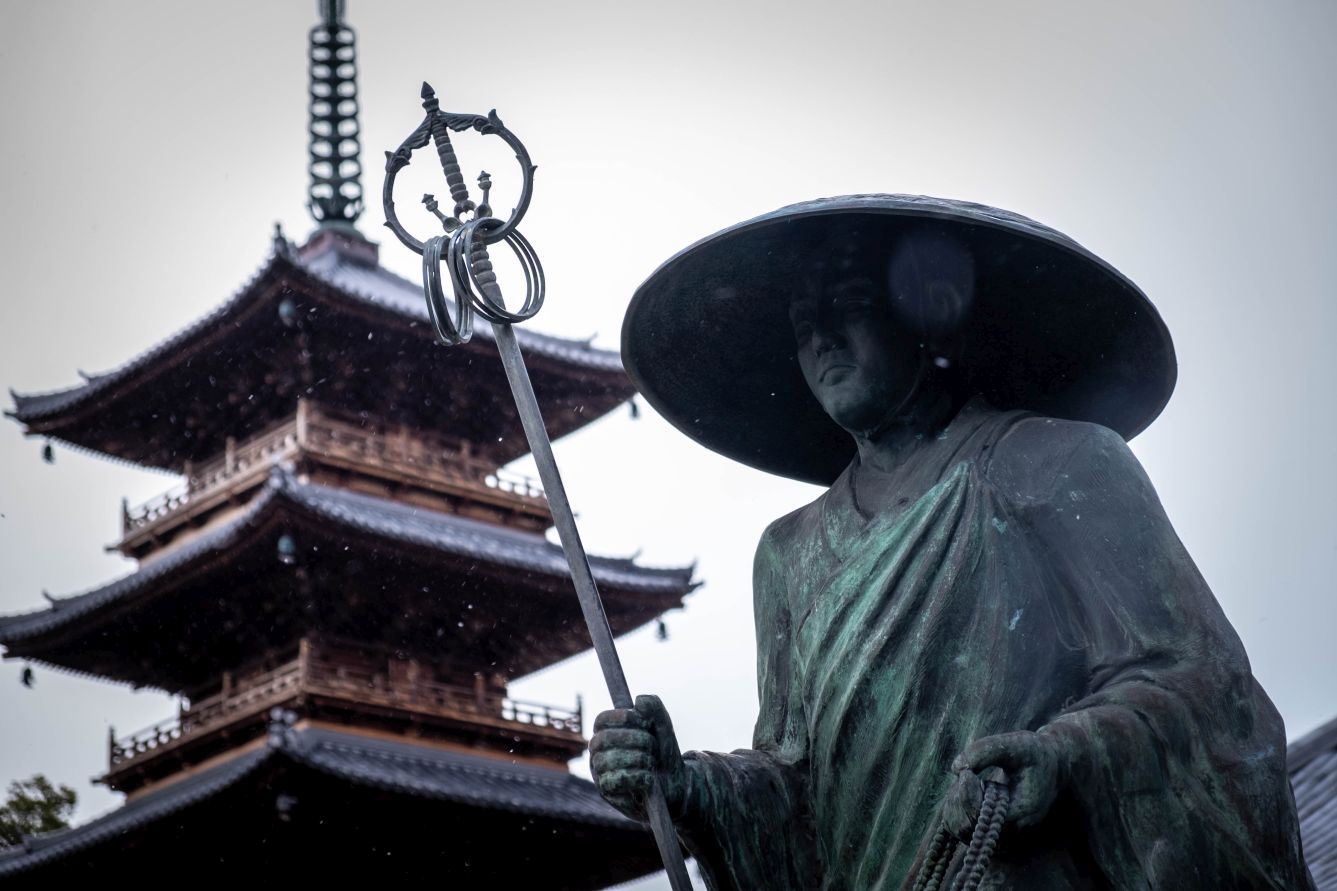
A pilgrim’s conical hat
comes into view on the Sanuki road—
an ancient, weathered village.
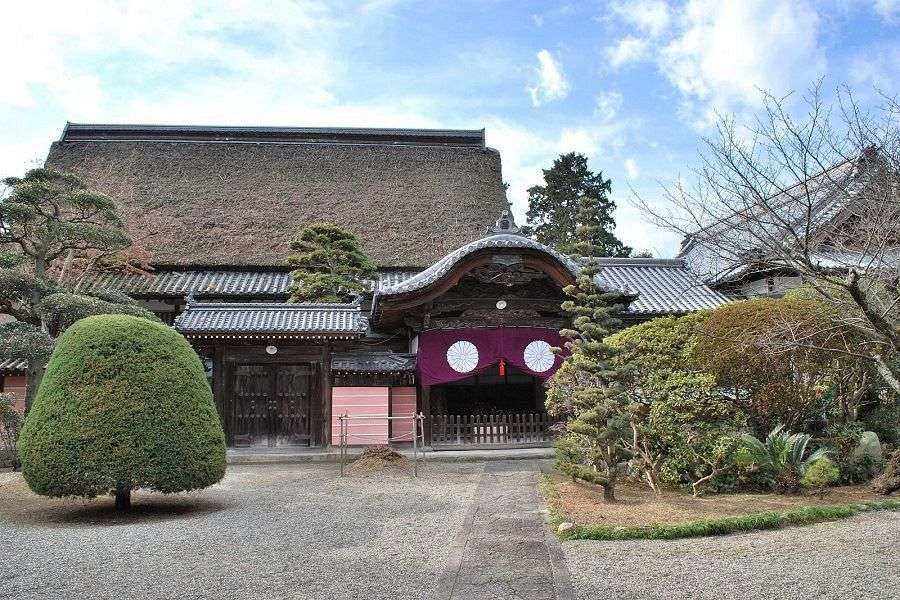
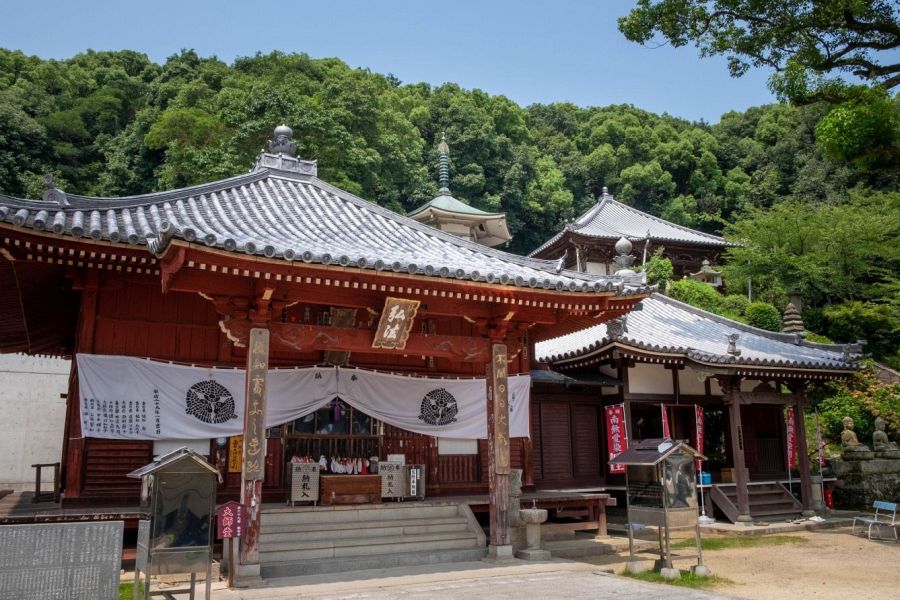
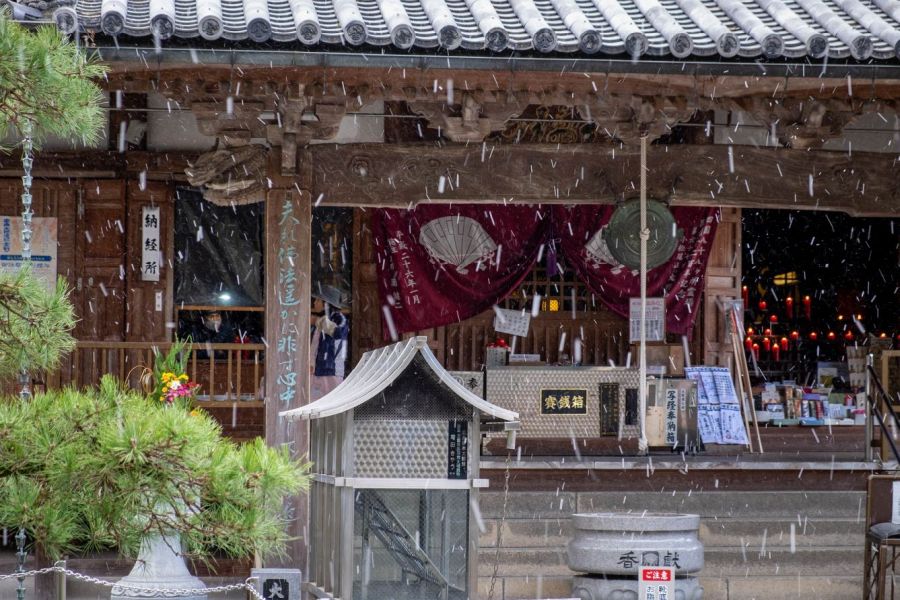
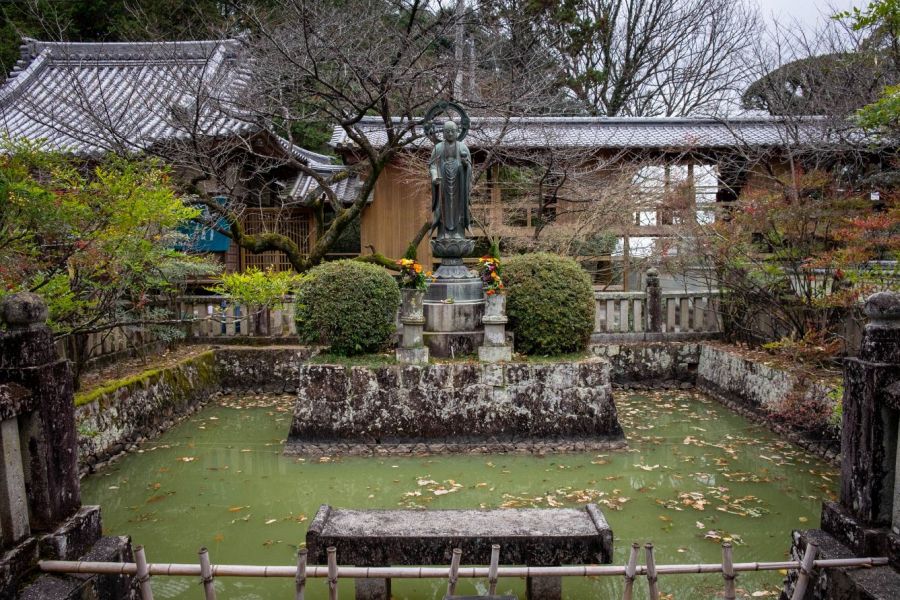
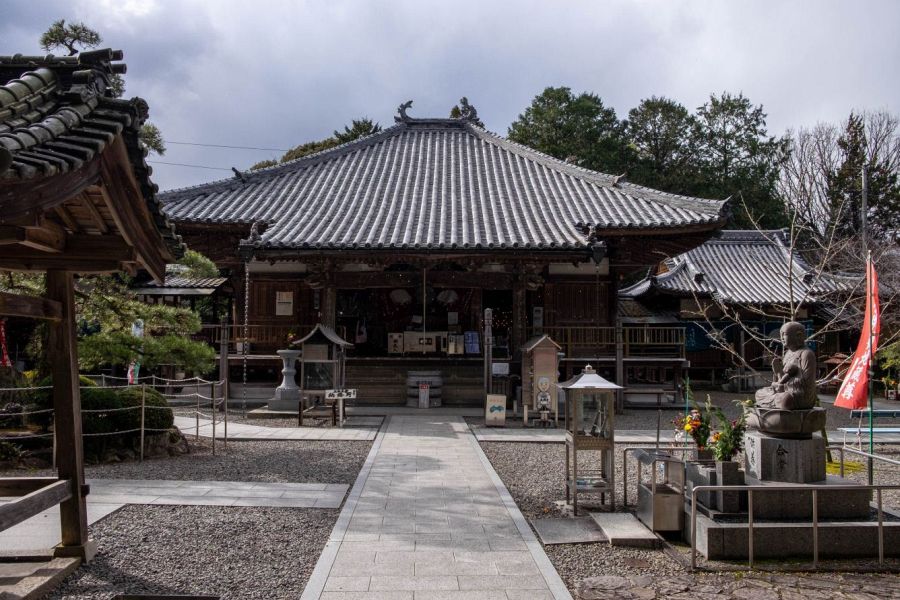
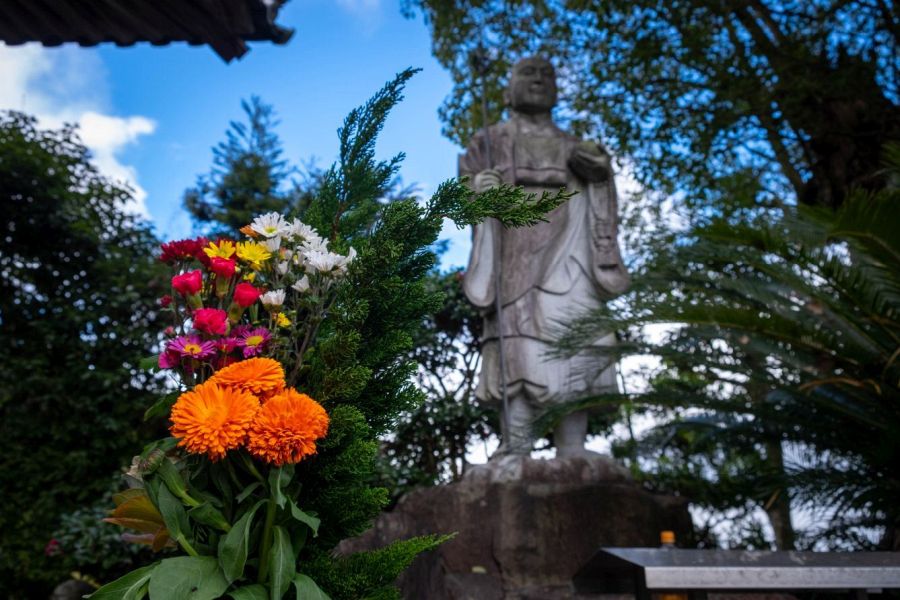
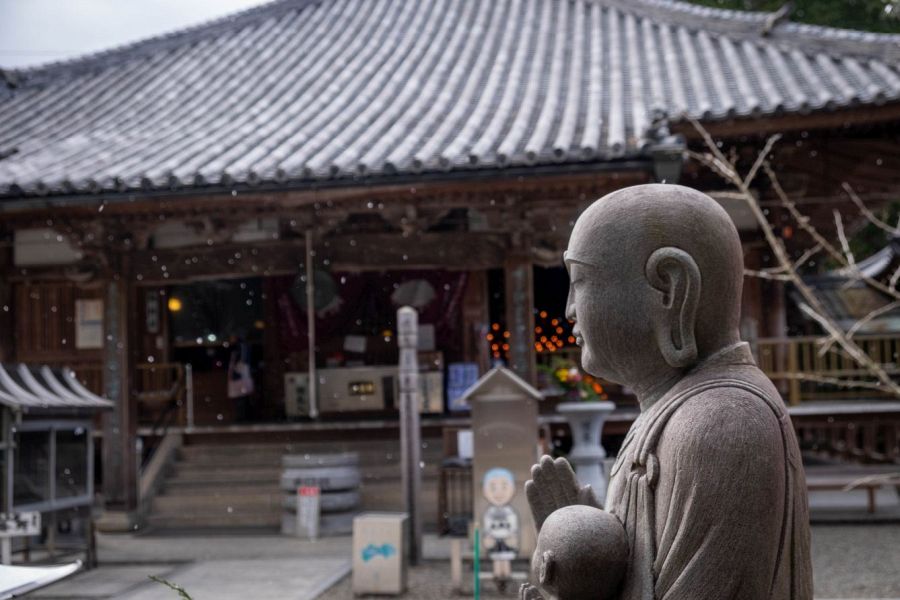
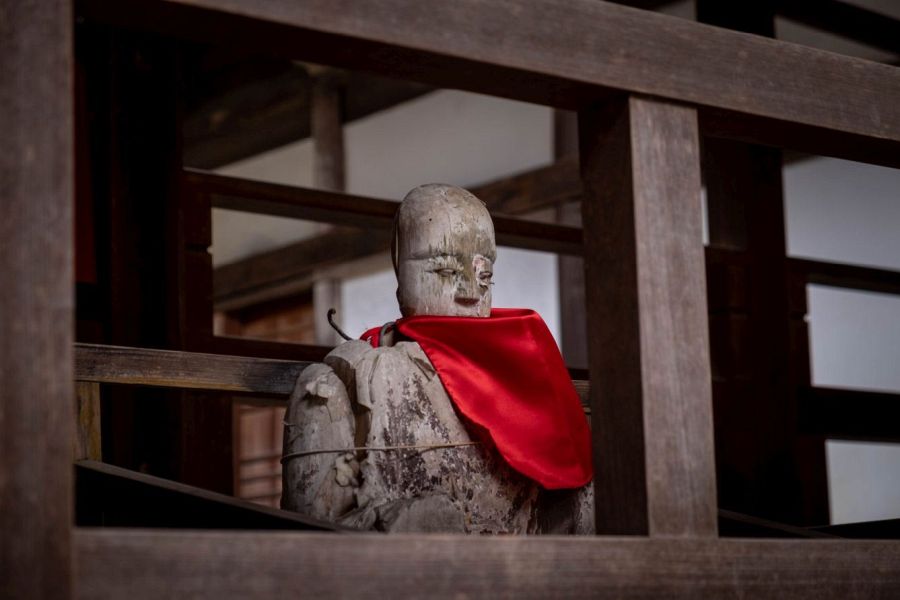
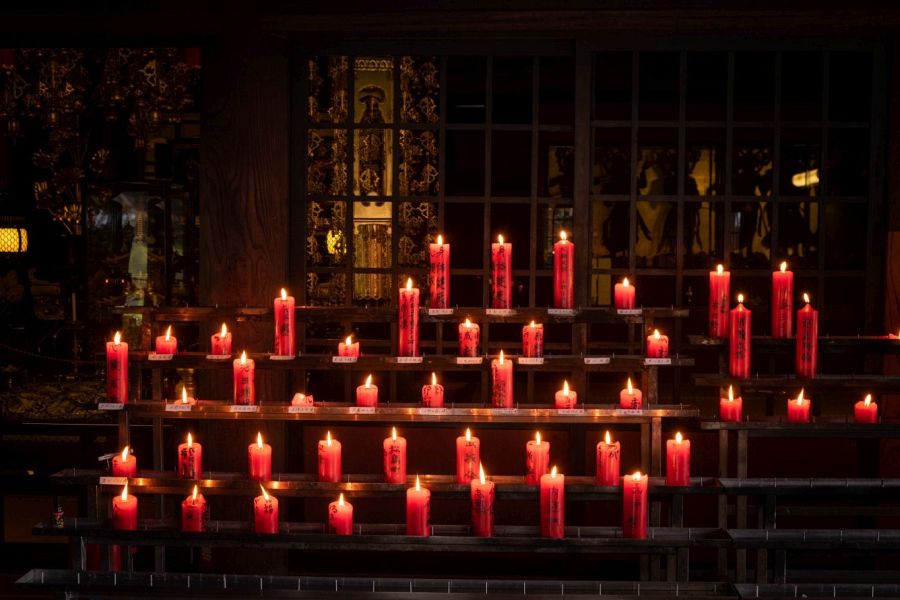
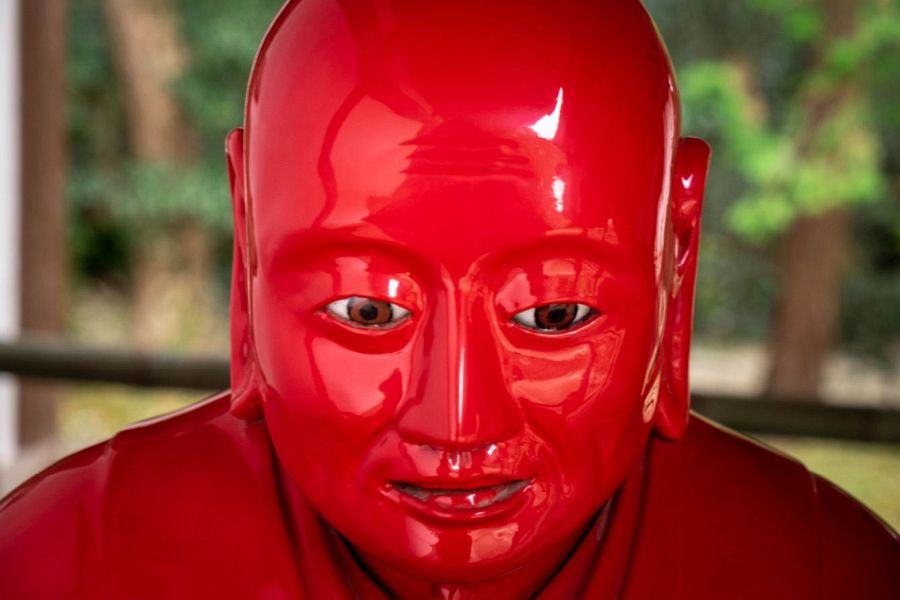
Directly ahead is main hall, flanked by the Daishi Hall and Tendai Daishi hall to left and right. There’s a beautifully lacquered statue of Binzuru on the veranda of the main hall. Red candles are lit for good fortune. The temple office is to the left. To the right of the main hall is a square pond with a standing statue of Jizō.
The steps up to the temple are flanked by an enormous nutmeg-yew and camphor tree. Two pines stand in front of the main hall, and there are several large cherry trees around the precincts that blossom in spring.
History
The temple was established in 742 as a sub-temple of Tōdai-ji. Later, under Saichō’s influence, it became Tendai sect. After the main halls were destroyed by fire, Kūkai rebuilt them in 822 by imperial decree of Emperor Saga as a sacred site enshrining the Buddhist and Shintō Kumano deities. He also carved the principal image of Yakushi Nyorai flanked by Fudō Myōō and Bishamonten and enshrined them in newly constructed halls. Subsequently, as a branch temple of Tōdai-ji, it flourished as a training ground for the teachings of Kūkai and Saichō, with 24 Shingon Buddhist halls and 12 Tendai Buddhist halls forming a continuous line of monastic quarters.
Temple records state that all buildings except the main hall were destroyed by fire during the military campaigns of Chōsokabe Motochika. However, various historical records indicate major damage occurred in 1596 for unspecified reasons, suggesting Motochika was likely not involved. In 1597, the temple relocated to its present site approximately 1 km southeast, where subsidiary halls had stood in Komatsuo. A temporary main hall was erected, and although a main hall was constructed in 1669, it too was destroyed by fire. The present main hall was rebuilt in 1741. The Kumano Sansho Gongen shrine on the southern side of the precincts was managed by the temple’s chief priest until the Meiji separation of Shinto and Buddhism. Also, until the late Shōwa period, it was commonly referred to locally as Komatsuo-dera, derived from the place name, but is now uniformly known by its formal name, Daikō-ji.
Information
Name in Japanese: 大興寺
Pronunciation: daikō-jee
Address: 4209 Yamamotochotsuji, Mitoyo, Kagawa, 768-0101