Temple 76, Konzō-ji
Konzō-ji is temple No. 76 on the Shikoku pilgrimage, or Henro. It occupies a spacious sandy compound among houses and fields on the Zentsūji plain. The temple is renowned for being the birthplace of Enchin, founder of the Tendai Sect, and as the temporary home of General Nogi Maresuke, hero of the Russo-Japanese War.
What to see
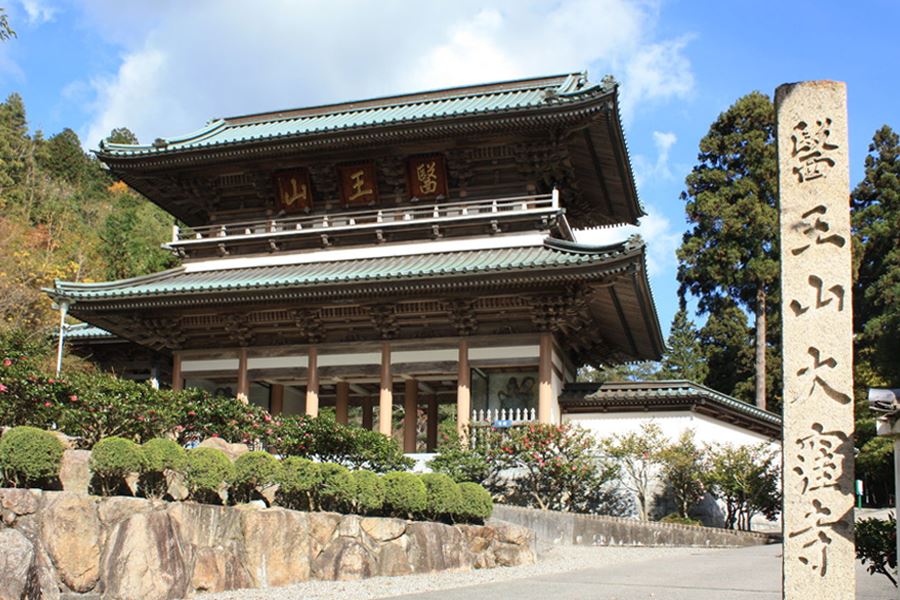
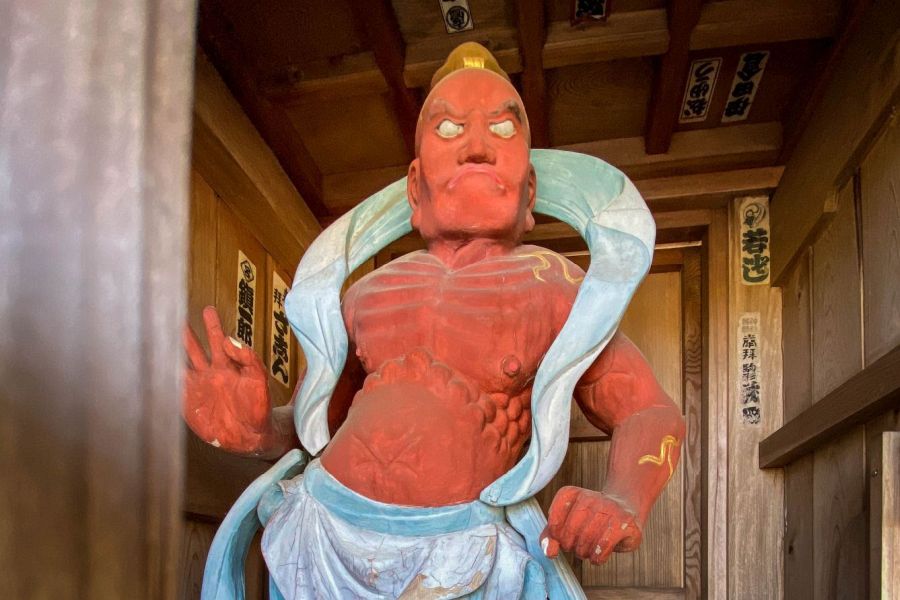
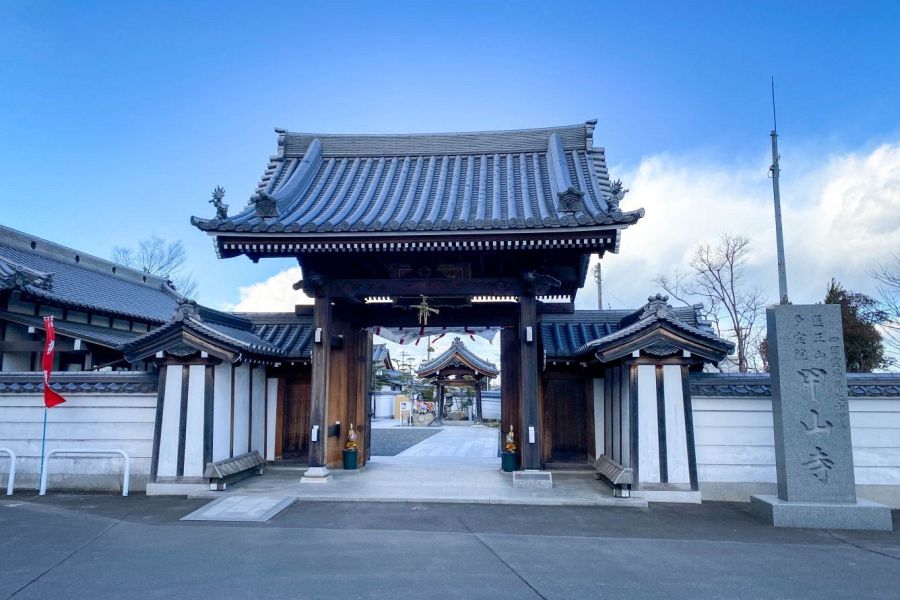
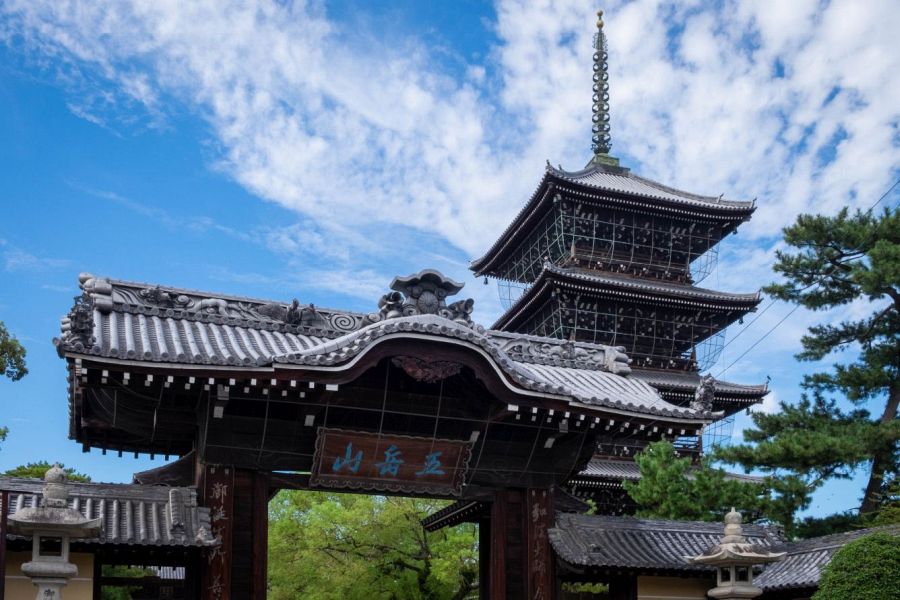
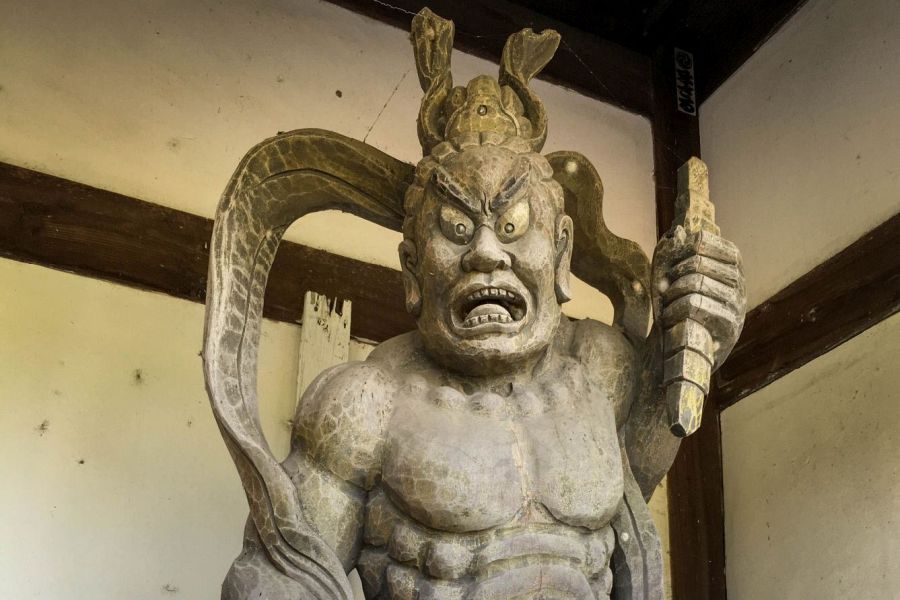
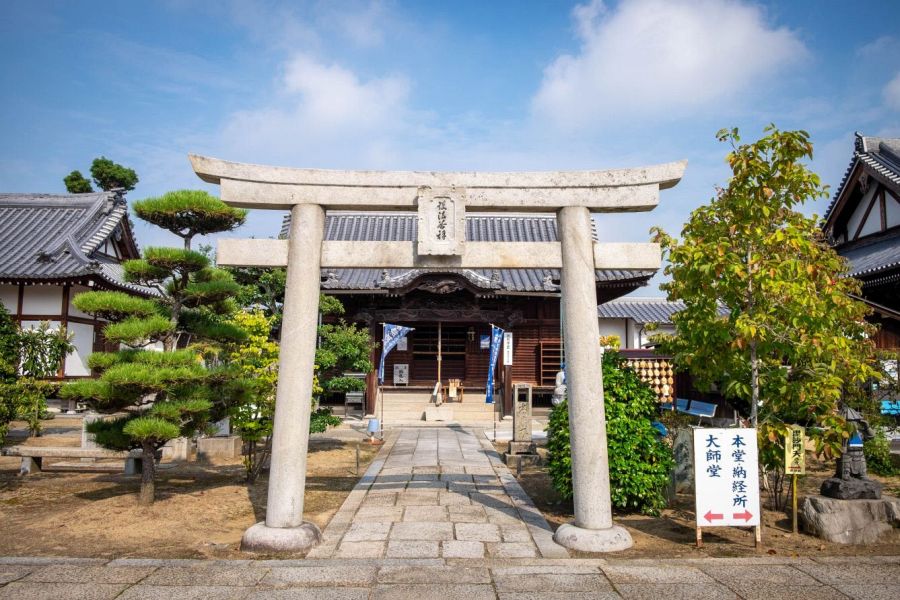
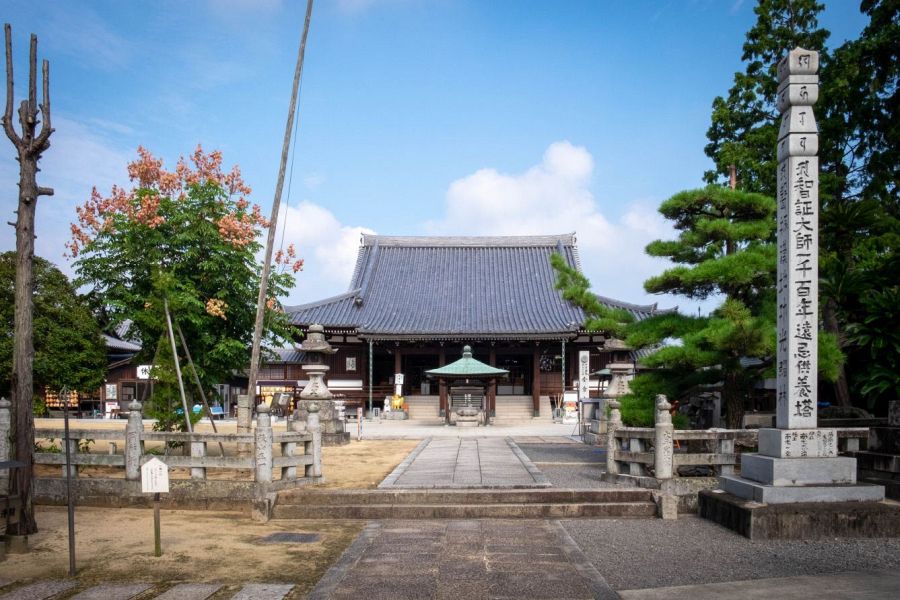
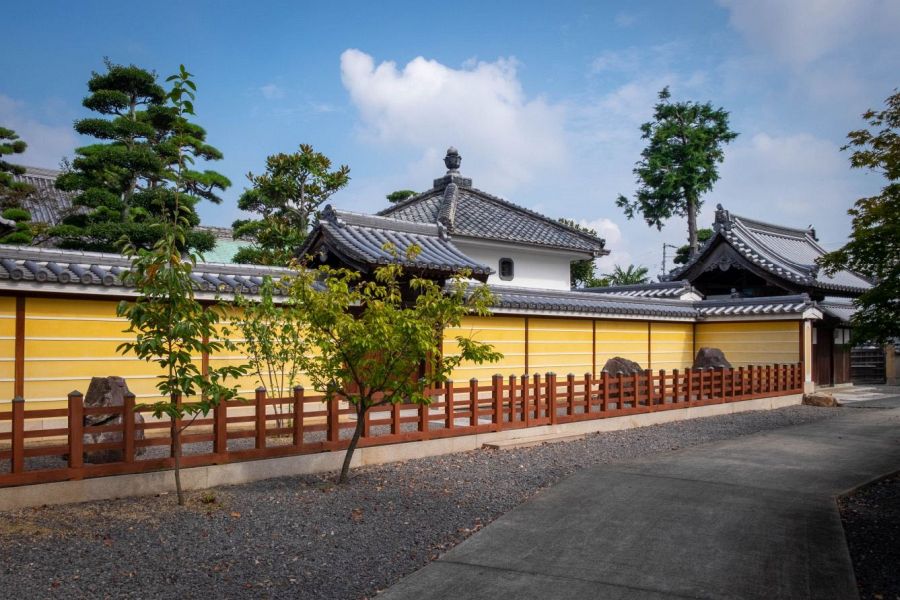
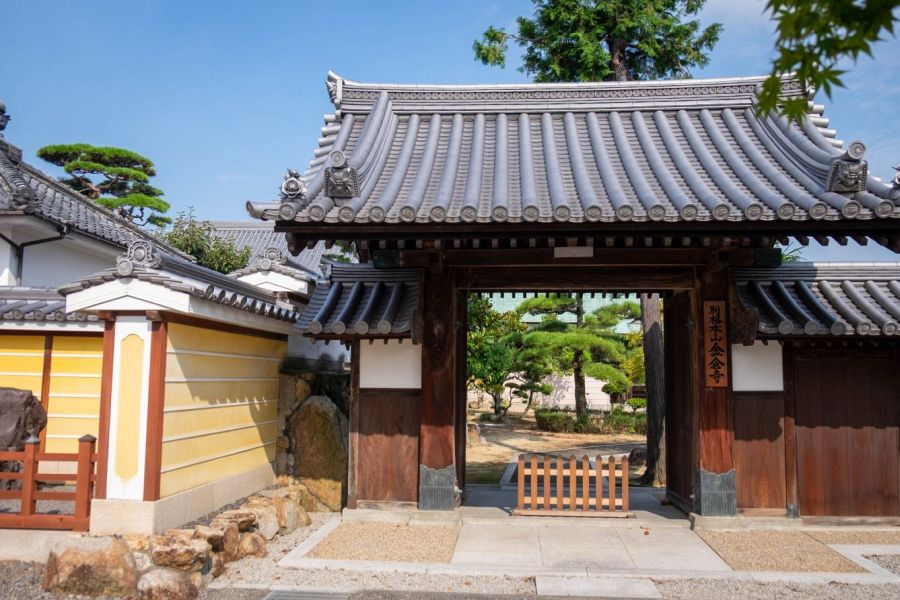
The temple is surrounded by a yellow wall with five stripes, marking it as a temple of high degree. A small Niō guardian gate gives entrance to the compound. Across a wide space stands the main hall stands directly ahead. The current structure was reconstructed in November 1983. To the right of the main hall is the temple office.
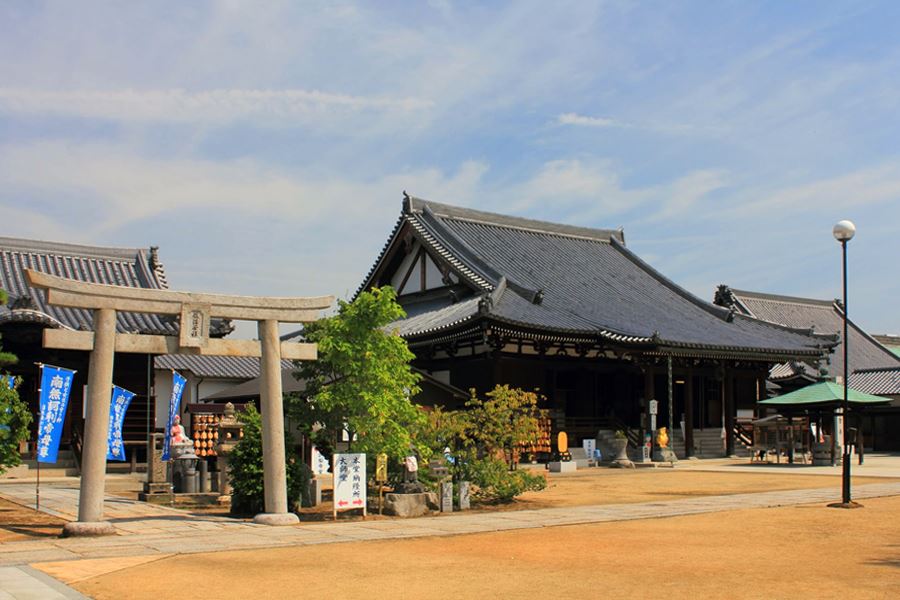
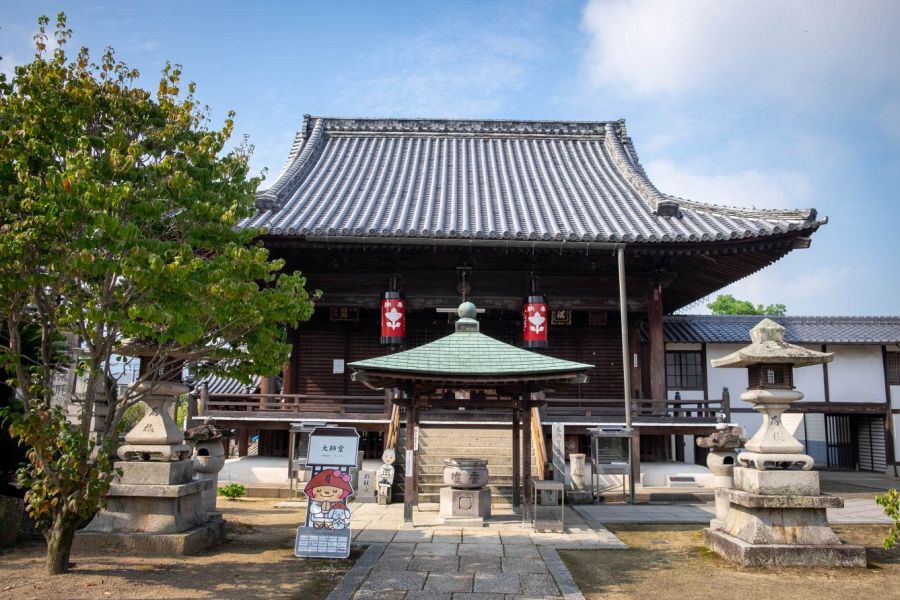
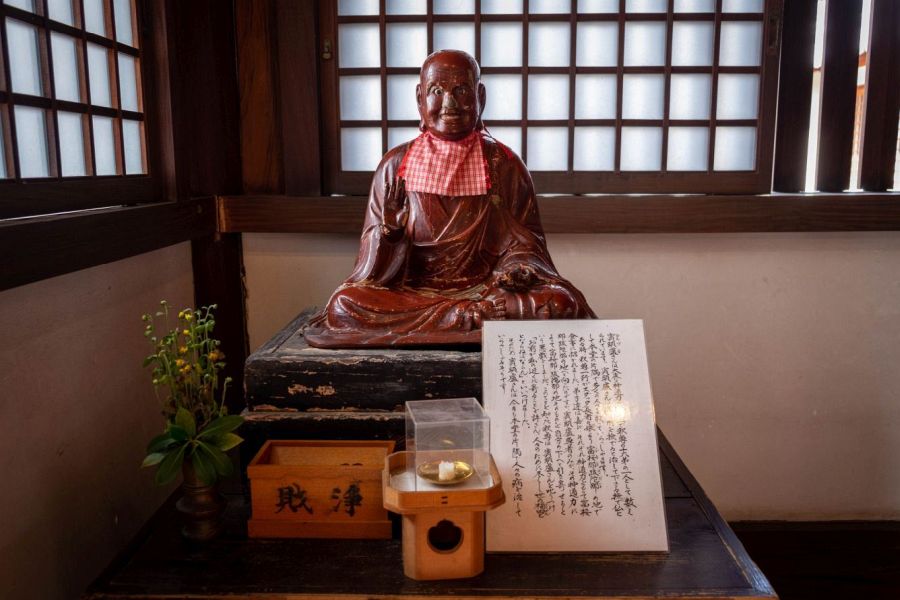
The Daishi Hall is towards the left. Originally built in 1651, it was relocated from the original main hall. In it are statues of Enchin, Kūkai, and En no Gyōja. Among the temples of the Shikoku pilgrimage, this is the only one where a “Great Master” other than Kūkai is enshrined centrally in the Daishi Hall. The same three statues are also enshrined in the inner sanctuary beyond the Daishi Hall.
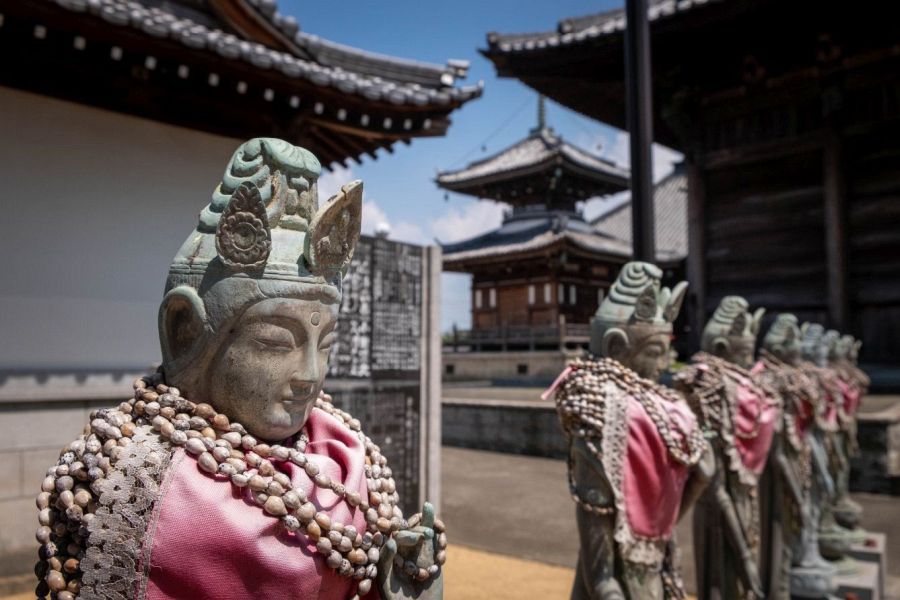
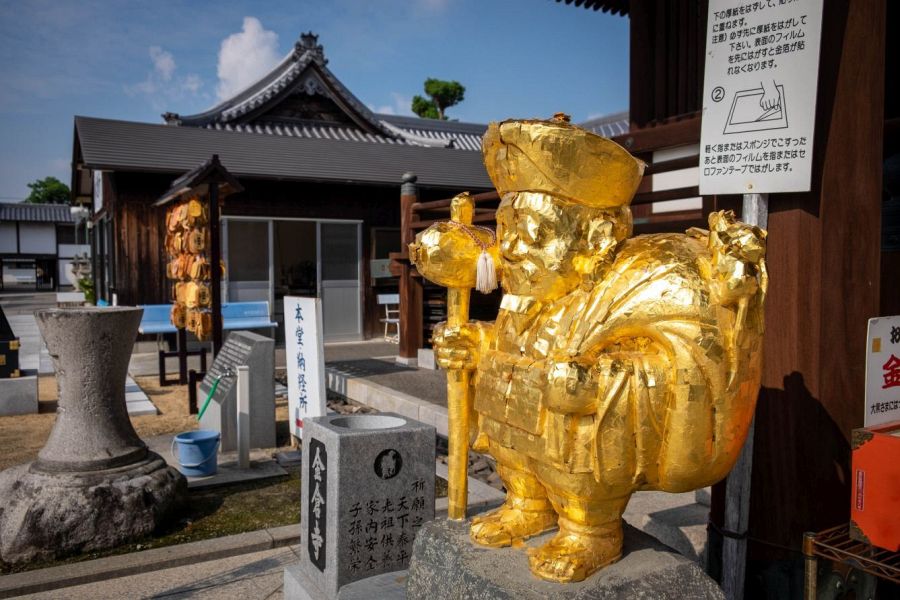
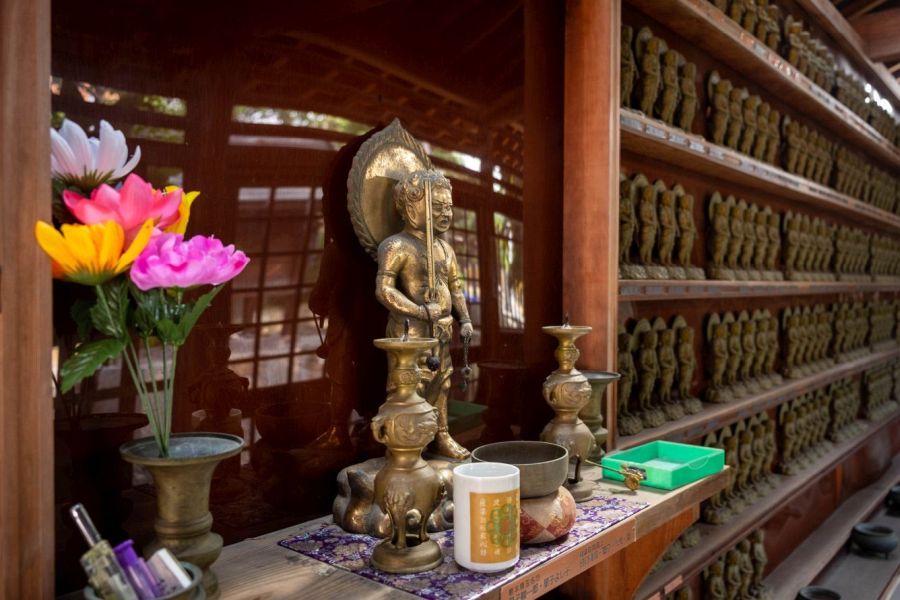
Other buildings include the Karite Hall built in 1716 and worship hall in 1881 enshrining a female deity revered for granting children and ensuring safe childbirth, a Kannon Hall, Benzaiten Shrine, Tenmangū Shrine, and Chūkon-sha Shrine. Near the car park is a mini pilgrimage of soil from all of the pilgrimage temples. The stone statue of an ox recalls that an ox market was once held in the temple. Seven Lucky Gods are dotted around the precincts, including a pond dedicated to Benzaiten.
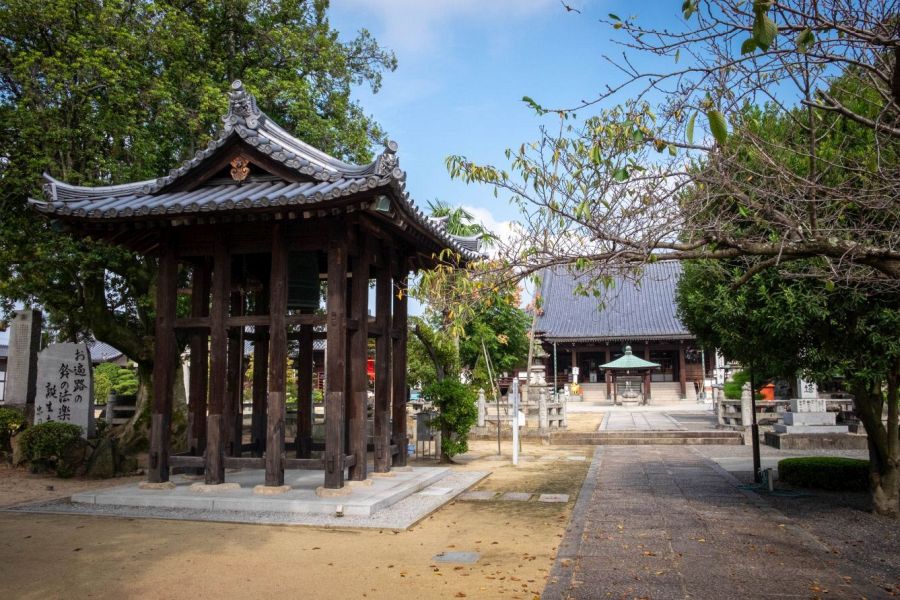
The belfry has a very unusual twelve pillars, again signifying the high status of the temple.
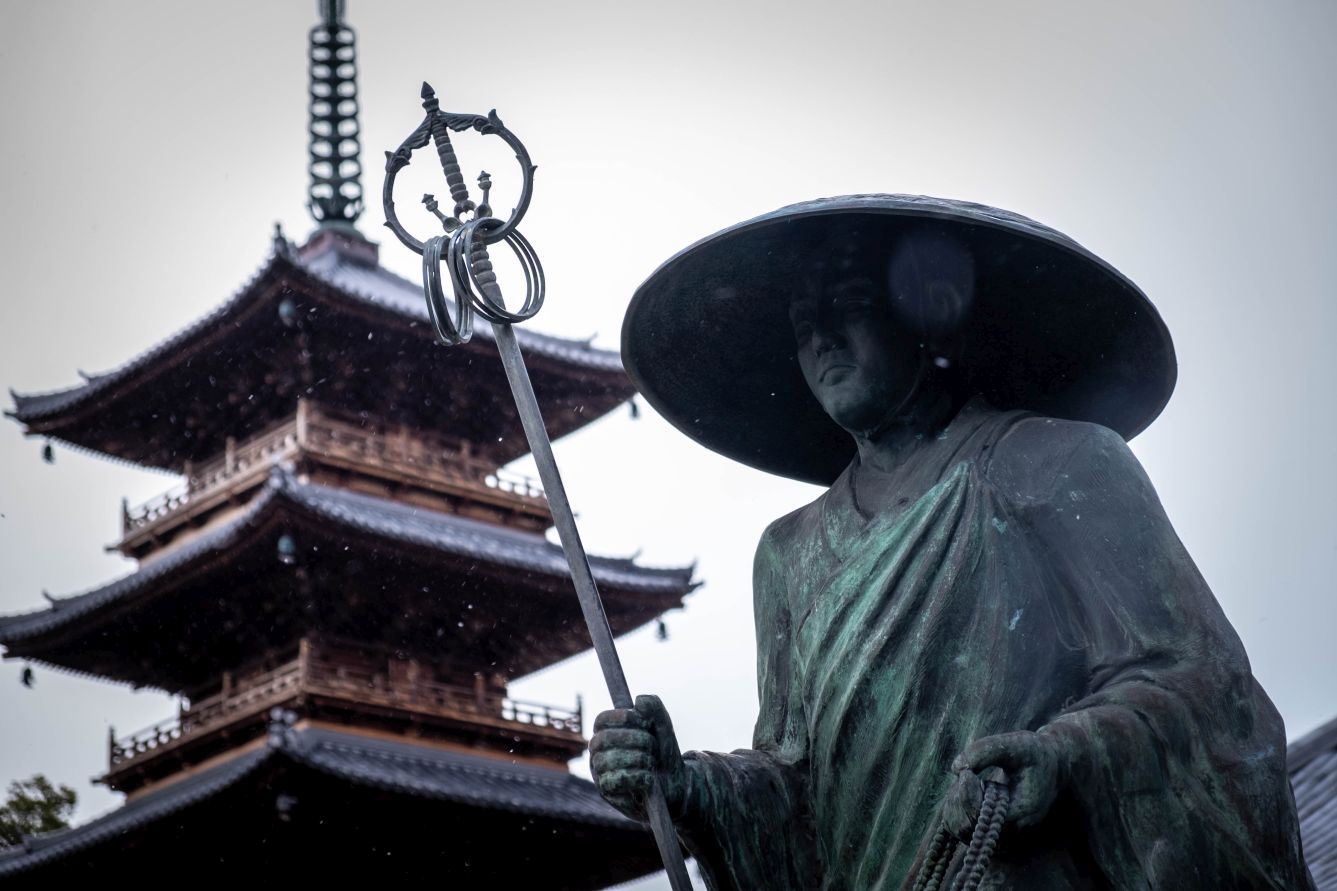
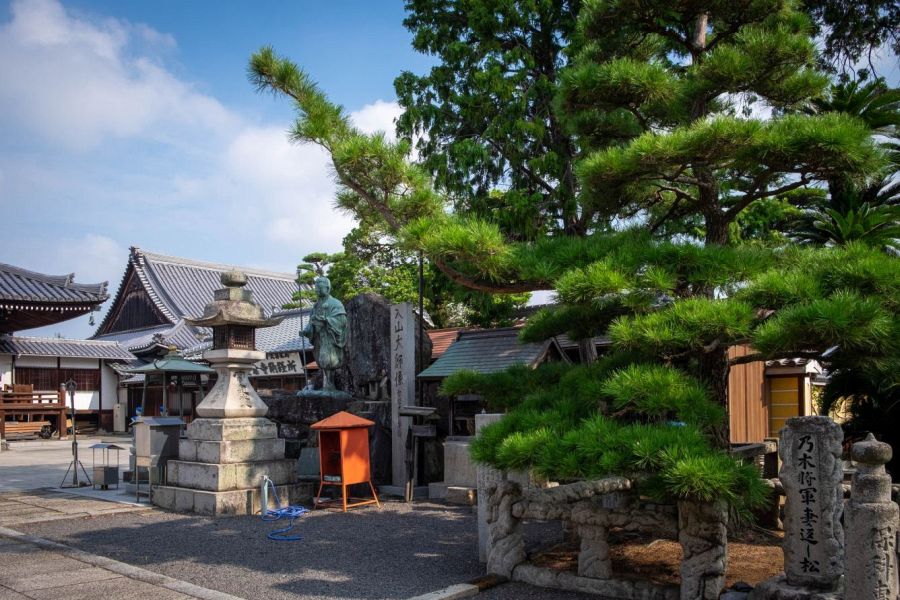
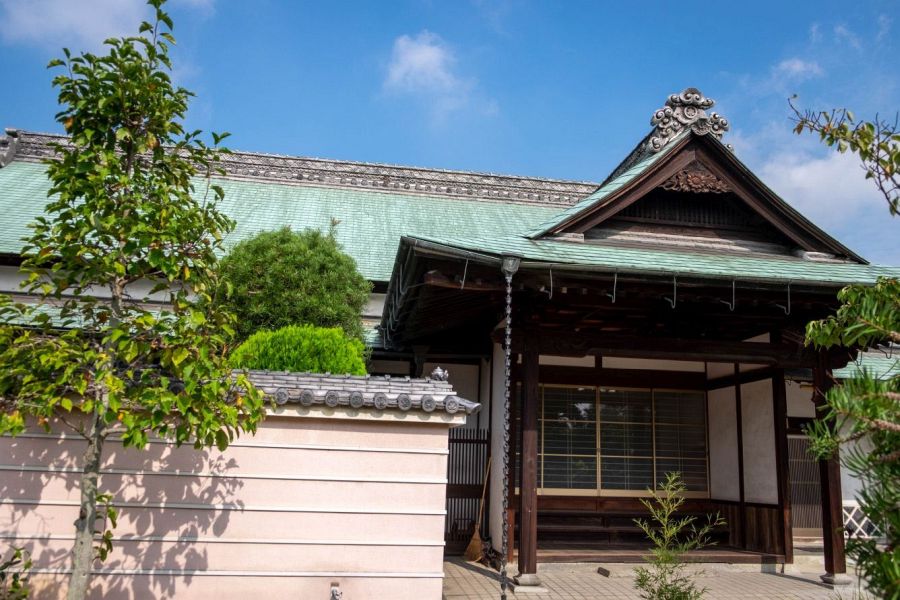
The guest hall includes the General Nogi Memorial Room. Within the grounds is a pine tree under which the general’s wife waited in vain for an audience with her husband, and a bronze statue of the general in traditional Japanese clothing.
The Shilla Shrine stands to the west of the main gate, enshrining the deities who encouraged Enchin to travel to Tang China.
History
Konzō-ji Temple is known as the birthplace of Enchin, latterly known as Chishō Daishi. It was founded in 774, in the same year Kūkai was born, when Wake no Dōzen, Enchin’s grandfather and a descendant of Emperor Keikō, made a life-sized statue of Kannon and built a hall to enshrine it. In 851, the temple received state sponsorship thanks to the work of Enchin, who had brought back valuable knowledge from Tang China, including the female deity Kishimojin, a guardian of mothers and children.
In 928, Emperor Daigo decreed that the temple should be called by its current name. At that time, Konzō-ji was at its most prosperous, with 132 monasteries in its extensive grounds and a congregation of over 1,000 people. Later, the temple suffered destruction repeatedly in wars, losing its treasures.
After having had no priests for around 100 years, the lord of the Takamatsu domain Matsudaira Yorishige and Tendai sect monk Kirakuin Sankai restored the temple.
Later still in 1898, General Nogi Maresuke made the temple his lodging as the first commander of the 11th Infantry Brigade. On New Year’s Eve in 1898, his wife Shizuko visited him from Tōkyō, but he told an aide to send her away without seeing her, reasoning that other low-ranking soldiers were unable to enjoy the luxury of seeing their wives at that time. Not knowing what to do, Shizuko lingered by herself under the pine tree as snow fell all around. Then, considering her husband’s feelings, she returned to Tōkyō. The pine tree that bore silent witness to this pitiful scene became the stuff of legend. The third generation of this pine tree can still be seen at the temple.
Information
Name in Japanese: 金倉寺
Pronunciation: kon-zōjee
Address: 1160 Konzojicho, Zentsuji, Kagawa 765-0031