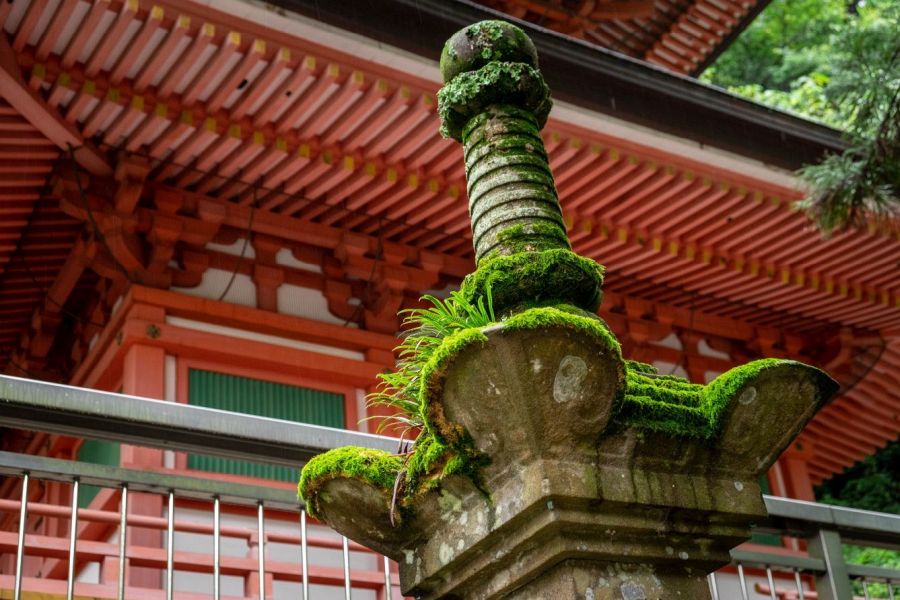

Temple 84, Yashima-ji
Yashima-ji is temple No. 84 on the Shikoku pilgrimage, or Henro. It occupies a large compound on the dramatic flat-topped island of Yashima to the east of Takamatsu. The compound includes buildings dated at various periods, from the Kamakura to the current era.
What to See
Yashima-ji was originally accessed by a trail on the south side of the mountain. On the trail you can find a spring, a tree bearing inedible pears (see Legends below), and the Tatami Stone, an outcrop of plate-like joints in Sanuki andesite rock.
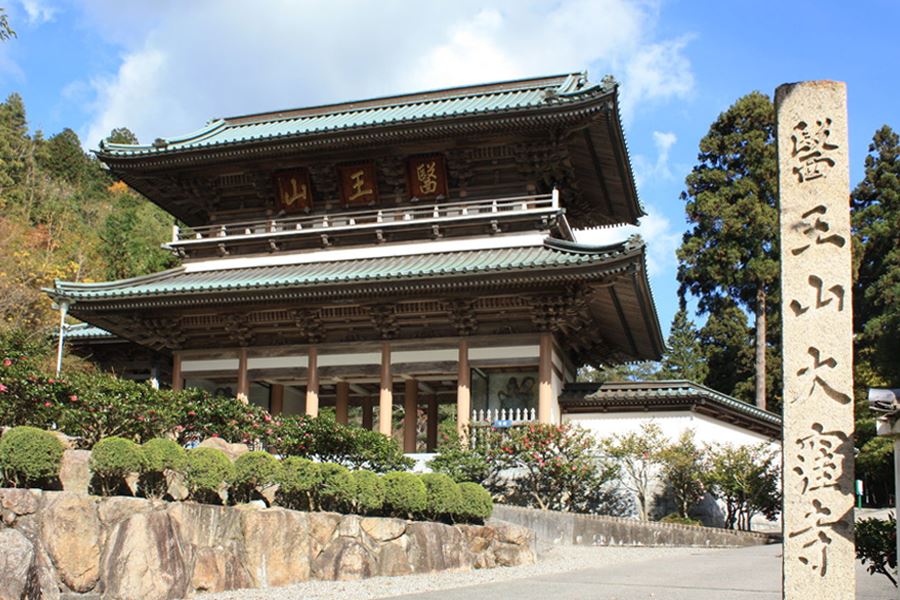
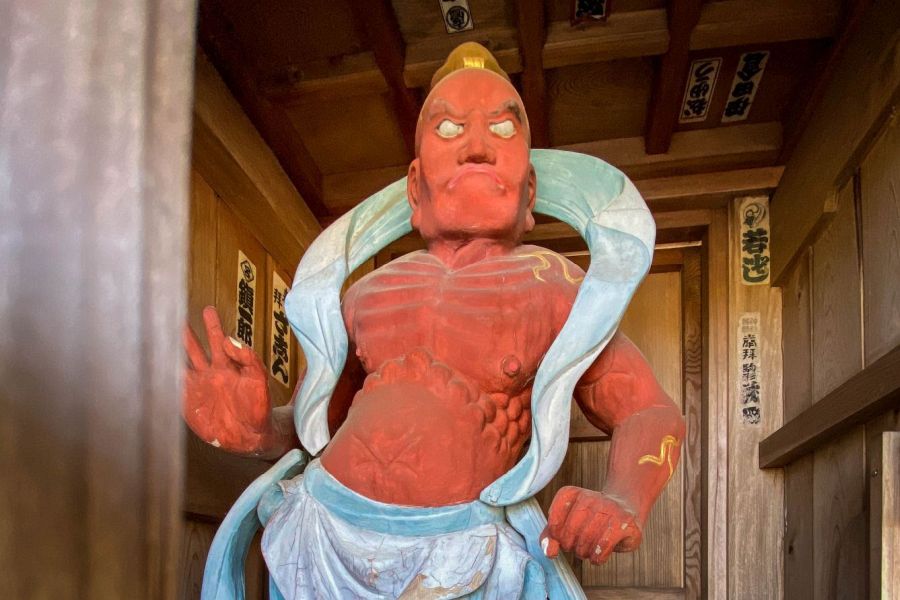
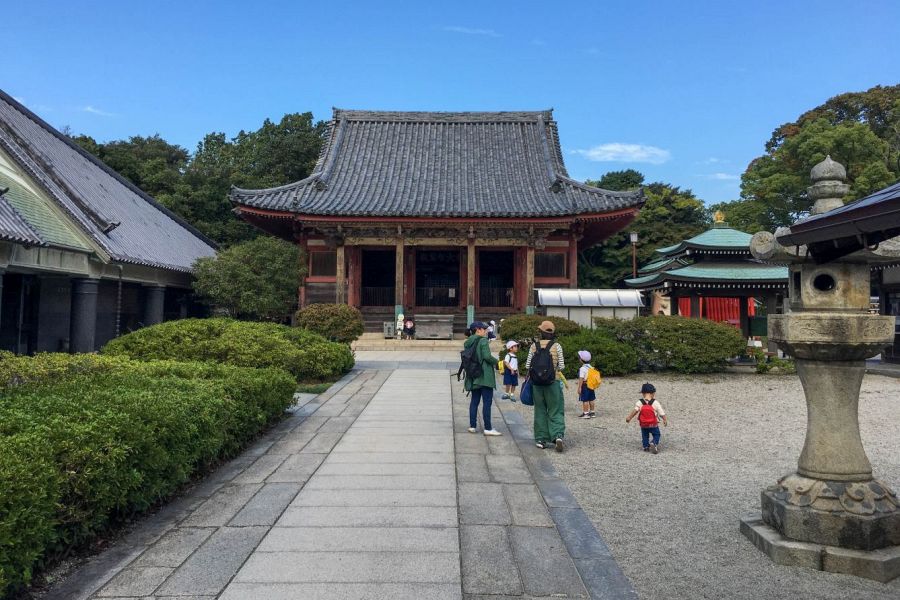
Where the trail reaches the top of the plateau is a gate with two Niō guardian statues. A little further is another gate with four Shitennō statues. Passing through this gate, the main hall is in front of you. It was built in 1618 using materials from the previous hall from the Kamakura period. To the left is the modern treasure hall housing many Buddhist statues, including the principal image, and artifacts from the Battle of Yashima.
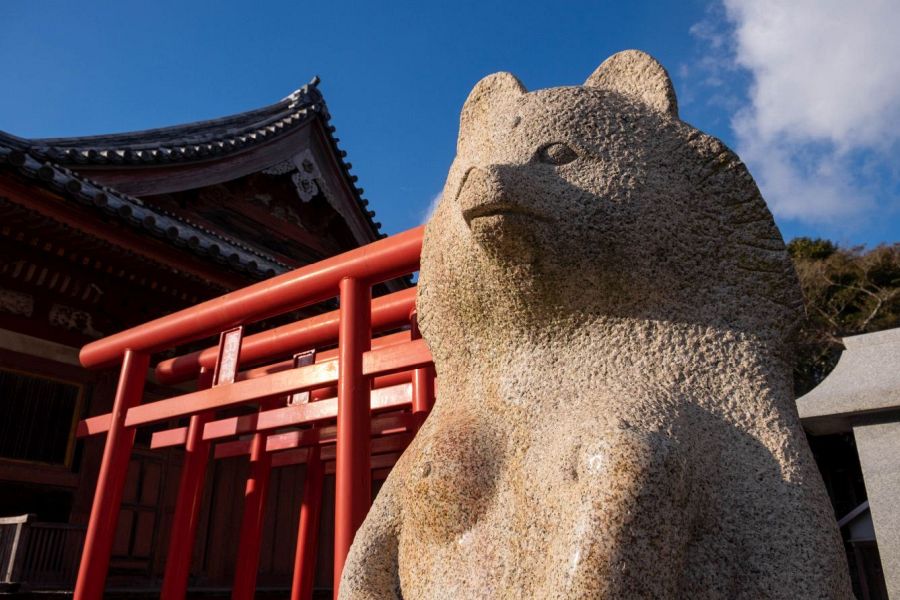
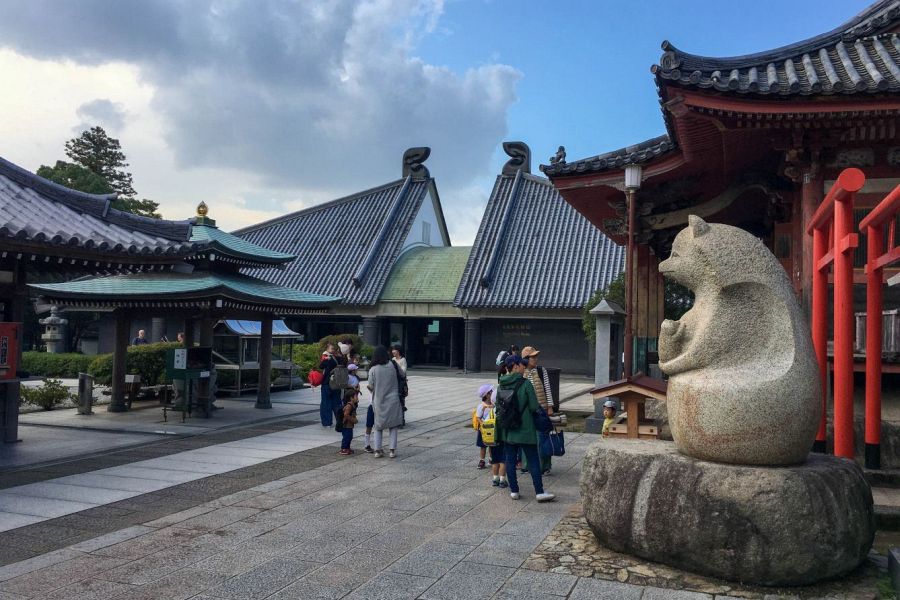
Turning right in front of the main hall, you’ll see the temple office on the right and a Shintō shrine to Minoyama Daimyōjin on the left, flanked by large stone tanuki. Ahead of you is the Daishi Hall and an incense burner.
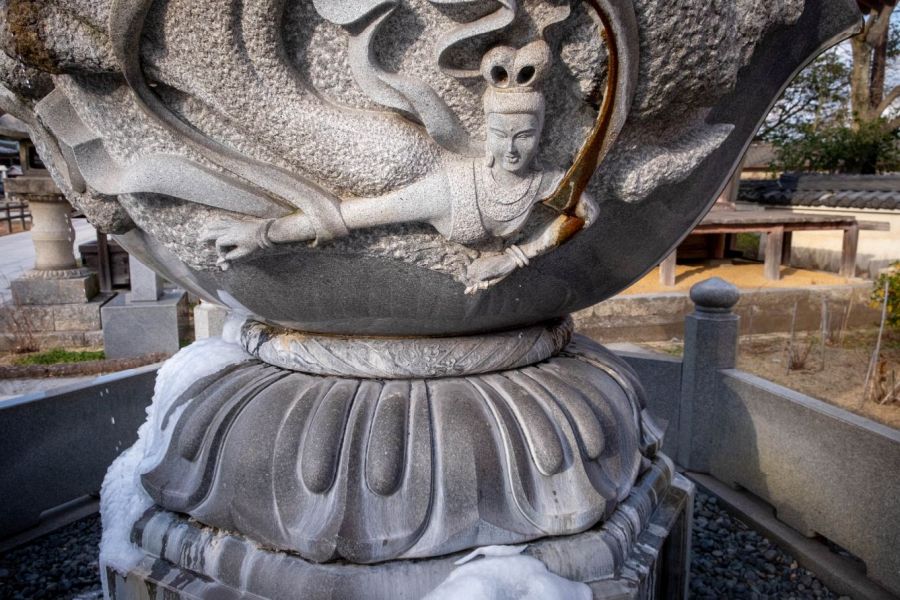
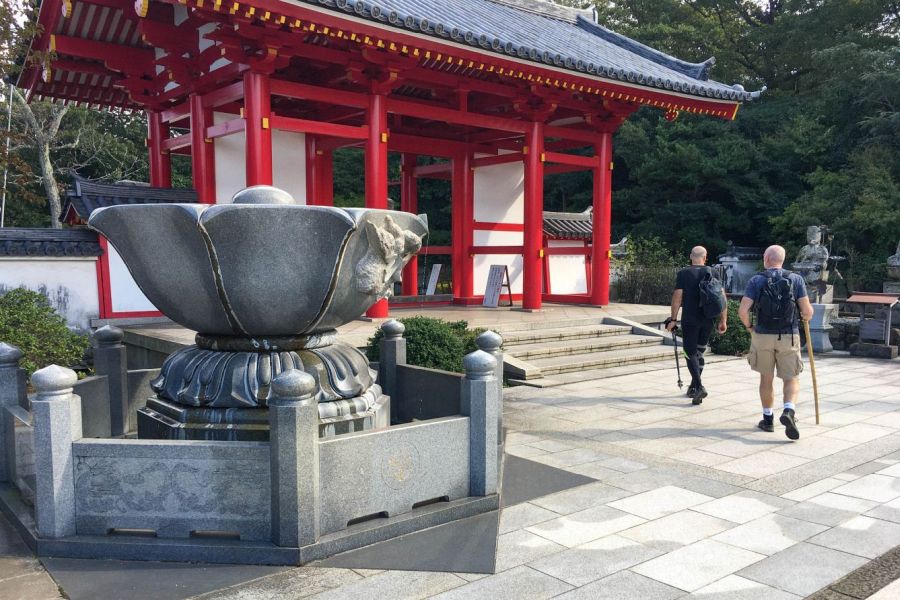
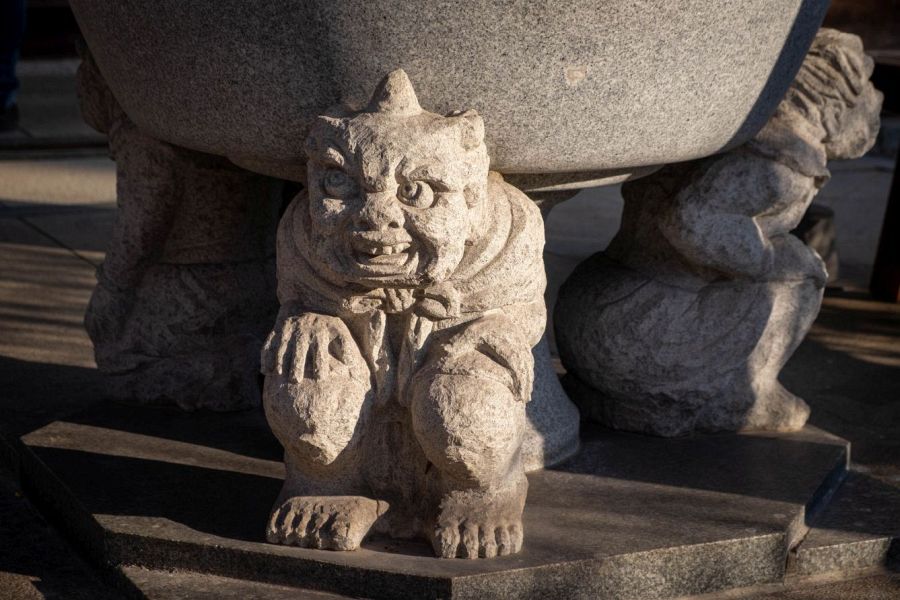
To the left of the Daishi Hall are statues of the Seven Lucky Gods lining a path to Kumano Gongen Shrine. Turning right in front of the Daishi Hall, you’ll see the Santai Hall enshrining a statue of founder Ganjin, the Sentai Hall with a thousand-armed Kannon flanked by many Buddha statues, and a large stone fountain carved with angels. A Kannon statue stands facing the red and white East Gate. Beyond the gate is the Blood Pond because the victors of the Battle of Yashima washed their bloodstained swords here.
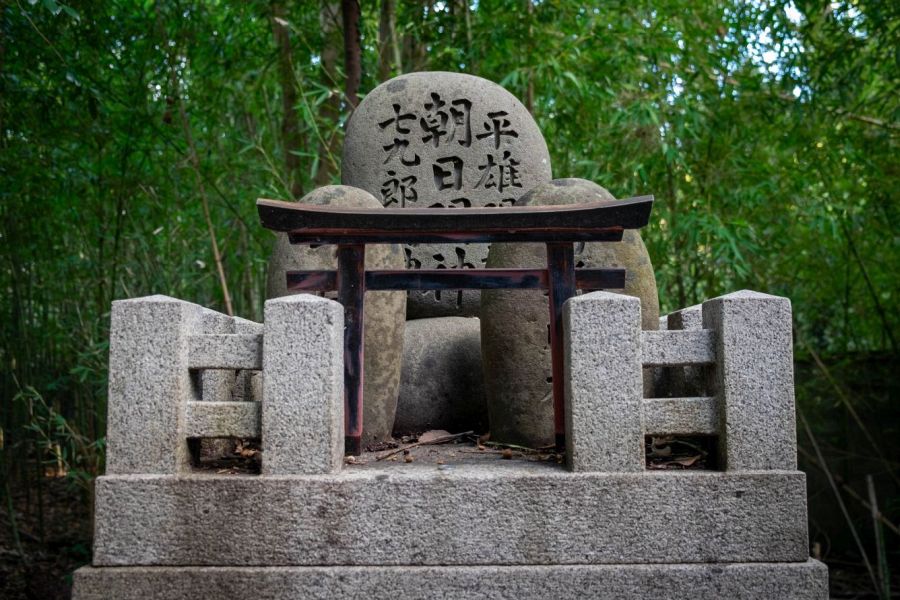
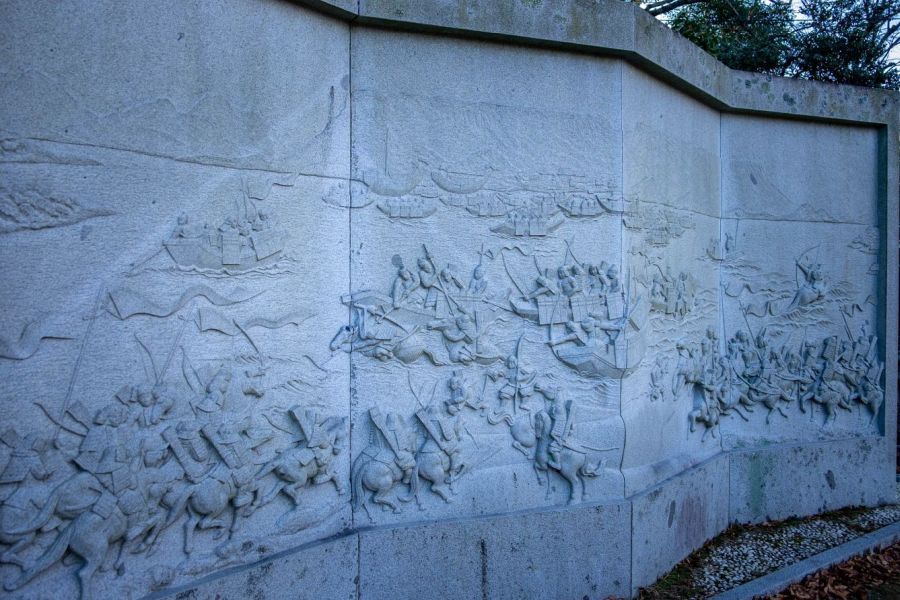
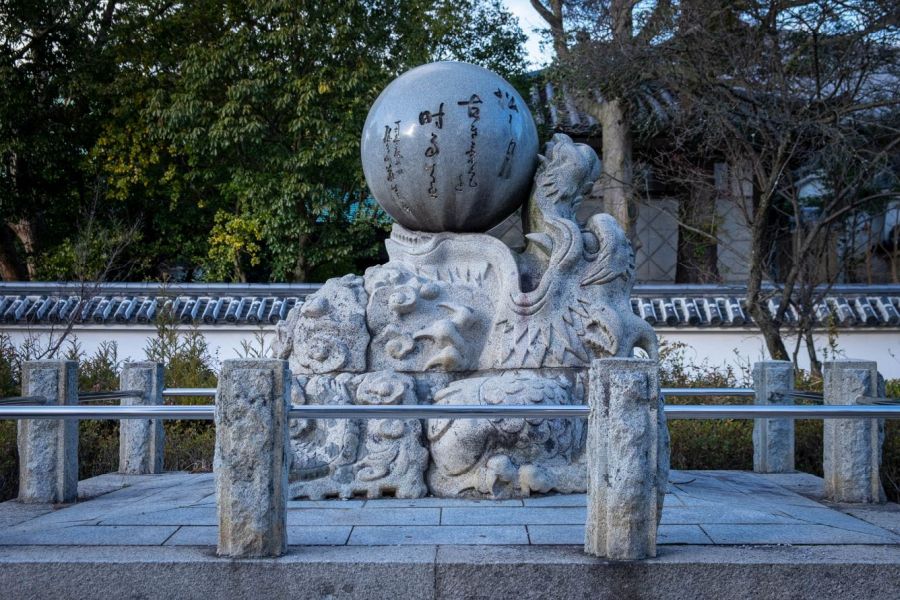
If you head left before the Shitennō gate, you’ll see the Kasei Cherry Tree, one of seven planted by Matsudaira Hansuke, a samurai of the Takamatsu domain, in 1665. There’s a relief stone monument for the 800th anniversary of the battle, and stone monuments with Basho haiku alluding to the ancient battle, the pilgrimage, and the wild scenery.
History
Ganjin, a Chinese monk and the founder of the Ritsu sect, was invited by the imperial court in 754 and he founded the temple. Later, his disciple, Keiun built a hall and named it Yashima-ji Temple, becoming its first abbot. Following the abandonment of the ancient mountain fortress of Yashima Castle, Kūkai received an imperial decree from Emperor Saga in 815 to move the temple to the site of the castle’s main enclosure on the southern ridge. At that time, the temple was changed to the Shingon sect.
On March 22, 1185, the Battle of Yashima took place here towards the end of the Genpei War.
A list of temples affiliated with Saidai-ji Temple in Nara, also founded by Ganjin, dated 1391 shows that Yashima-ji Temple was then a sub-temple of Saidai-ji Temple. In 1601, Ikoma Kazumasa, lord of the Takamatsu domain, confirmed the temple’s land holdings. Throughout the early modern period, the temple was under the protection of the Takamatsu domain.
Legends
The large stone tanuki images are unmissable. The tanuki is a mainstay of Japanese folklore, believed to be able to change its shape and play tricks on the wicked and unsuspecting. The story goes that when Kūkai came to Yashima, it was swathed in a thick mist. An old man wearing a raincoat and hat made of straw appeared and led Kūkai to his destination. Of course the man was really a shape-shifting tanuki, sent by the Buddhist deity Senju Kannon to assist Kūkai in his pious mission.
When Kūkai asked a local farmer for a pear, the farmer lied that his pears were of an inedible type. To his dismay, he found thereafter that they had become inedible. This tree is called the Kuwazu Nashi.
On the trail up to the temple, Kūkai called forth a spring of drinking water to quench the thirst of the faithful climbing up to the temple.
Information
Name in Japanese: 屋島寺
Pronunciation: yashima-jee
Address: 1808 Yashima Higashimachi, Takamatsu, Kagawa 761-0111