Fukusai-ji Temple
Fukusai-ji is one of Nagasaki’s historic Chinese Buddhist temples and forms part of the city’s group of so-called “Chinese temples” (tōdera) established by the Chinese merchant community during the Edo period. Although its present appearance is largely modern, the site has a long history closely connected to Nagasaki’s role as Japan’s main point of contact with China.
Fukusai-ji was founded in 1628 by Chinese monks from Fujian Province. It was established to serve the spiritual needs of Chinese merchants and sailors living in Nagasaki and functioned as a temple of the Rinzai Zen tradition. Together with Kōfuku-ji, Sōfuku-ji, and Shōfuku-ji, it was one of the four major Chinese temples in the city.
In addition to its religious role, Fukusai-ji also served as a funerary temple for Chinese residents who died in Nagasaki. This function gave it an important place in the social life of the Chinese community, which was closely regulated but economically vital to the port.
The original temple buildings were destroyed during the atomic bombing of Nagasaki in 1945. Unlike some other temples, Fukusai-ji was not reconstructed in its original style.
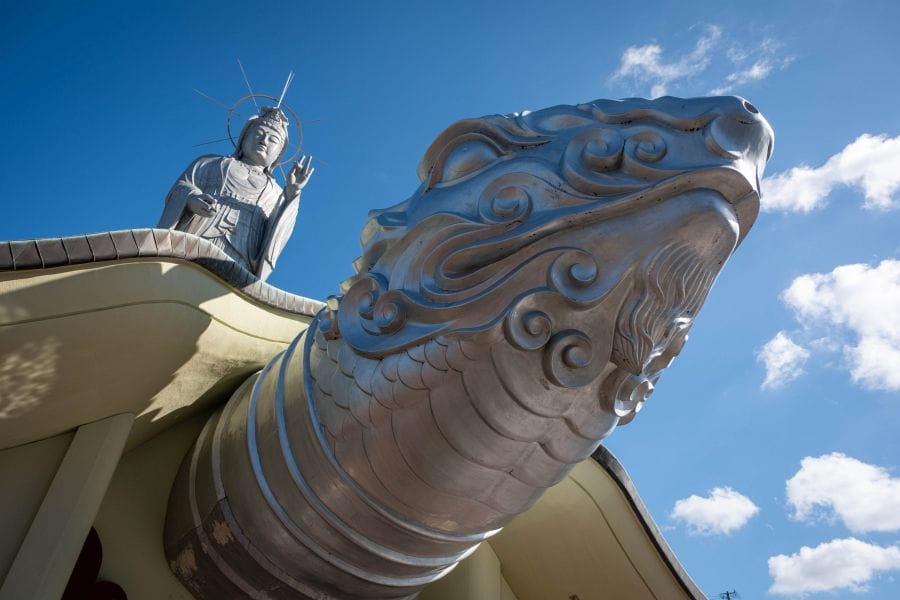
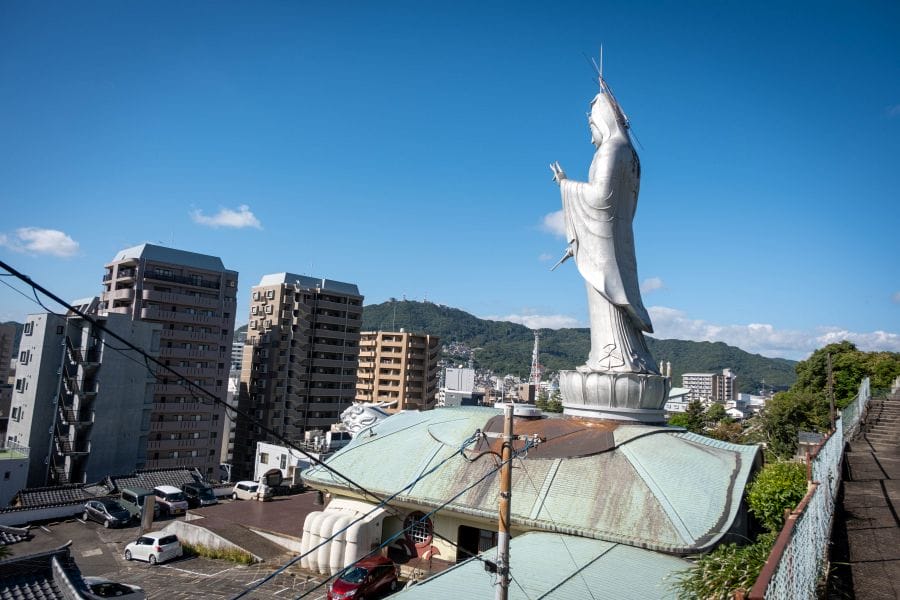
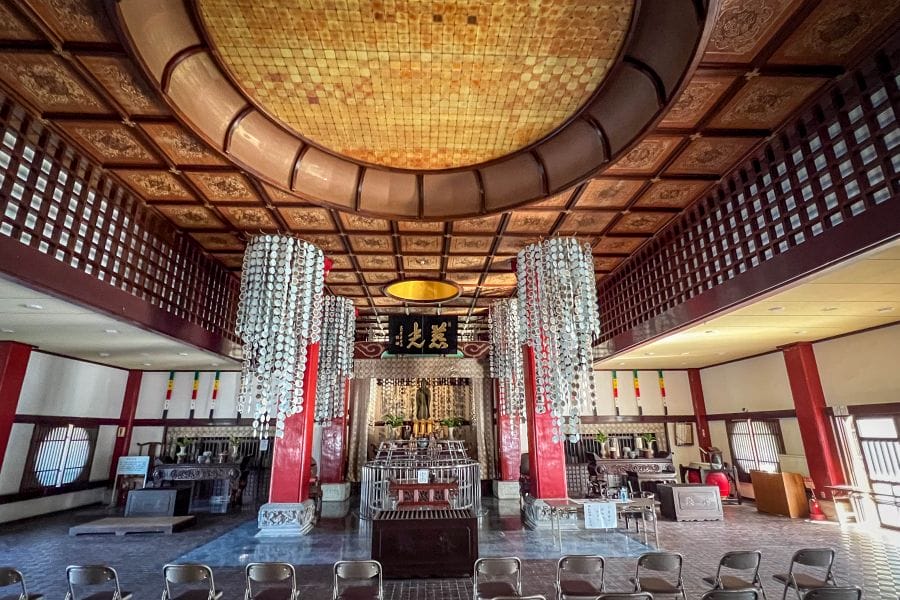
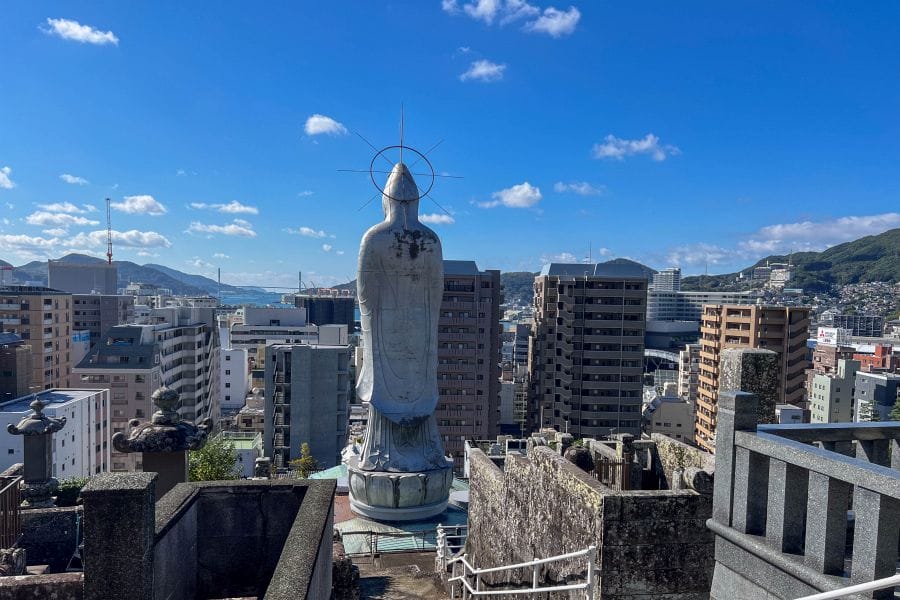
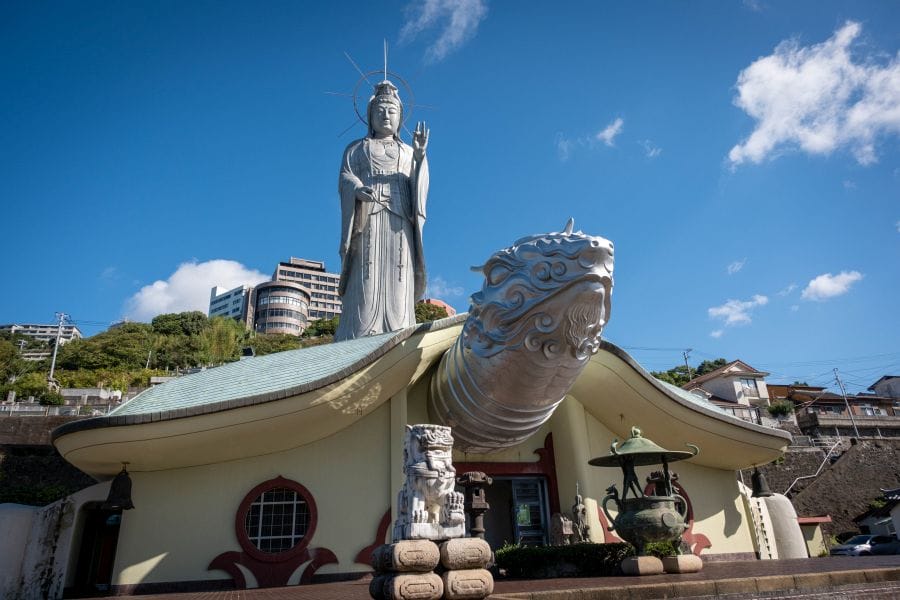
In 1979, Fukusai-ji was rebuilt in a striking modern form inspired by Chinese architectural motifs rather than by traditional Japanese temple design. The central feature of the rebuilt complex is a large concrete statue of Kannon, the Bodhisattva of Compassion, standing approximately 18 meters high. The statue also functions as an ossuary, housing the remains of Chinese people who died in Nagasaki during the Second World War.
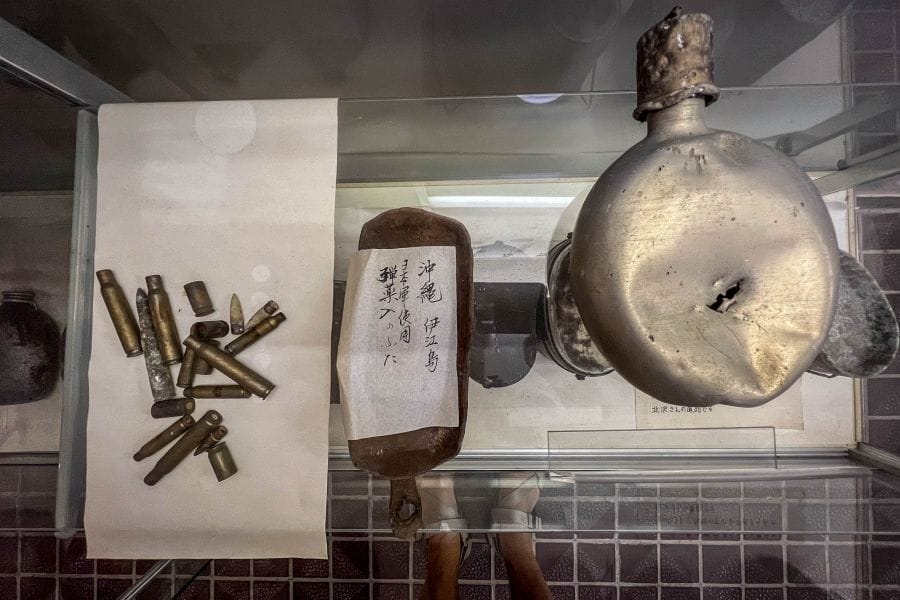
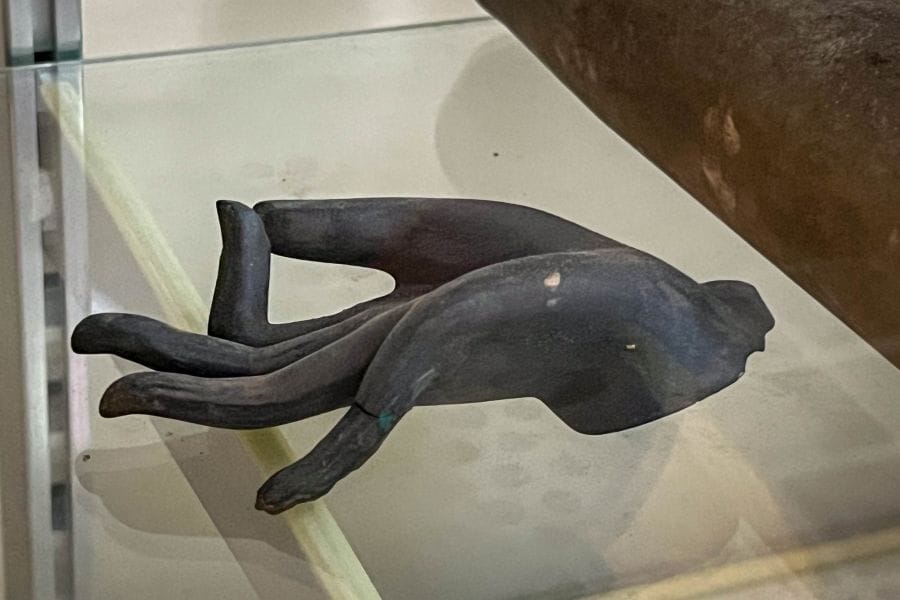
The base of the Kannon statue is a hall in the form of a huge tortoise, which is used for memorial services and worship. A basement houses evocative relics from WWII including a rusty machine gun and army uniforms.
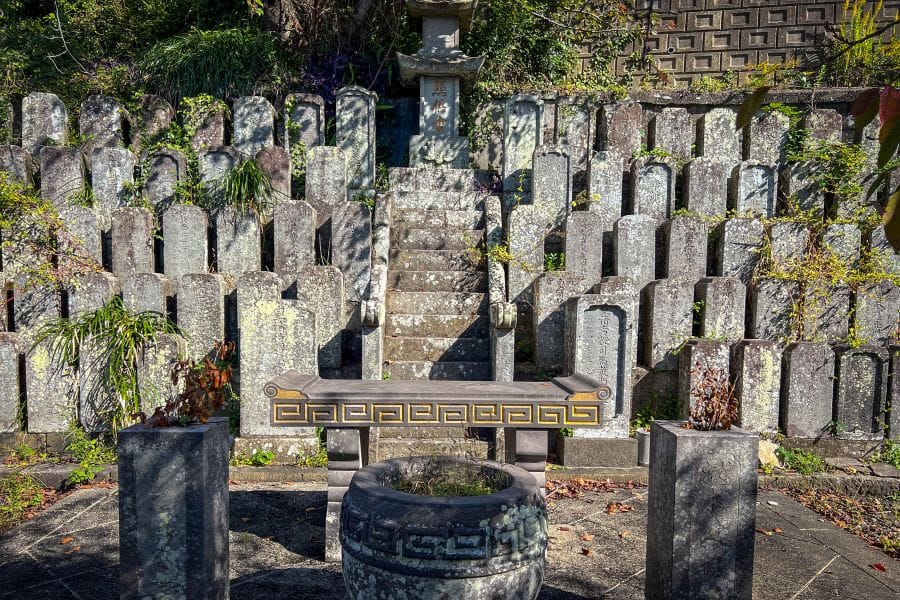
The hillside cemetery behind the temple contains the graves of Yōkawa Tōzaemon, a Tang Dynasty envoy, and the founding priest Kakukai. A miniature model reconstructing the temple’s full appearance before its destruction is housed at the Nagasaki Museum of History and Culture.
Although the present structure differs greatly from the original Edo-period temple, Fukusai-ji remains an important symbol of Nagasaki’s Chinese heritage. Its history reflects both the deep roots of the Chinese community in the city and the profound disruptions caused by the atomic bombing. Together with nearby sites such as Kōfuku-ji, Sofuku-ji, and Nagasaki Chinatown, Fukusai-ji illustrates how Chinese religious, commercial, and cultural traditions became an integral part of Nagasaki’s urban and historical landscape.
Information
Name in Japanese: 福済寺
Pronunciation: fuku-sai-jee
Address: 2-56 Chikugomachi, Nagasaki, 850-0052