Kasudōsu Confectionary
Kasudōsu is a fantastically sweet confectionary with a fascinating international history.
When Portuguese ships first arrived in the port of Hirado in 1550, they brought ingredients that were virtually unknown in Japan, including refined sugar and a high volume of chicken eggs. Catholic missionaries used these unfamiliar staples to recreate European confectionery, sharing their techniques with the local population. Among these imports was the predecessor to a sweet known today as kasudōsu. While sponge cake, or kasutera, eventually became famous throughout Nagasaki, kasudōsu developed as a more decadent, localized variation. The recipe relies on preserving techniques developed centuries before domestic refrigeration, transforming simple sponge into a resilient, rich confection.
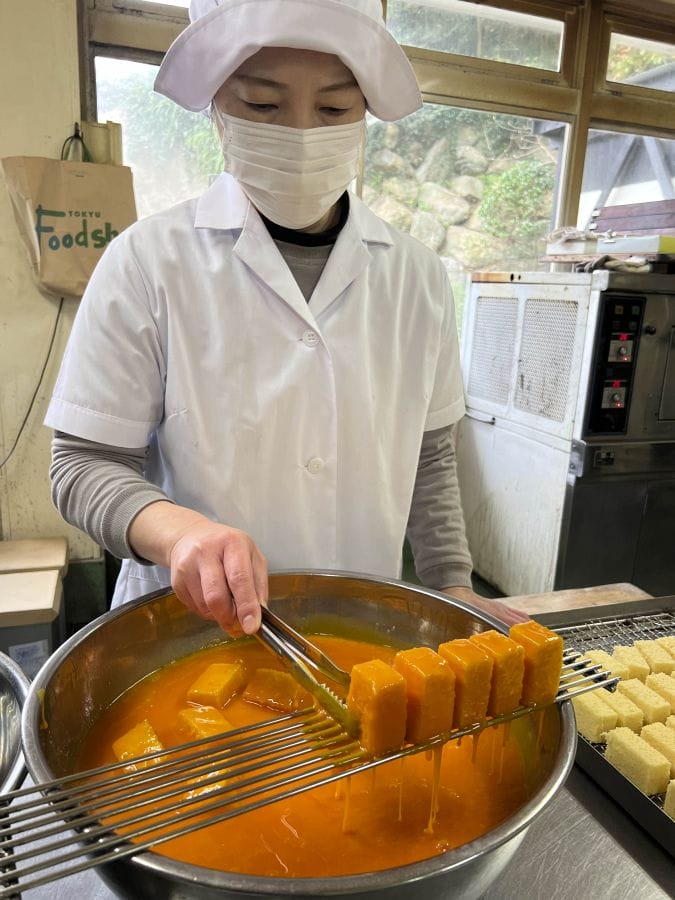
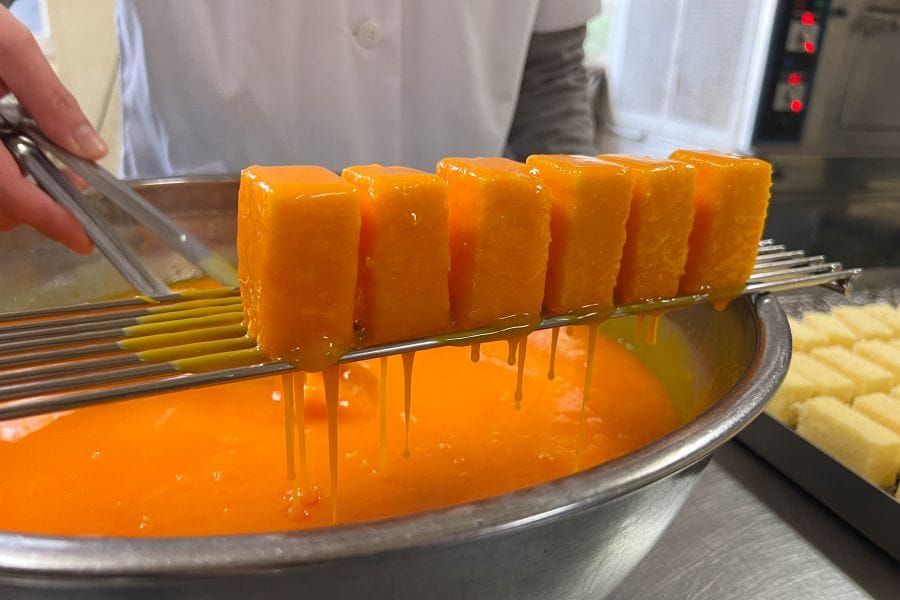
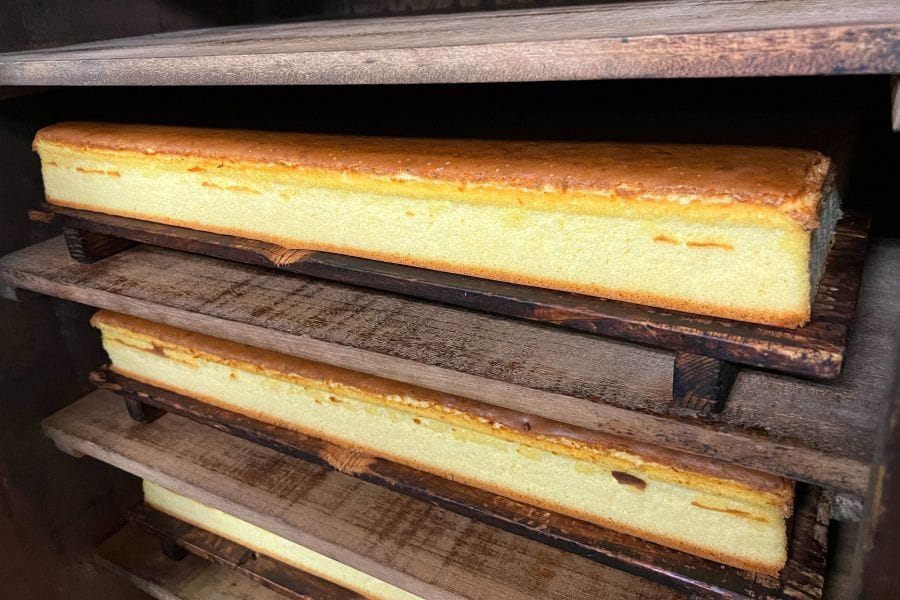
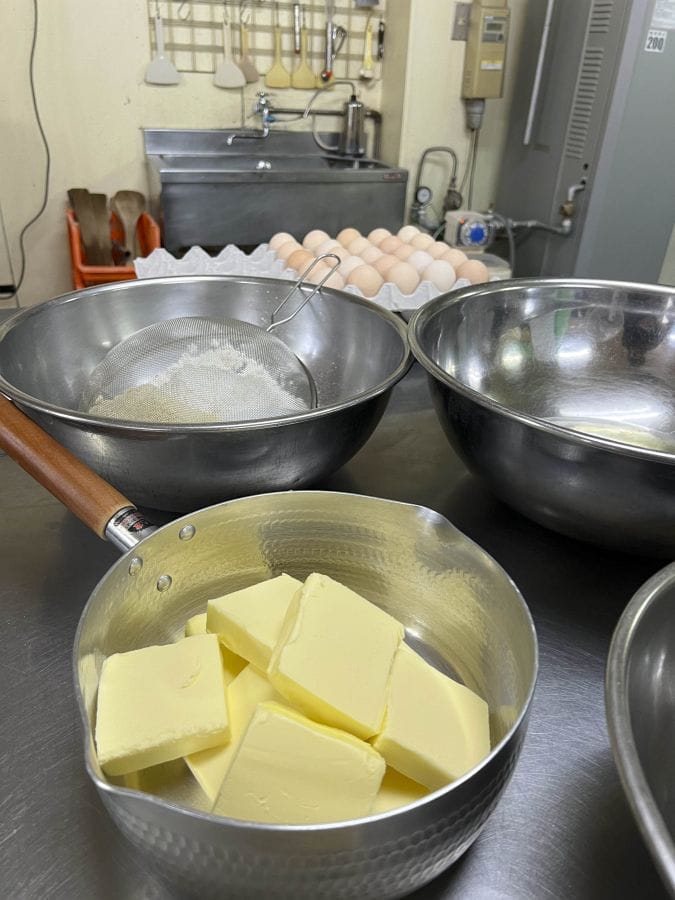
The production of kasudōsu is a precise, multi-stage process that takes two days to complete. It begins with a dense, firmly baked sponge cake, which is cut into small, uniform rectangular blocks. Bakers separate dozens of fresh eggs to obtain only the rich, pure yolks, completely removing the whites. Each block of cake is thoroughly coated in the beaten yolk, ensuring the liquid penetrates the outer layers of the crumb. This preparation creates a thick, golden exterior that seals the sponge before it undergoes the core cooking process.
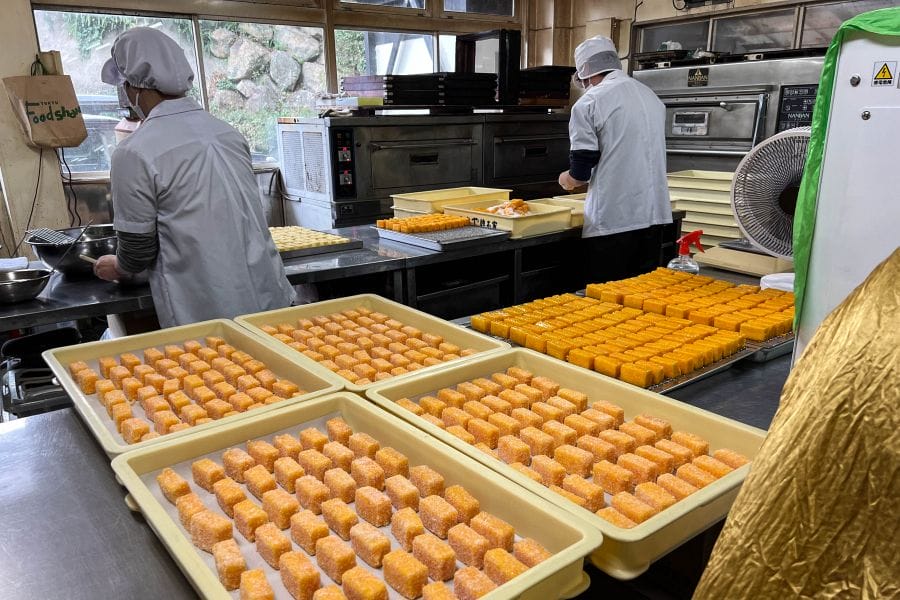
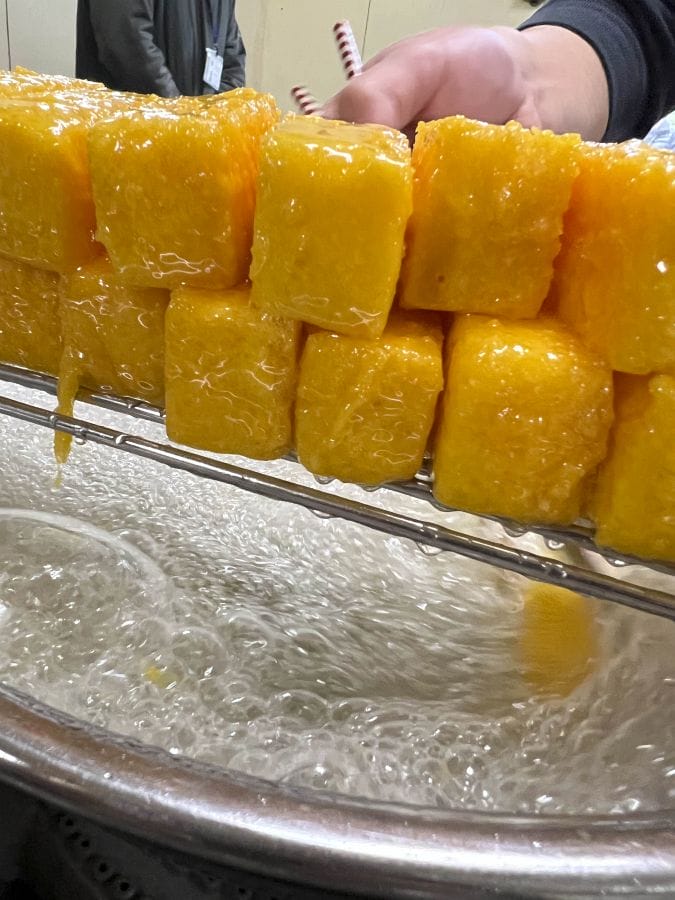
Once coated, the pieces are dropped into a cauldron of boiling sugar syrup. Cooking the egg-soaked sponge in hot syrup requires careful timing to ensure the yolk solidifies completely without scorching or hardening the interior cake. This method of boiling in sugar was originally a vital preservation technique, as the intense heat and high sugar concentration effectively sealed out moisture and air, extending the shelf life of the sweet. After the blocks are retrieved from the syrup, they are left to cool slightly before being rolled in coarse granulated sugar, which adds a distinct, crunchy texture to the exterior.
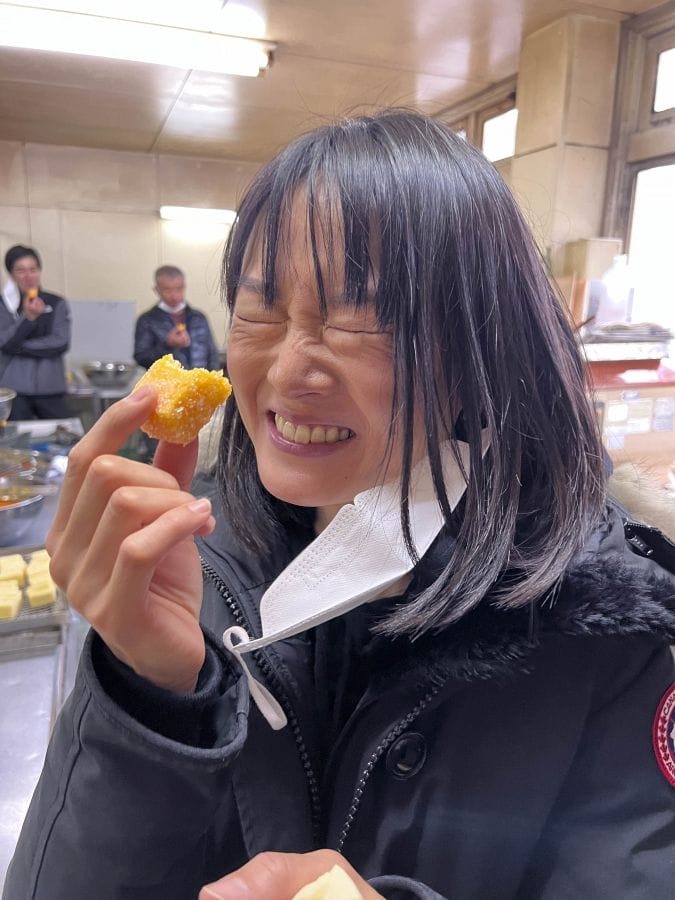
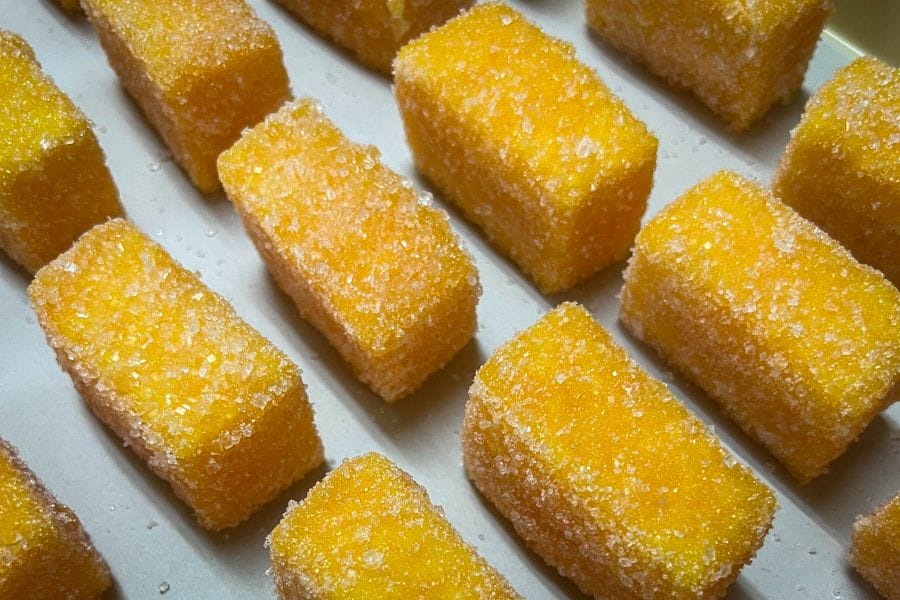
The final product exhibits a striking contrast between its physical textures and flavours. The outside of kasudōsu is bright yellow, firm, and covered in glinting sugar crystals, whilst the inside remains soft and moist. When you bite into it, the initial crunch of the granulated sugar gives way to a dense, syrup-soaked sponge with a deep flavour dominated by the richness of the egg yolk. It is entirely different from standard sponge cakes, functioning more like a rich, candied conserve meant to be eaten in small quantities alongside bitter tea.
For centuries, this sweet was entirely removed from the diet of ordinary people. The ruling Matsuura clan of the Hirado domain claimed exclusive rights to the recipe and its production, elevating kasudōsu to a private luxury for the samurai elite. In 1841, the 35th lord of Hirado commissioned an exhaustive, illustrated record of one hundred local confections, titled the Hyakko no Zu. This document preserved the precise proportions and methods for kasudōsu, ensuring that the recipe used by modern confectioners remains identical to the version served at feudal tea ceremonies.
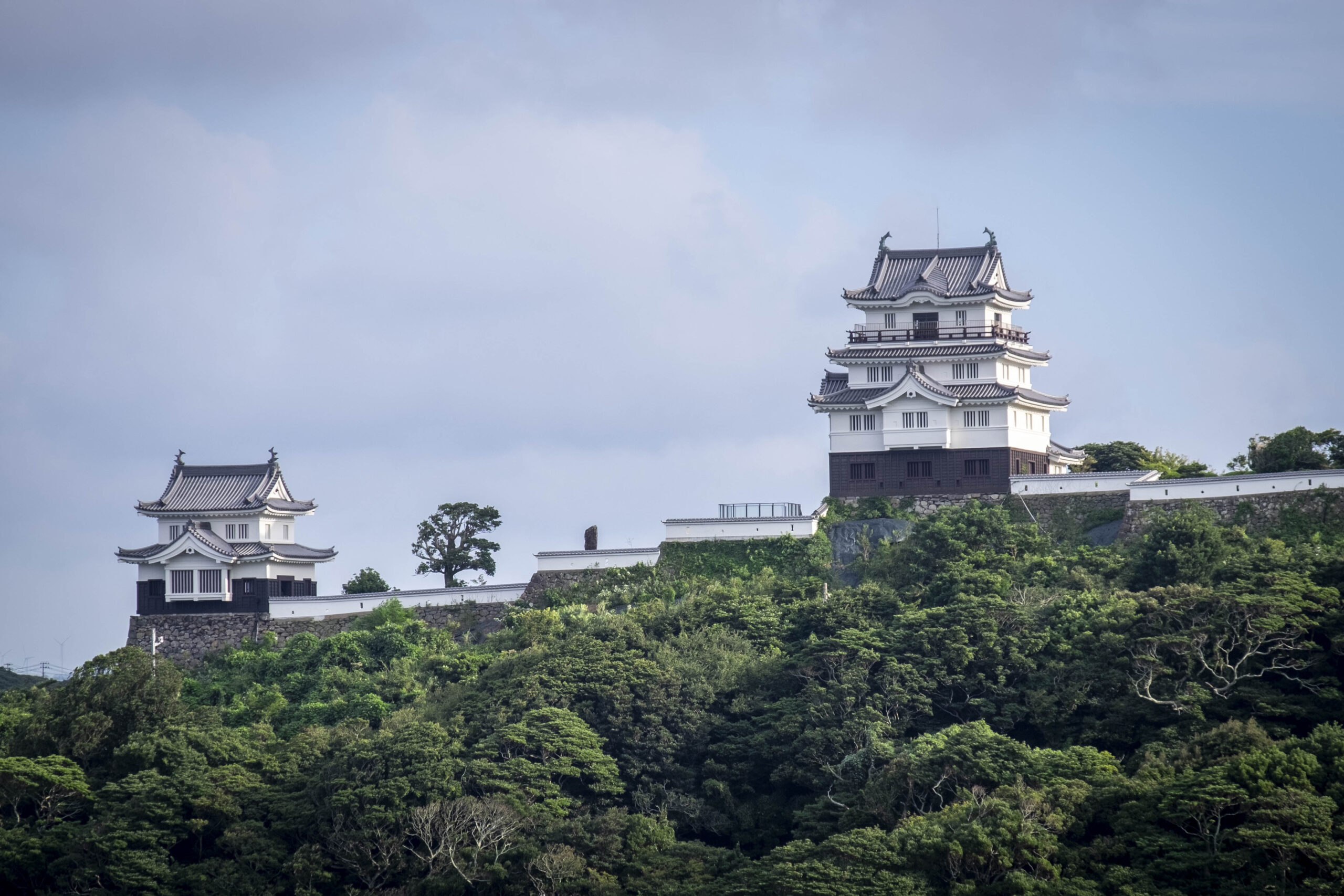
Today, the sweet is still manufactured in Hirado, a coastal castle town in Nagasaki Prefecture. Production is concentrated in a handful of historic sweetshops, including one founded in 1502 that originally served as the official supplier to the Matsuura family. Because the process demands hand-dipping and precise temperature control during the syrup boil, modern makers continue to produce it in small batches rather than automated assembly lines. You can find kasudōsu packaged in traditional boxes throughout the town, where it remains a distinct regional speciality that has survived unchanged since the first period of European contact.