Kamishihoro
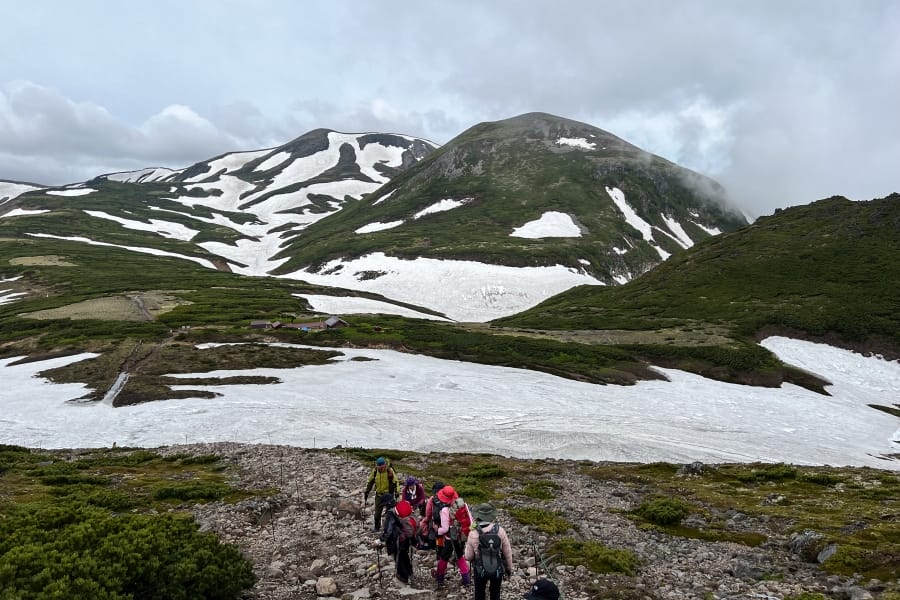
Kamishihoro is an expansive rural township located in the Tokachi subprefecture of eastern Hokkaidō. Occupying the northern reach of the Tokachi Plain where farmland meets the forested mountains of Daisetsuzan National Park, it combines vast agricultural acreage with rich industrial history and geothermal wilderness.
Taushubetsu River Bridge
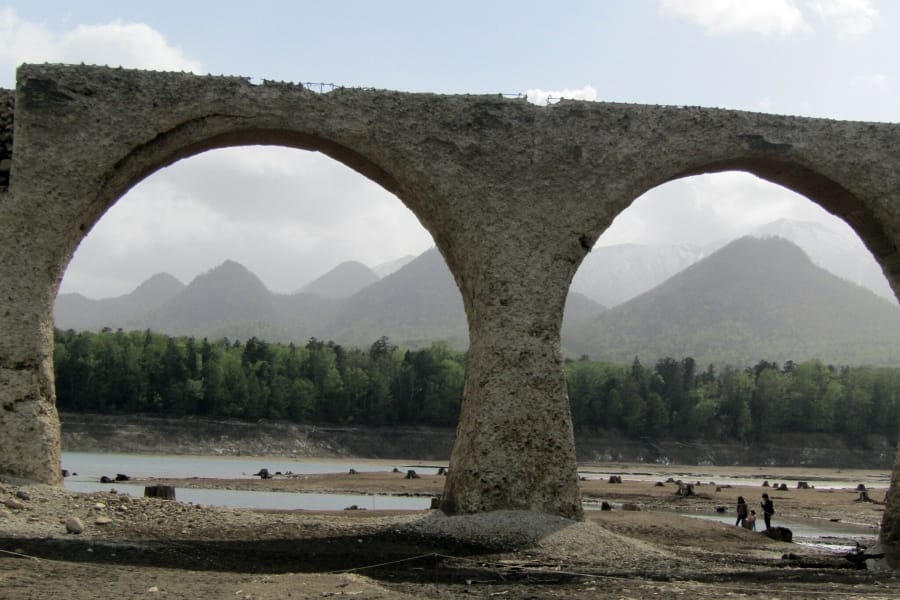
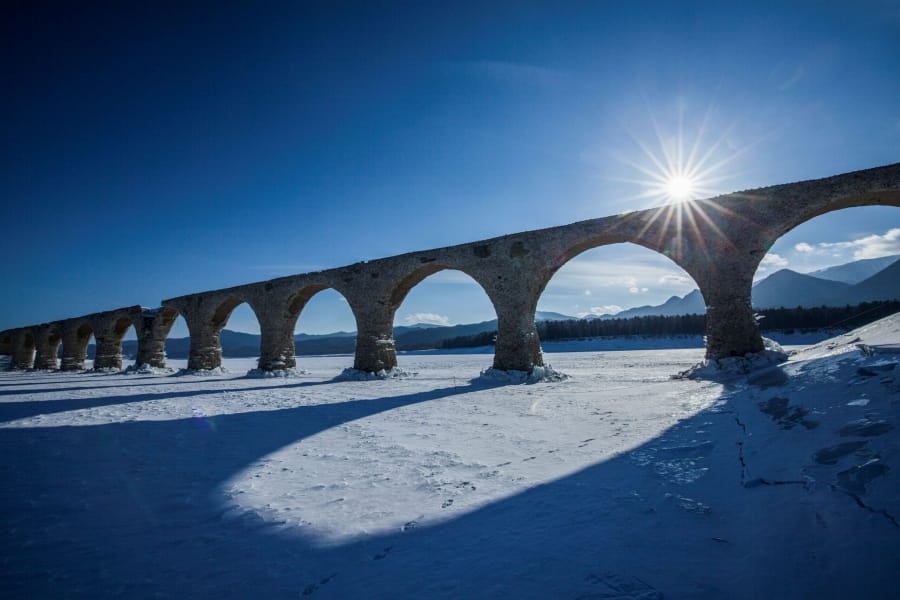
The Taushubetsu River Bridge is a 130-metre-long reinforced concrete arch bridge built in 1937 for the former Japan National Railways Shihoro Line. Abandoned in 1955 following the construction of the Nukabira Dam, the eleven-arch structure now sits inside the reservoir area of Lake Nukabira. Seasonal fluctuations in water level completely submerge the bridge during winter and spring, while receding waters reveal the concrete arches above the mudflats between summer and autumn. Decades of freezing and thawing have degraded the concrete structure, causing sections of the outer walls to collapse and exposing the inner aggregate. Access to the structure itself is restricted to guided tours or permitted vehicles along forest logging tracks, though a dedicated wooden observation platform situated on the western shore of Lake Nukabira permits clear views across the water.
Naitai Plateau Ranch
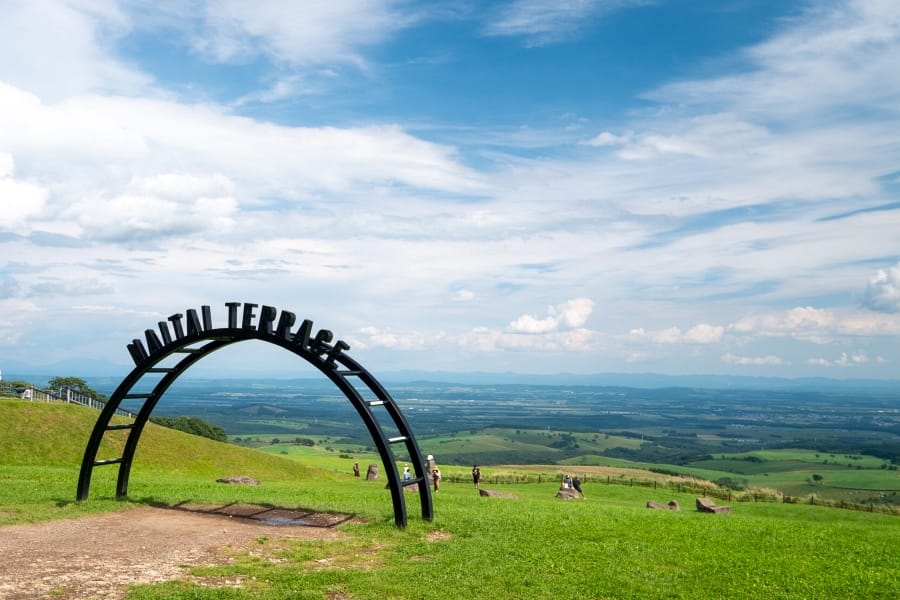
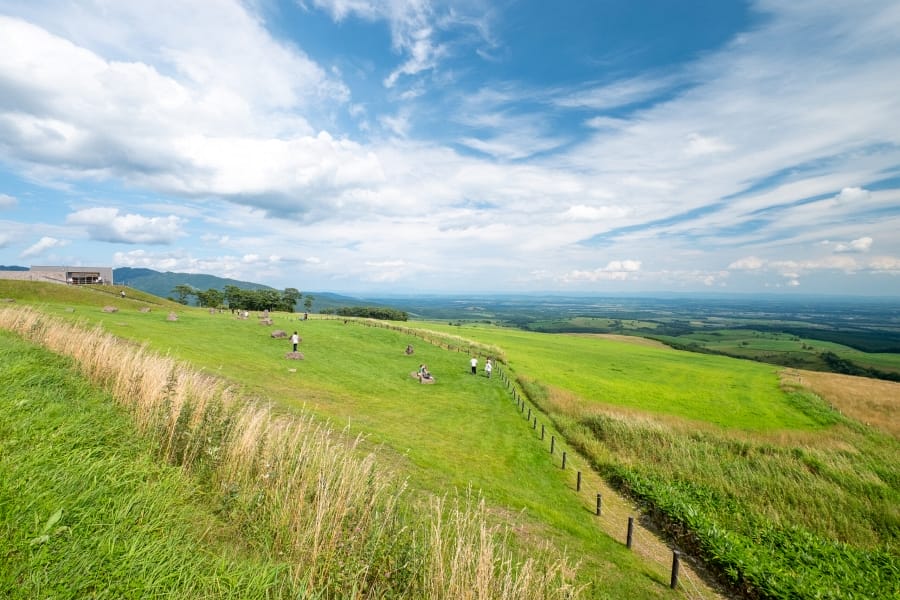
Naitai Plateau Ranch spans roughly 1,700 hectares along the steep southern slopes of Mount Naitai, making it the largest public grazing pasture in Japan. Established in 1972 for dairy cattle management, the continuous sloping grassland supports thousands of grazing cattle from late spring through autumn. A narrow paved road climbs through the pastures to reach Naitai Terrace, a modern visitor complex positioned near the summit at an elevation of 800 m. The glass-fronted building houses a café and viewing deck angled southward across the geometric fields of the Tokachi Plain. Thick fog frequently settles over the higher elevation during early mornings, whereas clear conditions offer views extending past Obihiro toward the Tokachi mountain range.
Nukabira Onsen
Nukabira Onsen is a secluded geothermal hot spring village established in 1919 within the forested valleys of Daisetsuzan National Park. The settlement consists of a handful of traditional wooden inns along a central road lined with native mixed forest. Thermal springs throughout the village pump sodium chloride-bicarbonate water directly from underground sources into communal outdoor and indoor baths without artificial heating or dilution. Adjacent to the village, the Higashi Taisetsu Nature Center provides detailed topographical and ecological exhibits covering the flora, fauna, and geological history of the surrounding national parkland.
Mikuni Pass and Matsumi Bridge
Mikuni Pass marks the highest point on Hokkaidō’s national highway network, reaching an elevation of 1,139 m along Route 273 near the border of Kamikawa District. The summit features a paved parking area, a timber rest house, and an elevated observation deck overlooking a dense forest canopy of Sakhalin fir, Ezo spruce, and Erman’s birch stretching across the valley floor. Curving through this forest canopy directly beneath the pass is Matsumi Bridge, an elevated, road bridge, painted bright red. The contrast between the red steel framework and the forest backdrop draws visitors year-round, particularly during autumn when the birch and larch foliage changes color.
Lake Shikaribetsu
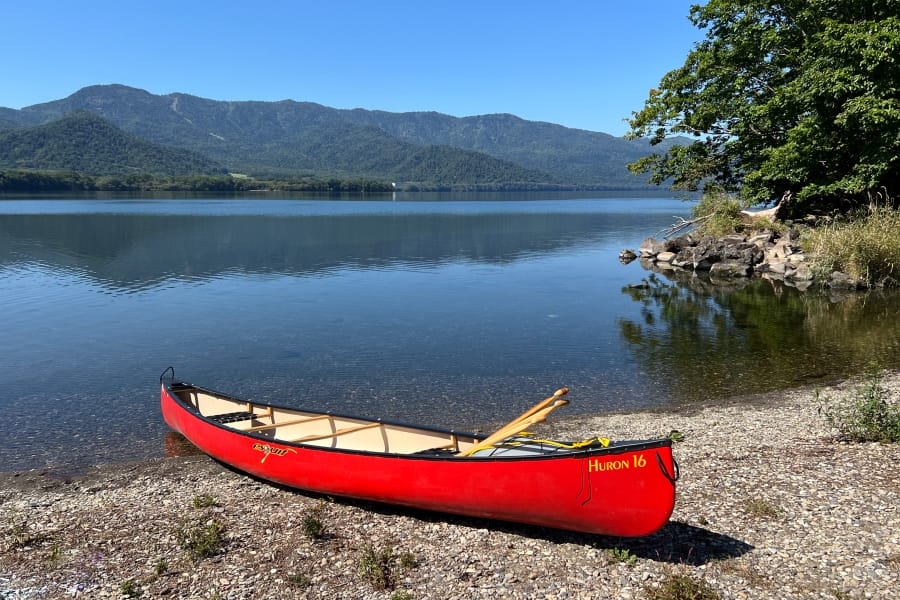
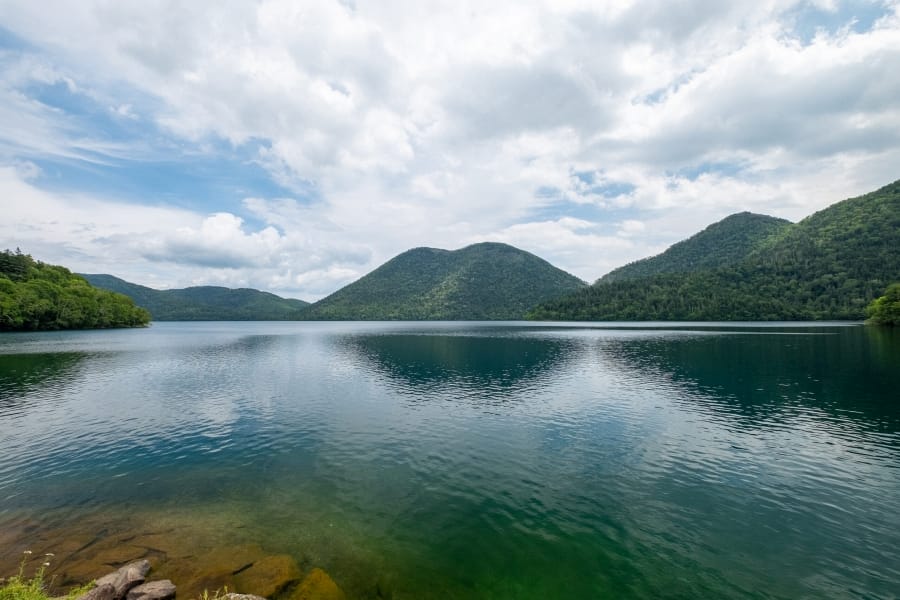
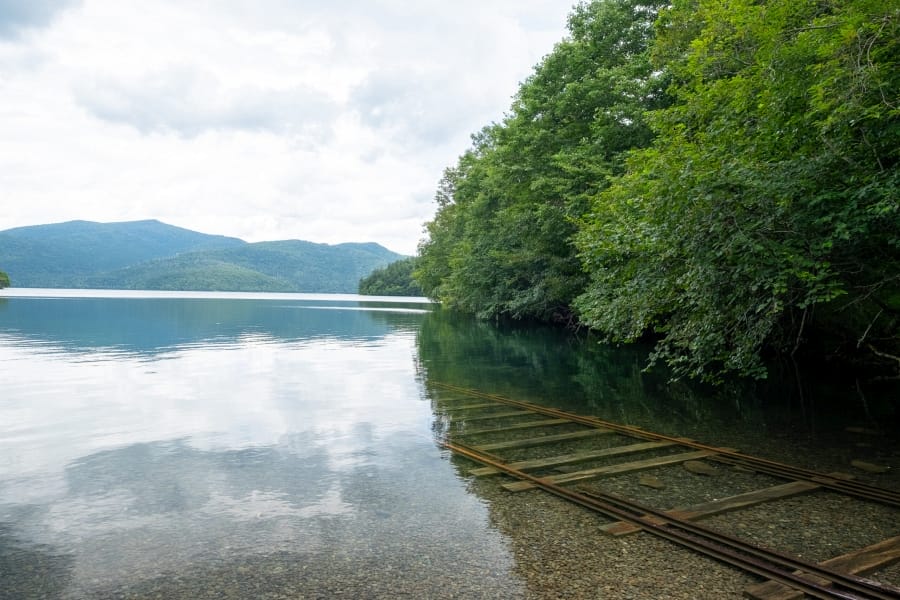
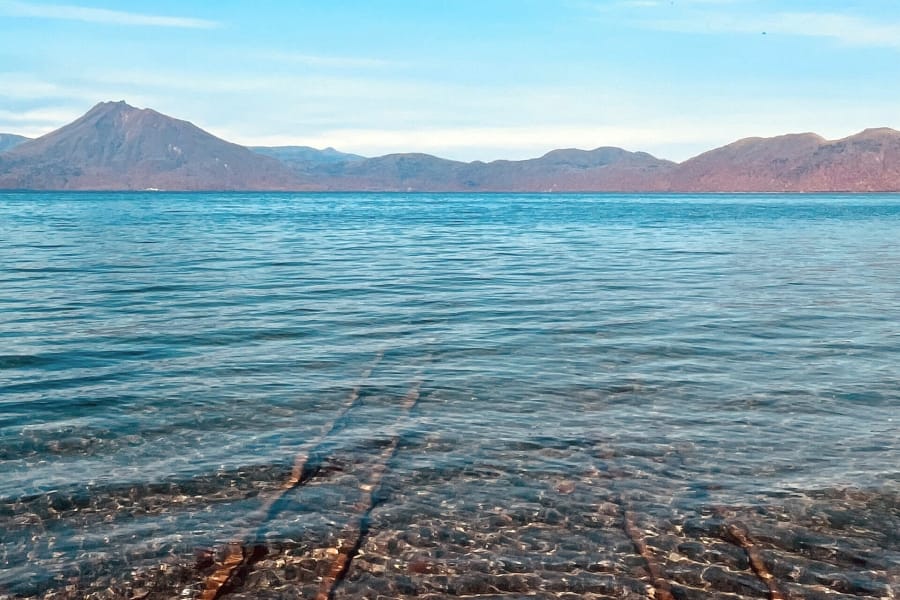
Lake Shikaribetsu is Hokkaido’s highest-altitude natural lake, situated within Daisetsuzan National Park. Formed by volcanic activity that dammed a river around 30,000 years ago, the landlocked body of water serves as a habitat for endemic species such as the Miyabe char and is surrounded by dense primeval forest populated by pikas. From late January to mid-March, the surface freezes completely, allowing locals to construct a temporary settlement known as Shikaribetsuko Kotan using block ice harvested directly from the lake. This seasonal village features an ice bar serving drinks in hand-carved ice glasses, an operational ice concert hall, sleeping lodges, and an open-air bath where thermal waters from shore-based hot springs are piped onto the frozen lake surface. At the lake’s southern end, twin metal tracks that run straight off the forested shoreline and vanish into the crystal-clear waters. Built as a slipway to haul sightseeing boats out of the water before the lake freezes completely each winter, the structure leaves a brief section of iron rails visible along the gravel bottom through the transparent surface between spring and autumn.
Information
Name in Japanese: 上士幌町
Pronunciation: ka-mee shi-horo
Address: Kamishihoro, Katō District, Hokkaidō