Yasuman-dake
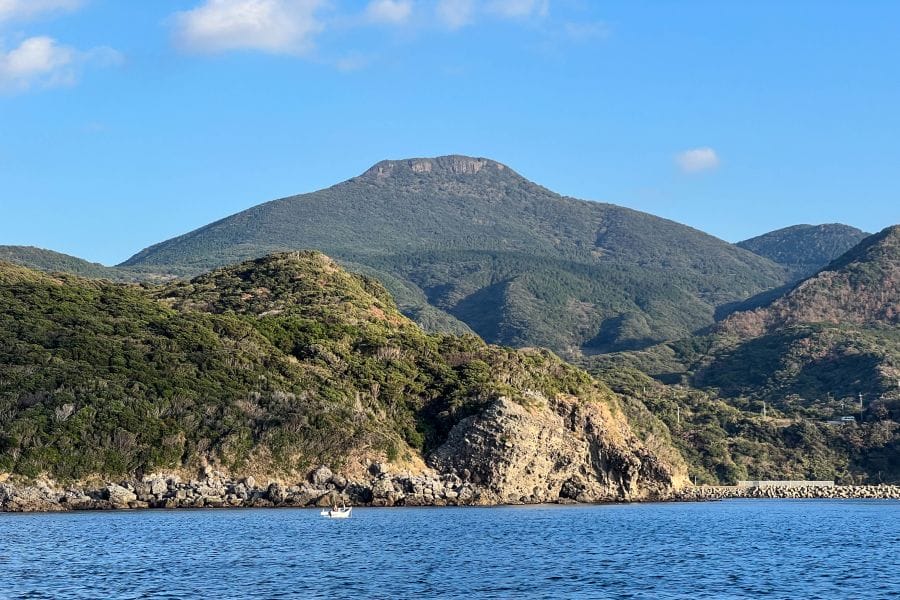
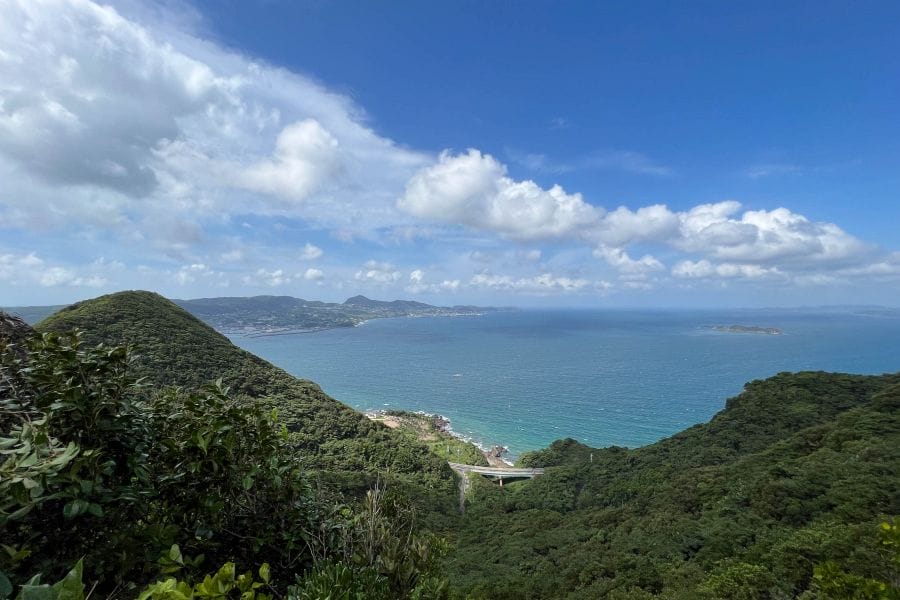
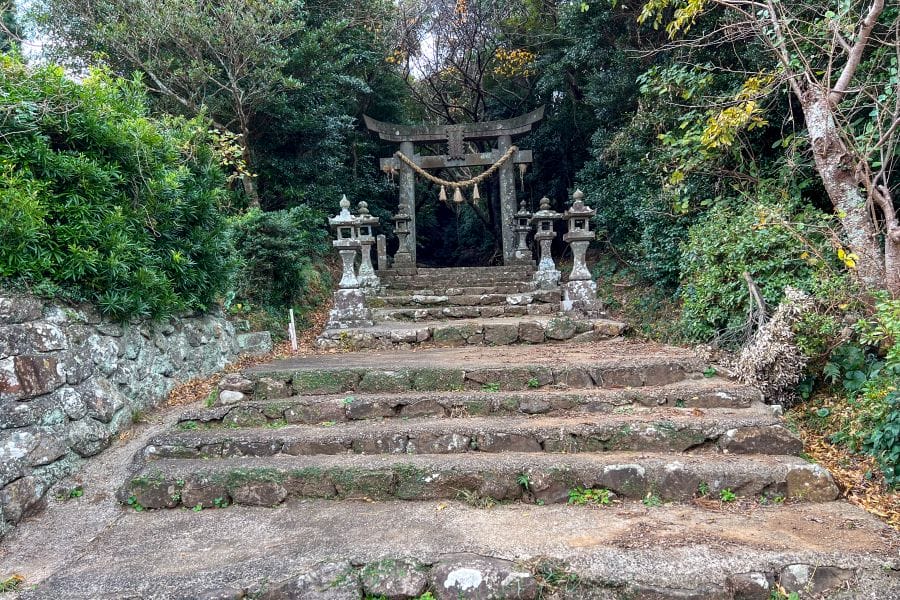
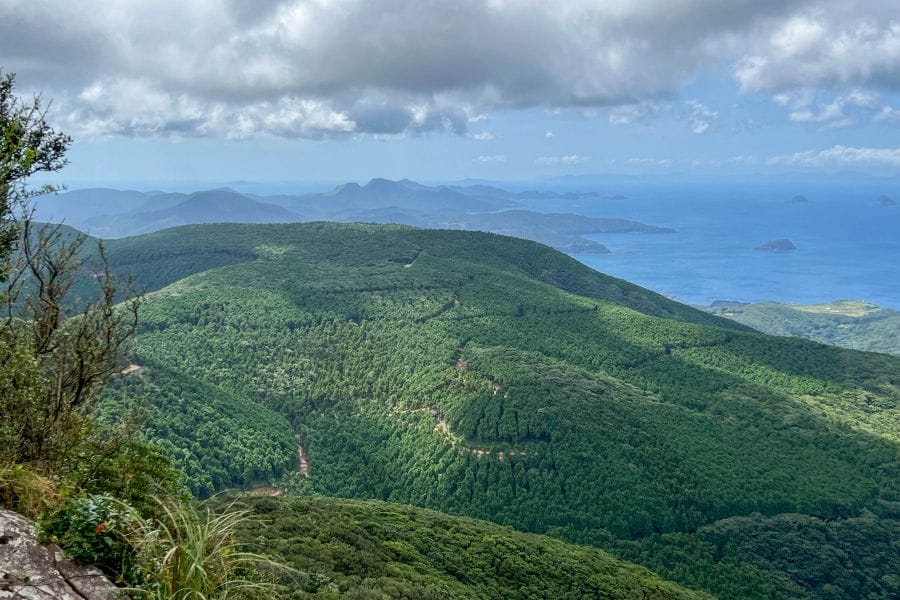
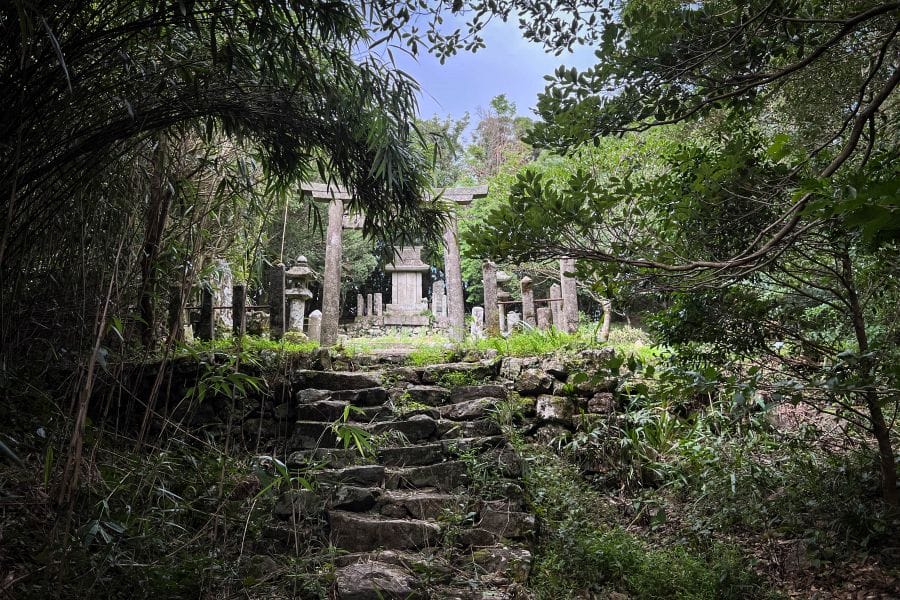
Yasuman-dake is the highest peak on Hirado Island, with an elevation of 536 m. It’s topped with a broad, flat plateau and displays a distinctive trapezoidal profile when viewed from the western coast. The slopes are covered in dense, old-growth forest, primarily evergreen broadleaf trees like chinquapin and oak. A forested trail, paved with moss-covered stepping stones in sections, leads you up to the summit. Near the top, a traditional stone gate marks the transition into the sacred precinct of Hakusan Shrine, which sits in a small clearing surrounded by thick vegetation.
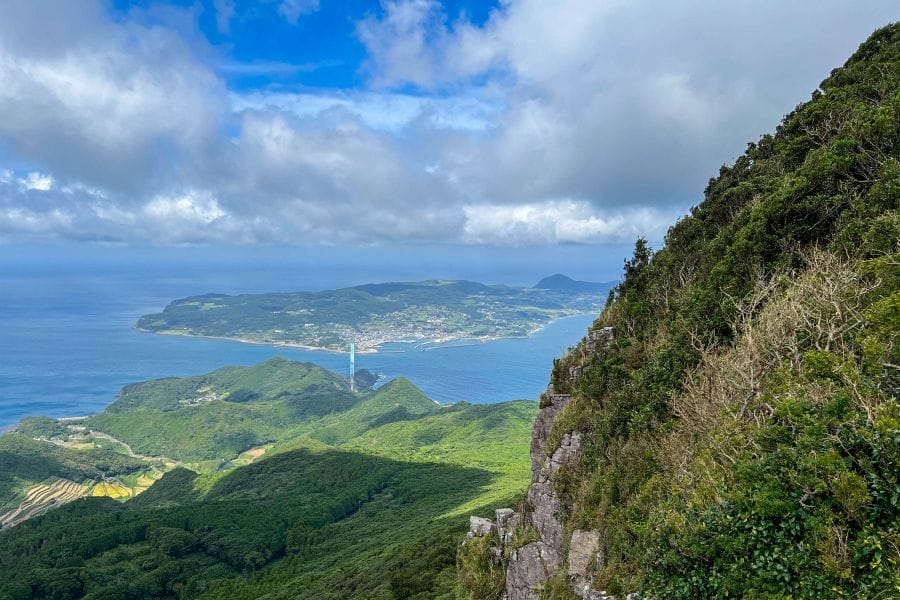
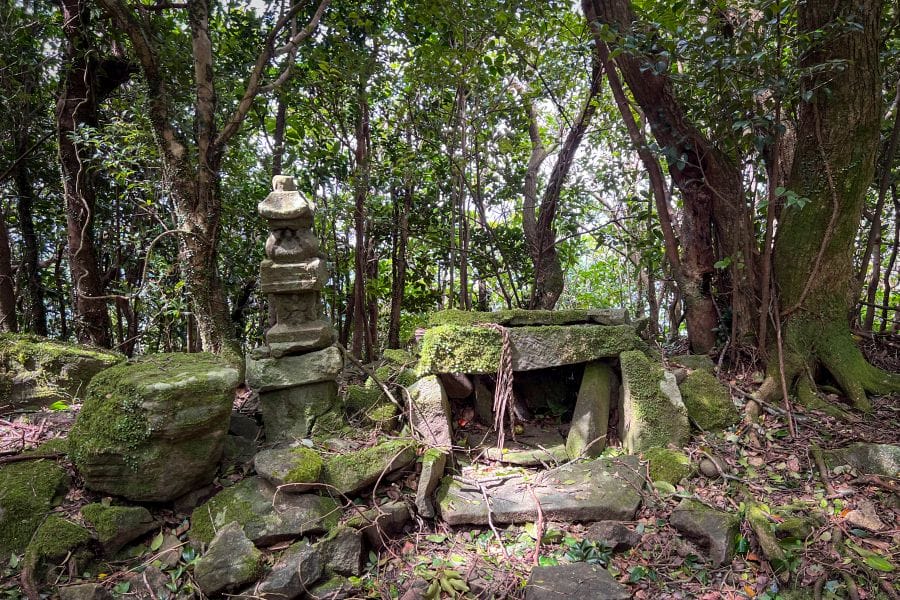
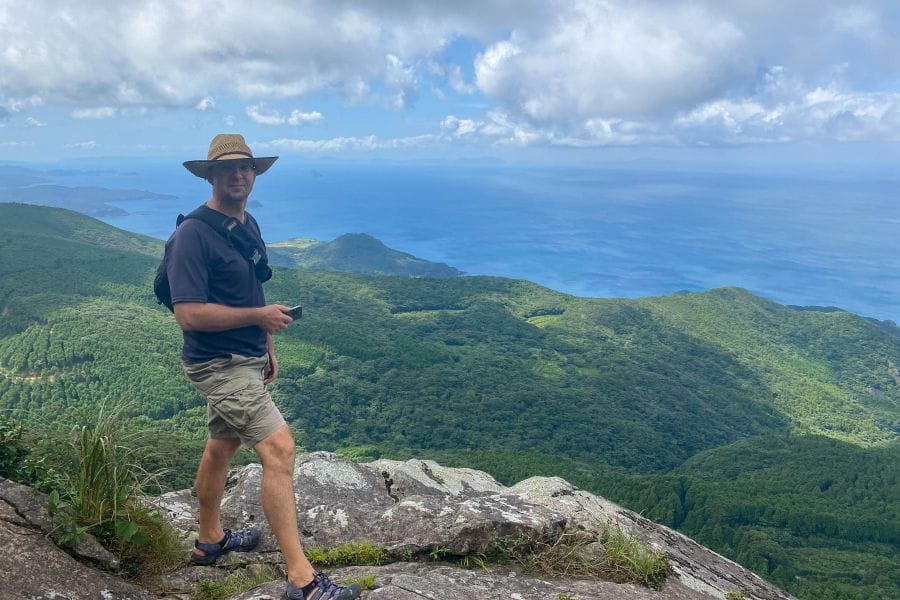
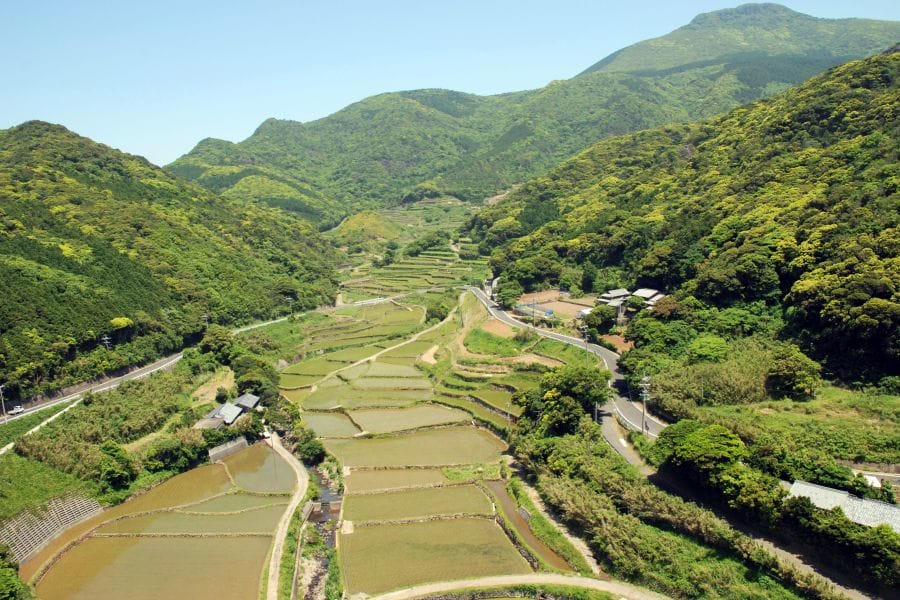
At the summit plateau, a small stone shrine building stands alongside several stepped stone pagodas dating back to the medieval period. These structures reflect the mountain’s long history as a centre for mountain asceticism and religious syncretism, where indigenous beliefs and Buddhism merged. A short path from the shrine area opens onto an observation point on the western side. This ledge gives you an unobstructed view over the terraced rice paddies of Kasuga Village below and out across the East China Sea towards Ikitsuki Island with its distinctive blue bridge.
Long before the arrival of European missionaries, islanders worshipped Yasuman-dake as a sacred entity, believing deities resided in its forests and peaks. When Christianity was outlawed in the early 17th century, the persecuted Christians of Kasuga Village and surrounding areas adapted this existing reverence for their own purposes. They incorporated the mountain into their clandestine faith, using its Shintō and Buddhist markers as fronts for Christian veneration. The mountain itself became a substitute for churches and European religious icons that the authorities had destroyed.
During the ban, leaders of the underground faith climbed the mountain to collect water from specific streams, which they used for baptisms and other secret rituals. They also gathered stones from the shrine precincts, bringing them back to treat as holy relics within their homes. When the ban on Christianity was lifted in 1873, the majority of the local practitioners didn’t rejoin the Catholic Church, instead choosing to continue their hybrid, mountain-focused faith. As a result, the mountain’s layout and the stone markers at its summit remain largely unchanged from the centuries of persecution, preserving a physical record of this specific, localised religious adaptation.
Information
Name in Japanese: 安満岳
Pronunciation: yasu-man-dakei
Address: Shūshi-chō, Hirado City, Nagasaki Prefecture, 859-5142