Himosashi Church
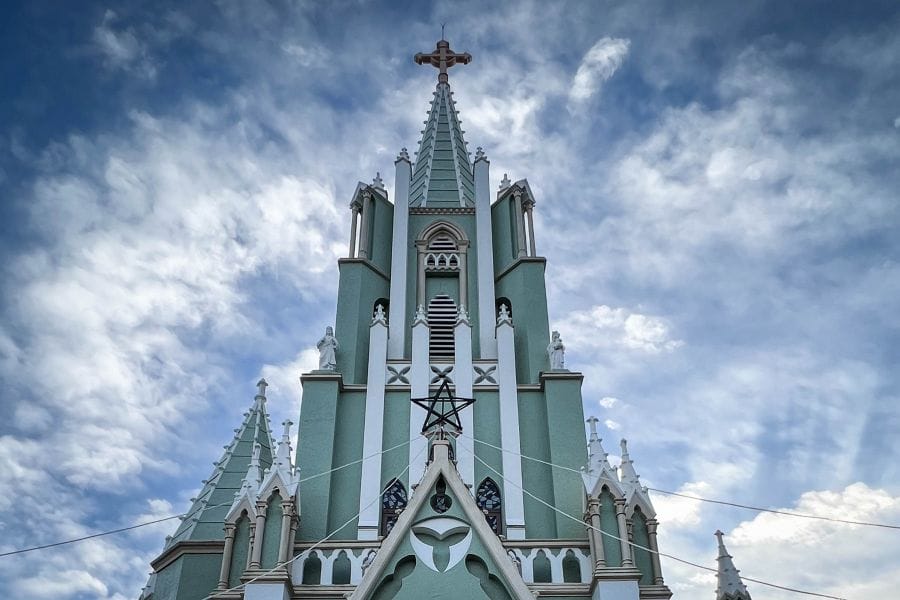
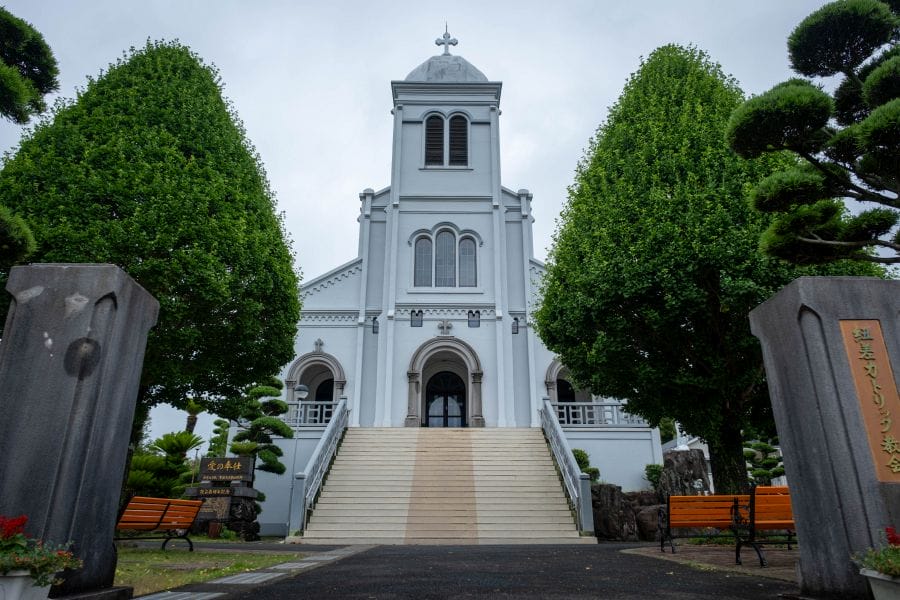
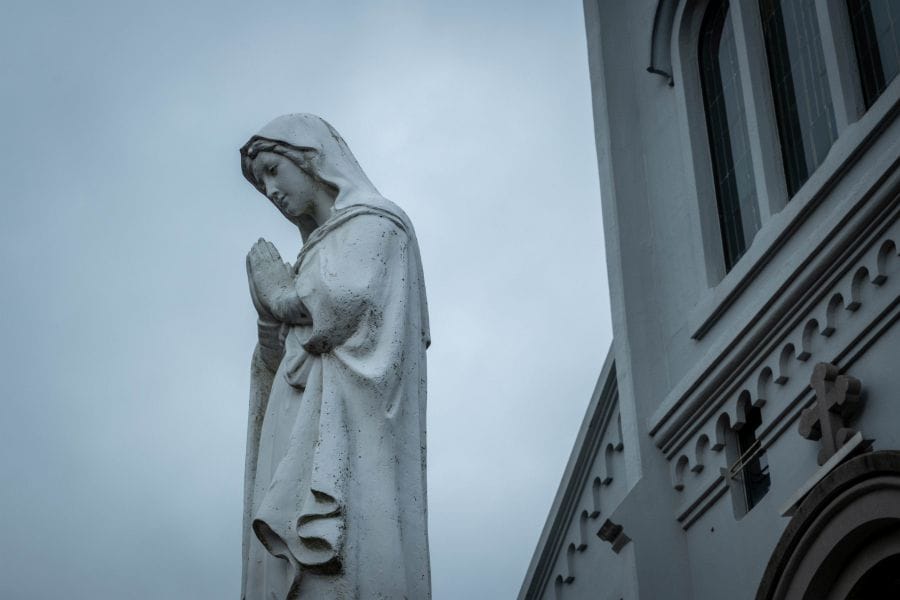
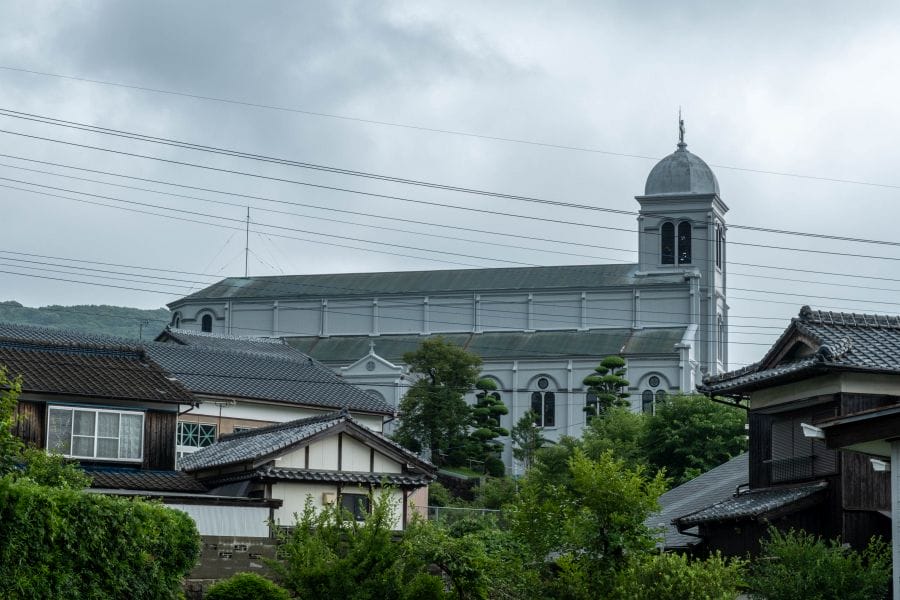
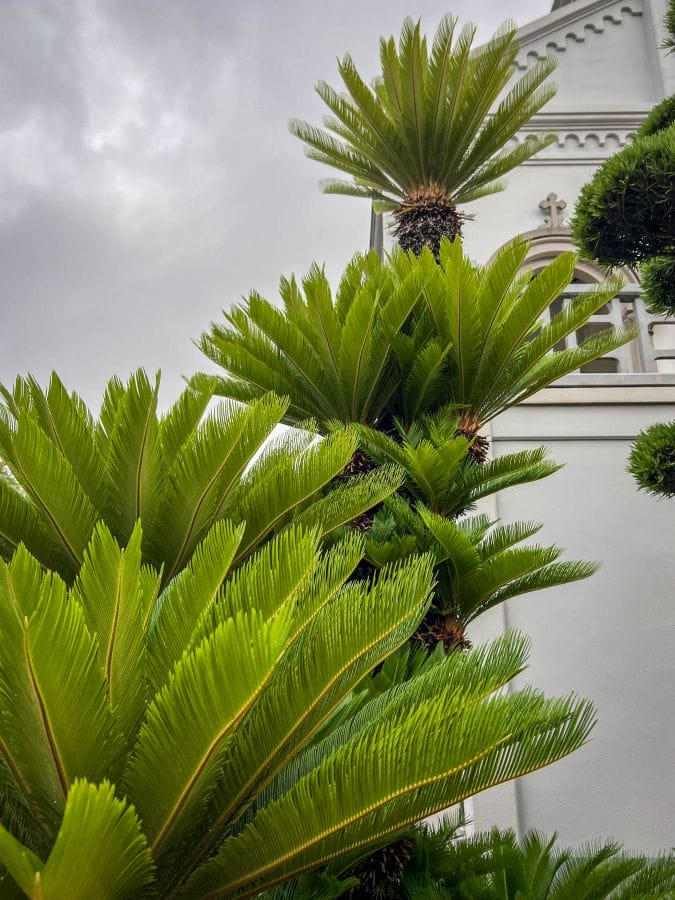
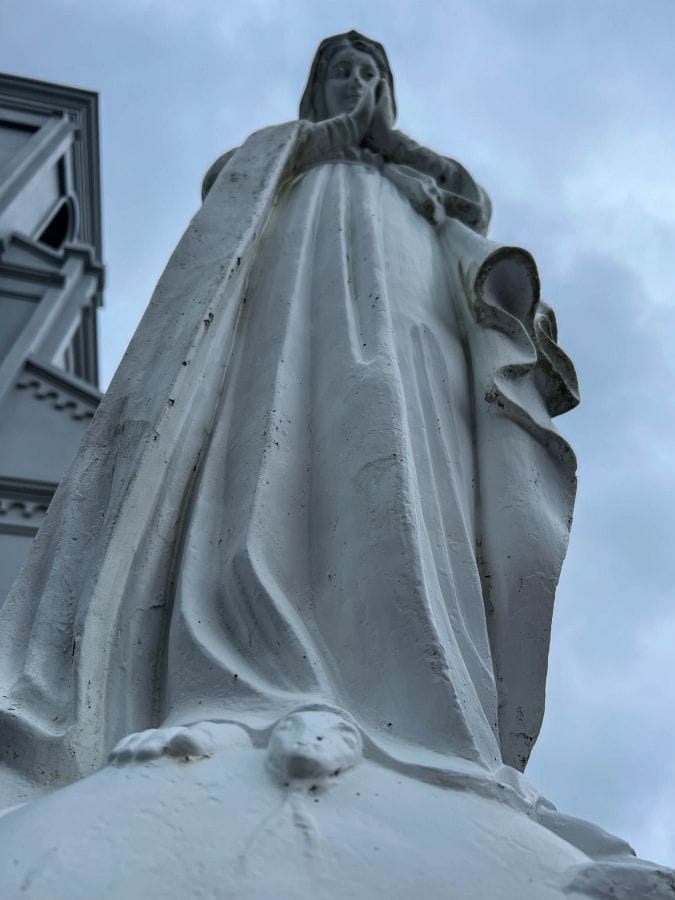
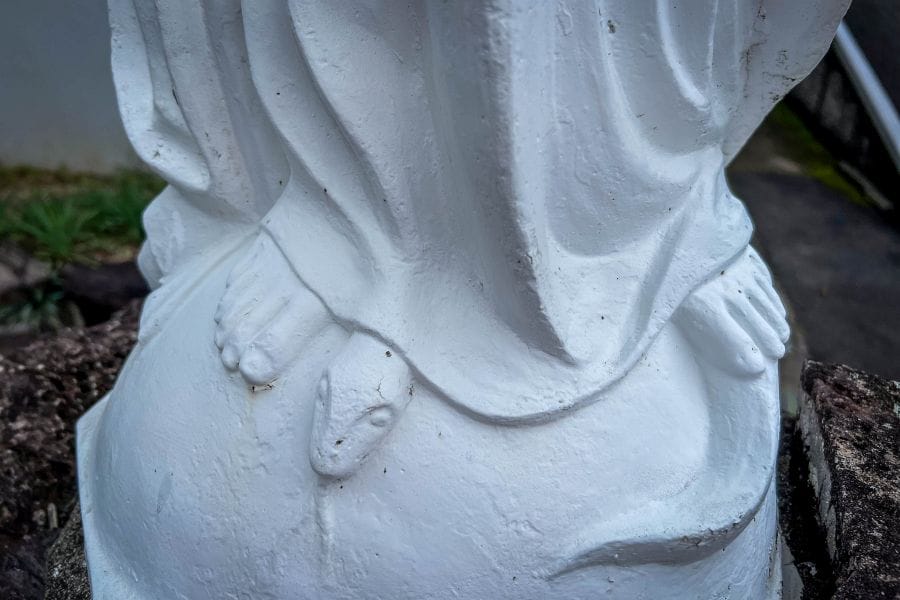
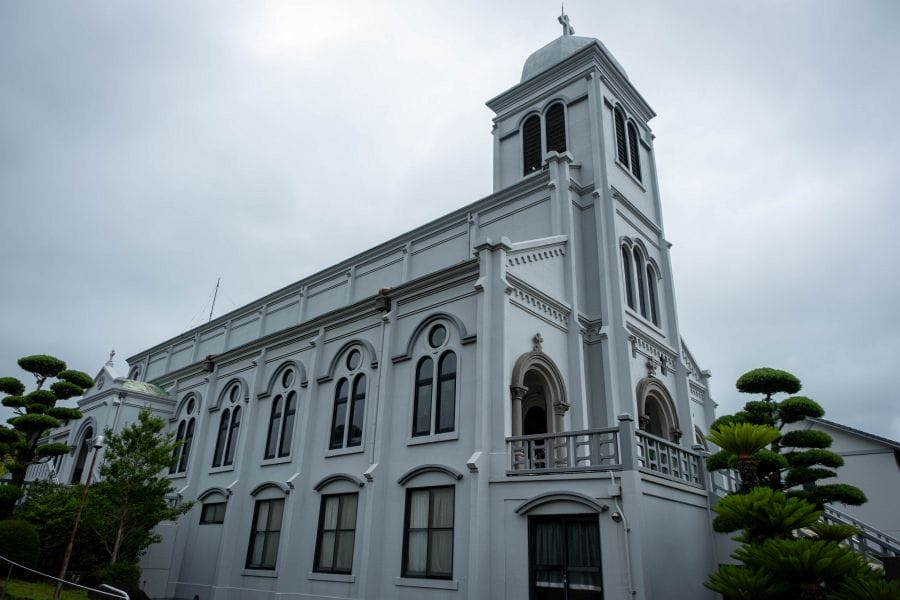
Himosashi Catholic Church is situated on promontory overlooking flat farmland in the central interior of Hirado Island. The white-walled building with its single tower commands the local landscape. Directly below the church is a Shintō shrine. Stone steps lead up to the church through a pair of beautiful trees, and the entrance is flanked on the left by a dramatic sago palm and the right by the Virgin Mary standing on a serpent.
The church is a concrete Romanesque building that served as the primary base for the Catholic revival on Hirado Island. The exterior features a prominent three-storey central bell tower topped with a dome, flanked by round-arched windows and geometric relief patterns. This structure replaced an earlier nineteenth-century wooden church on the same plot, which was dismantled and shipped across the sea to become the parish church on Madarashima Island.
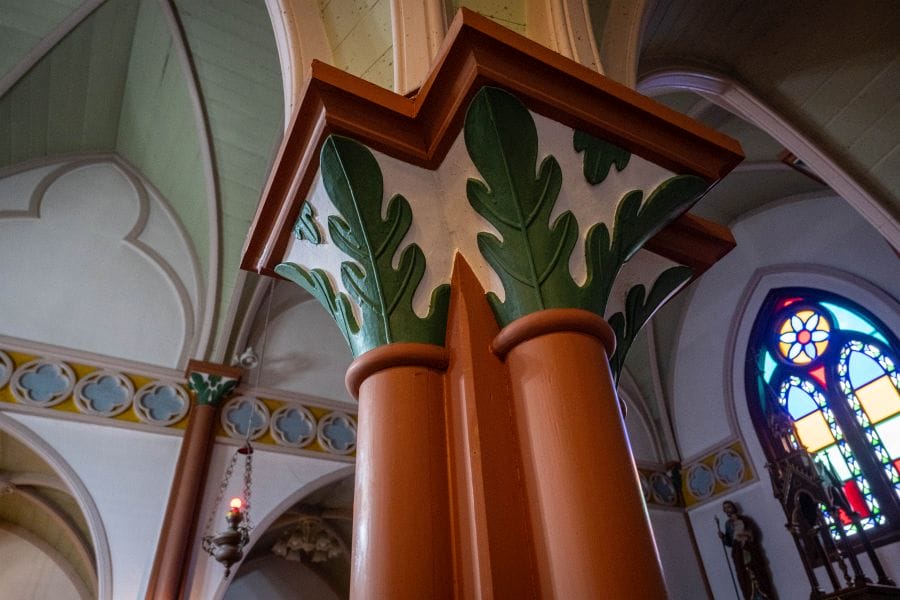
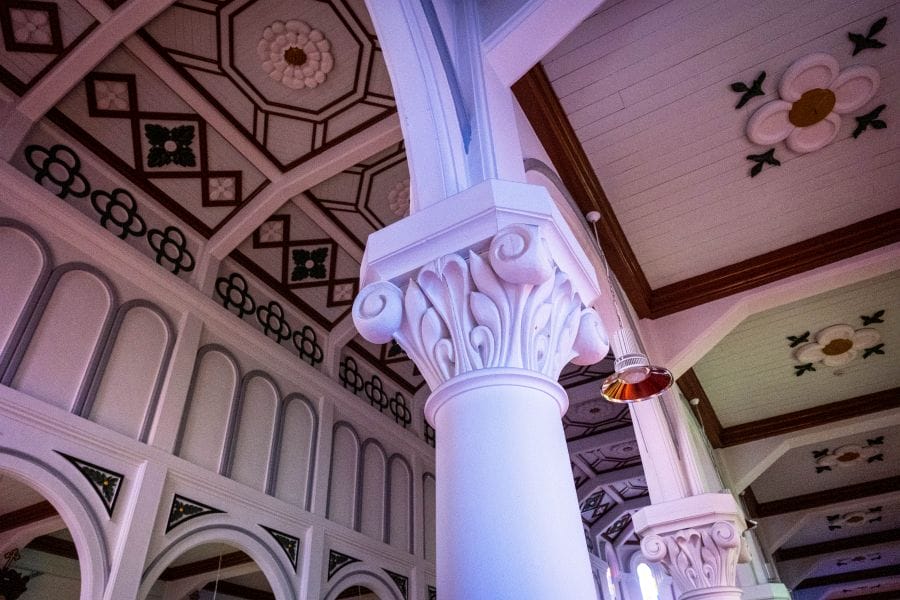
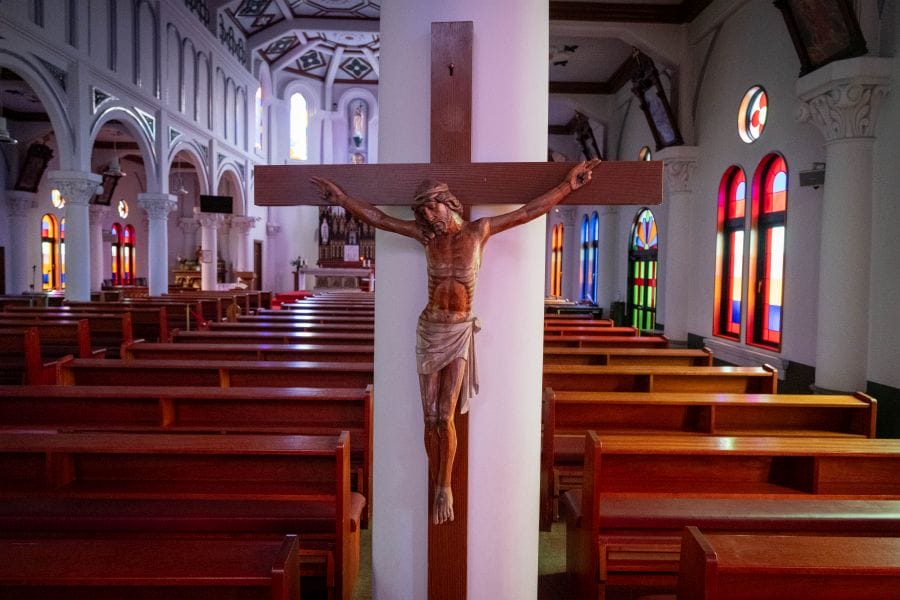
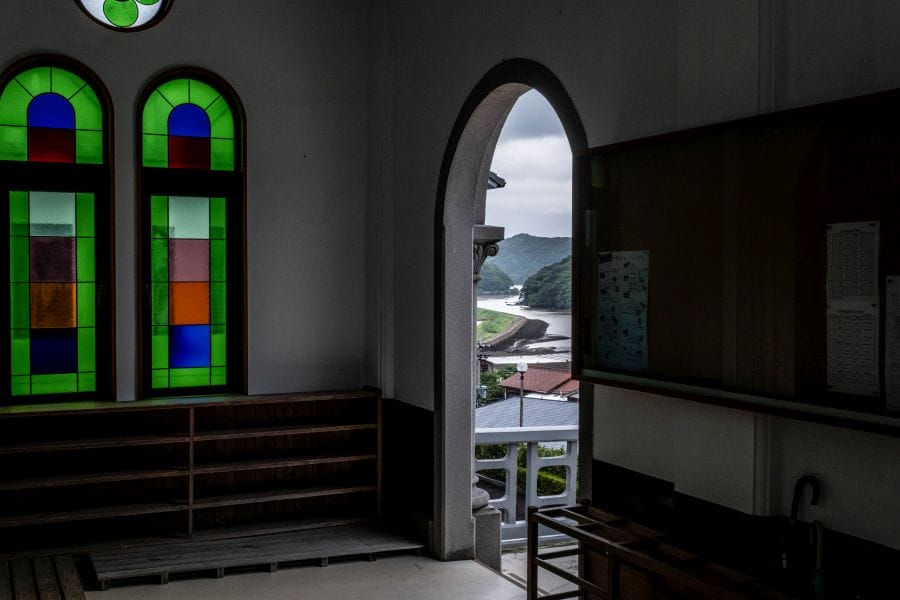
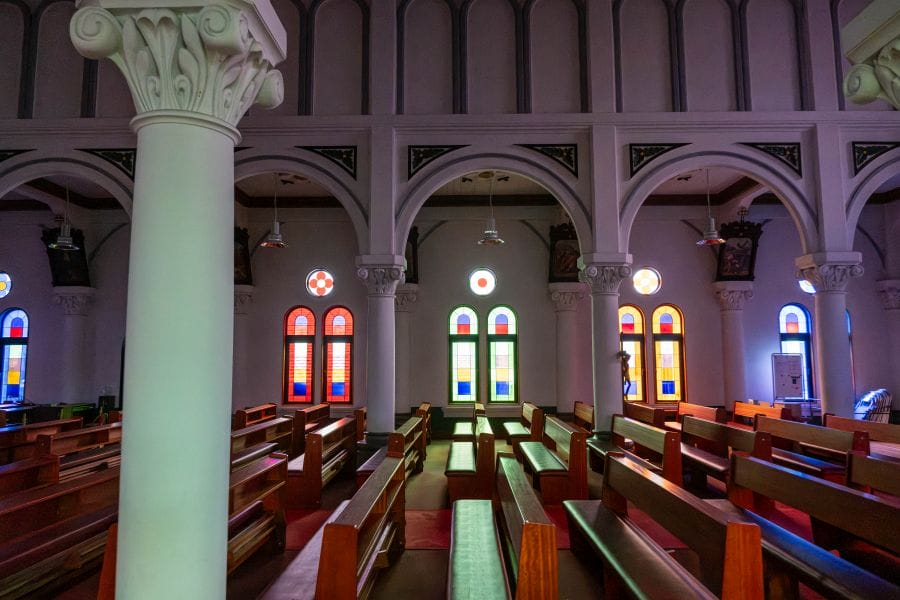
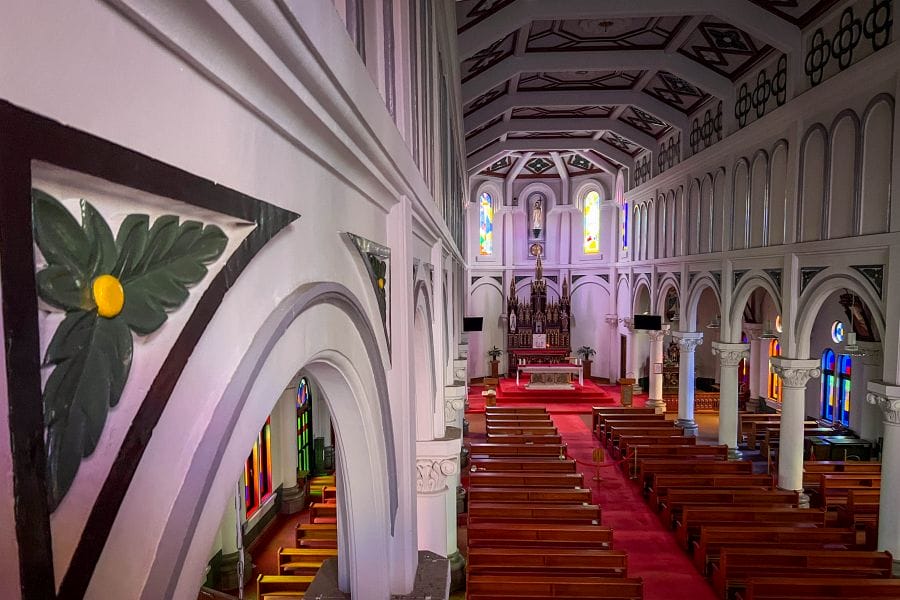
Inside, the building opens into a grand three-aisled hall covered by a continuous rib-vaulted ceiling. Rows of composite pillars separate the central nave from the side aisles, supporting a triforium-like gallery space above the lower arches. Sunlight filters through rows of arched stained-glass windows, projecting patterns across the expansive wooden floor. The chancel houses a traditional high altar, while an elevated choir loft spans the space directly above the main entrance vestibule.
Completed in 1929, the building stands as a major achievement by Yōsuke Tetsukawa, a master builder who designed numerous Western-style churches across western Kyūshū despite being a practicing Buddhist. Tetsukawa drew up the plans and supervised the construction, selecting reinforced concrete to ensure durability against the severe seasonal typhoons that hit the coast. At the time of its completion, it ranked as one of the largest Christian structures in the country, and it briefly became the largest standing vaulted church in Japan after the 1945 atomic bombing destroyed the original Urakami Cathedral in Nagasaki.
The surrounding Himosashi district developed a complex social fabric during the era of state prohibition, when Hidden Christians, mainstream Buddhists, and secret believers coexisted in the valley. When the ban ended in 1873, French missionaries established a welfare facility nearby, known as the Tasaki Aikukai, which eventually evolved into a permanent convent. The construction of the initial church on this site in 1885 prompted mass conversions, with entire families of secret believers and local Buddhists formalising their entry into the Catholic Church. Today, the 1929 concrete structure is designated as a Prefectural Tangible Cultural Property.
Information
Name in Japanese: カトリック紐差教会
Pronunciation: kato-riku heemo-sashee kyoh-kai
Address: 1039 Himosashi-chō, Hirado, Nagasaki 859-5361