Hōki Church
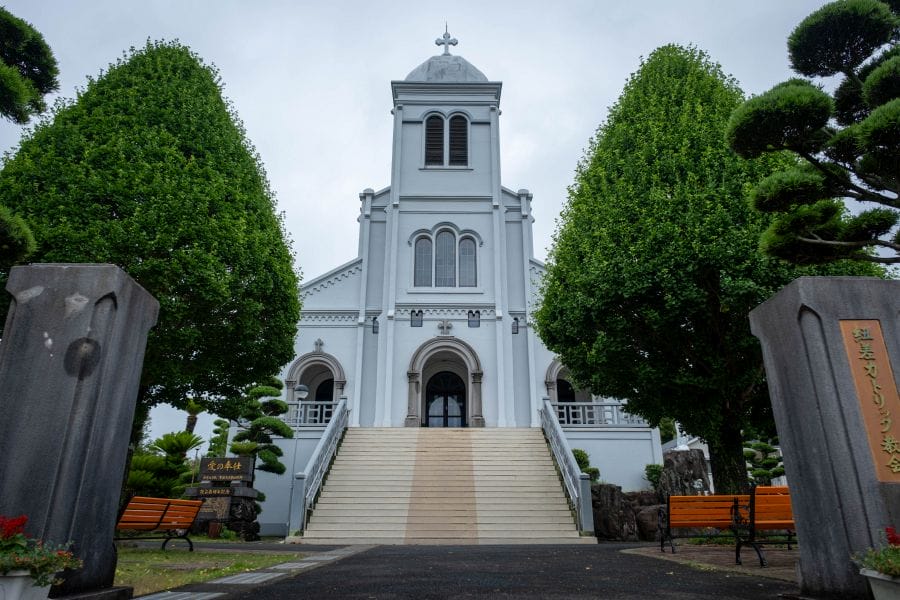
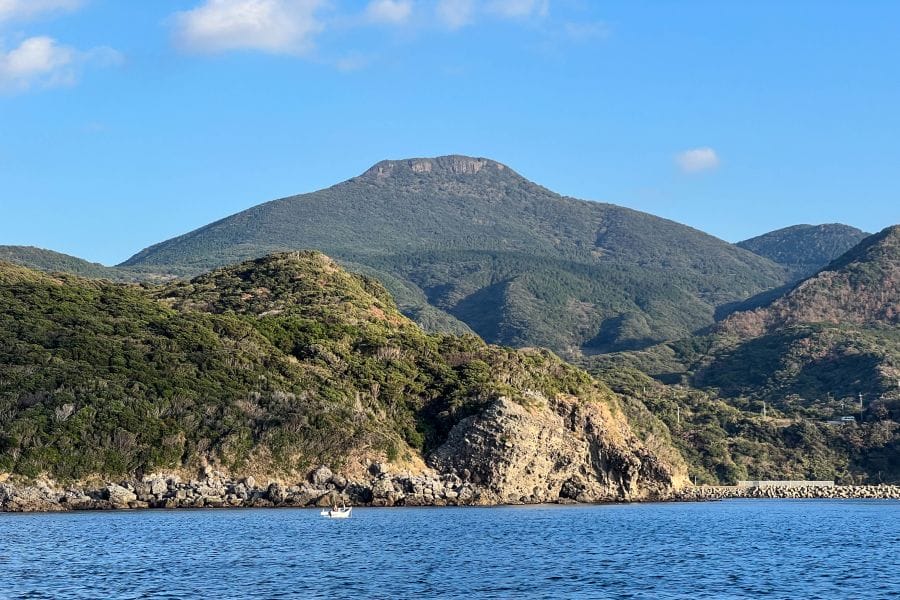
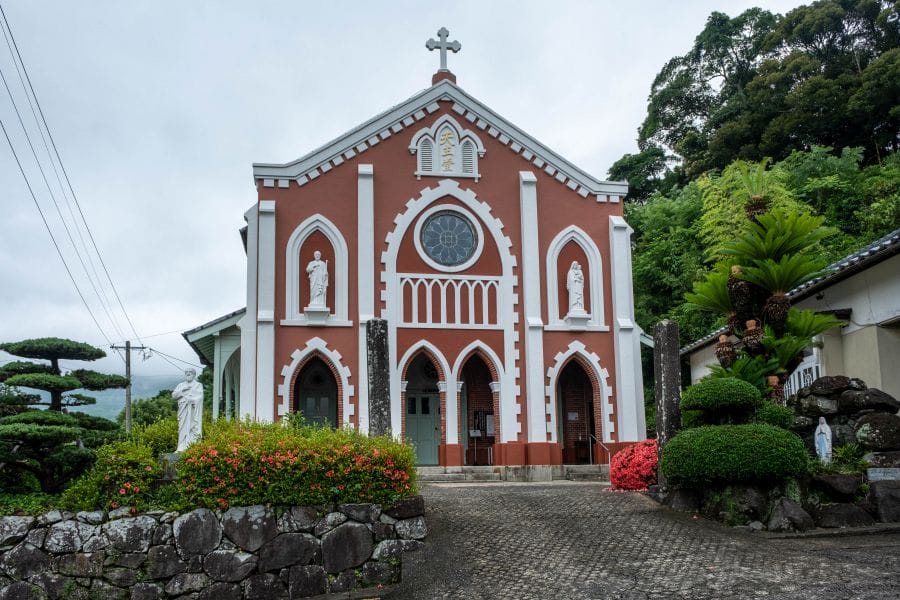
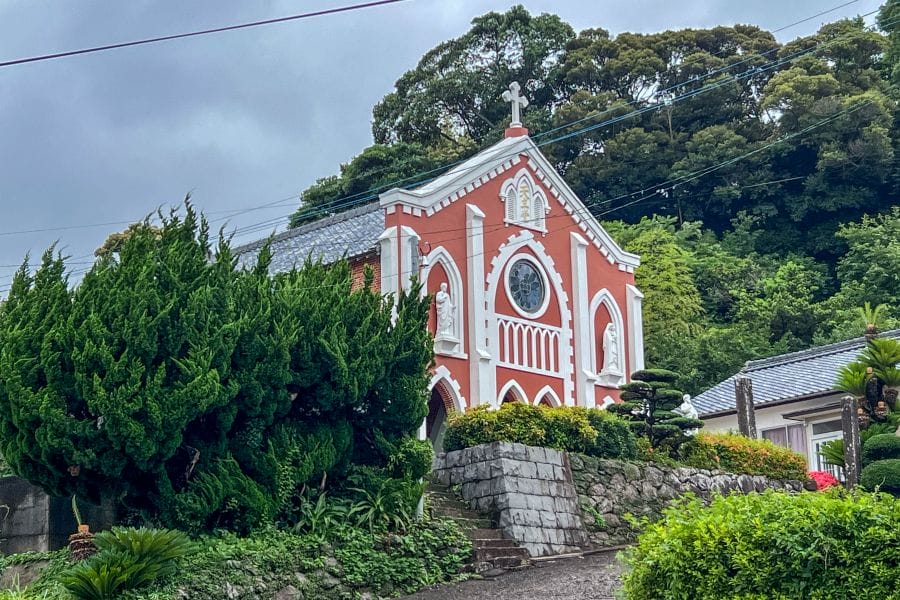
Hōki Catholic Church stands tucked away on a hillside on the eastern side of Hirado Island in Nagasaki, accessed by a narrow winding road through a rural community. Untidy allotments with noisy chickens stand in front of its striking red and white façade.
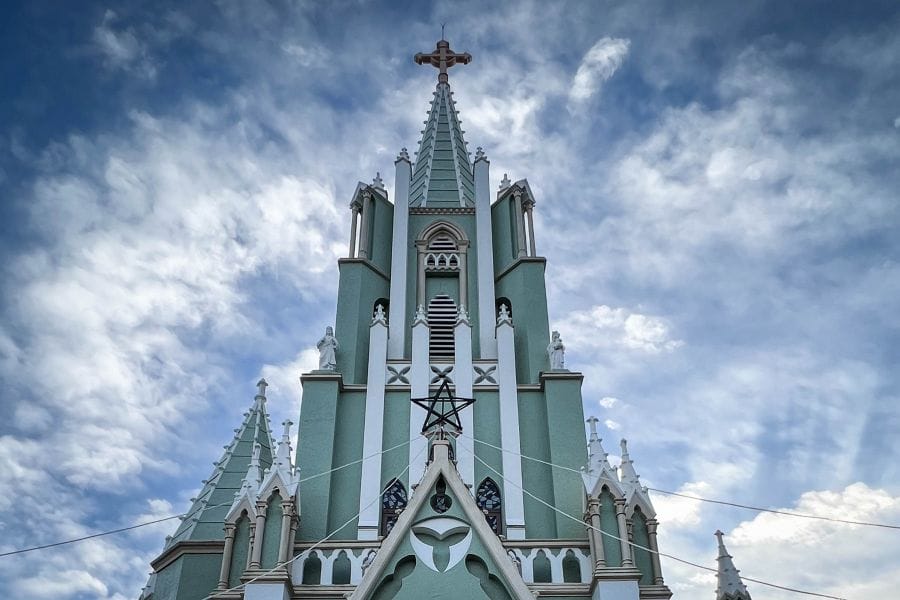
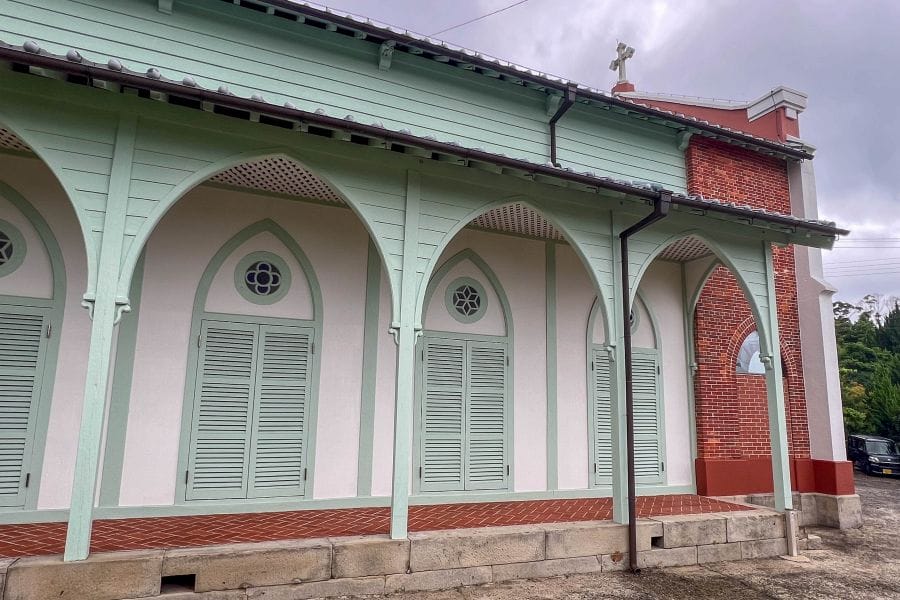
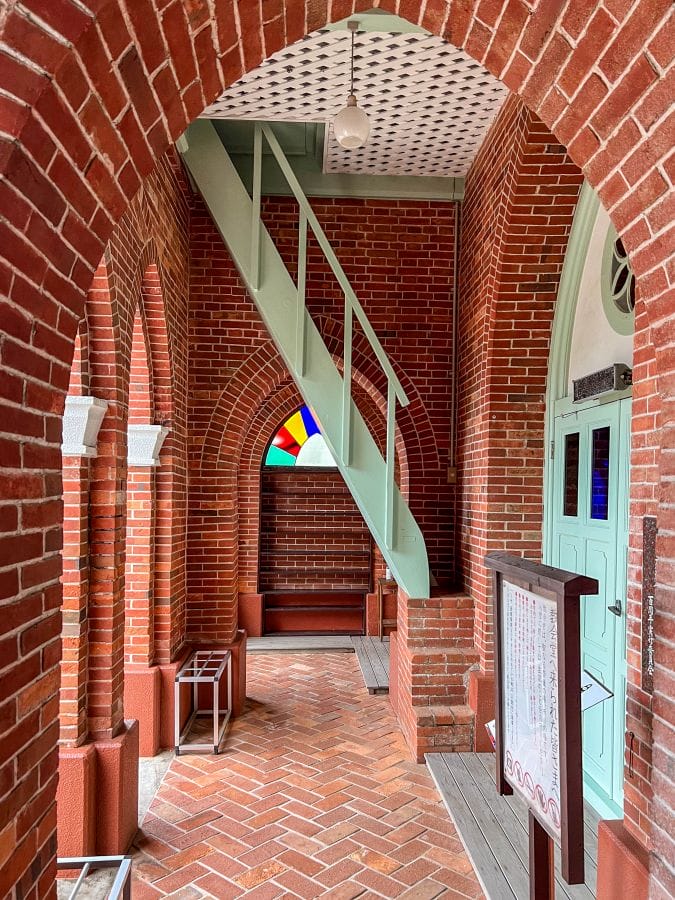
The church is a brick and timber building that marks the emergence of open Christian practice following centuries of state prohibition. Perched on a steep hill overlooking the quiet waters of Hōki Bay on the western coast of Hirado Island, the structure exhibits a unique blend of Western ecclesiastical design and domestic building traditions. The single-storey building features a traditional Japanese tiled gable roof set over weatherboarded side walls, yet the principal facade consists of painted brickwork and mortar. Flanking both long sides of the nave are open, covered verandas, an architectural layout highly unusual for historic churches in the region.
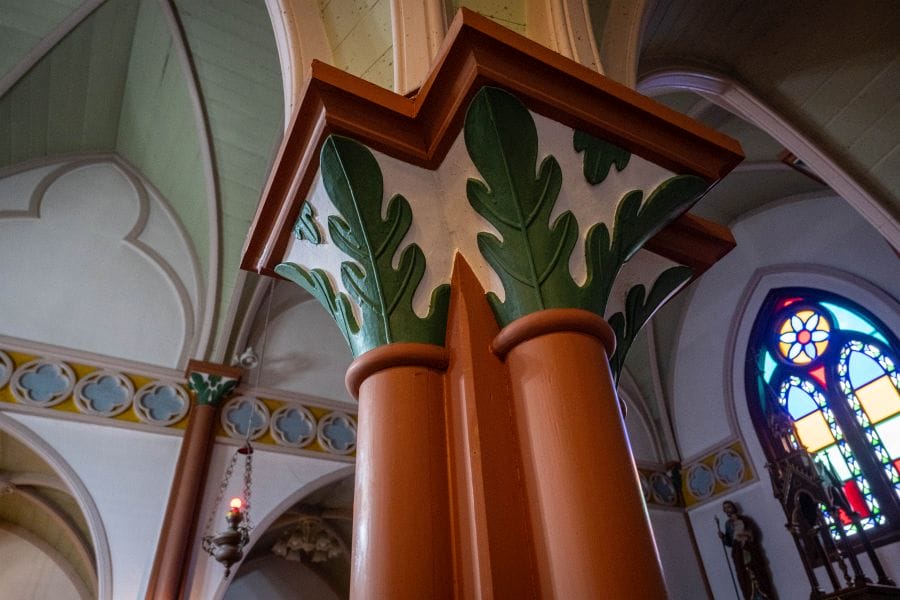
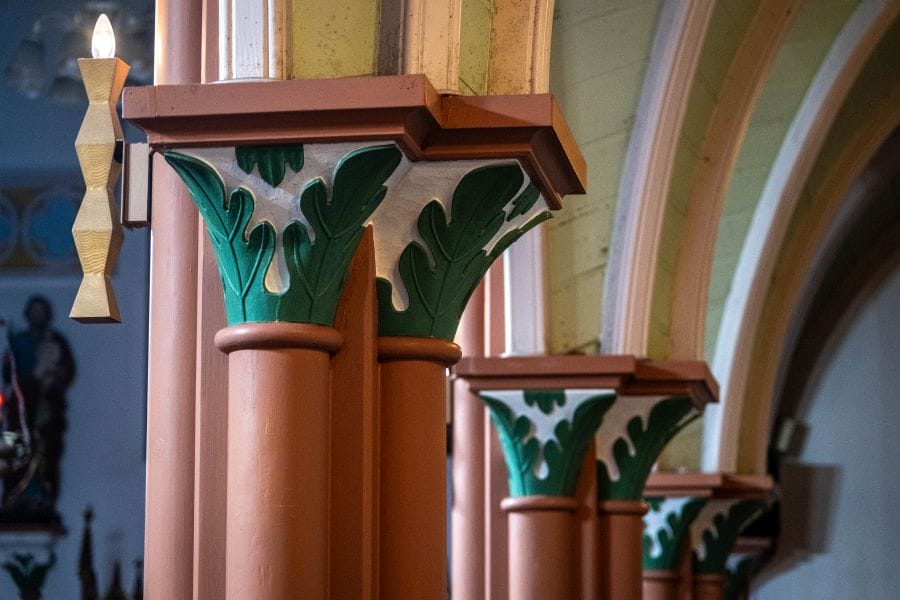
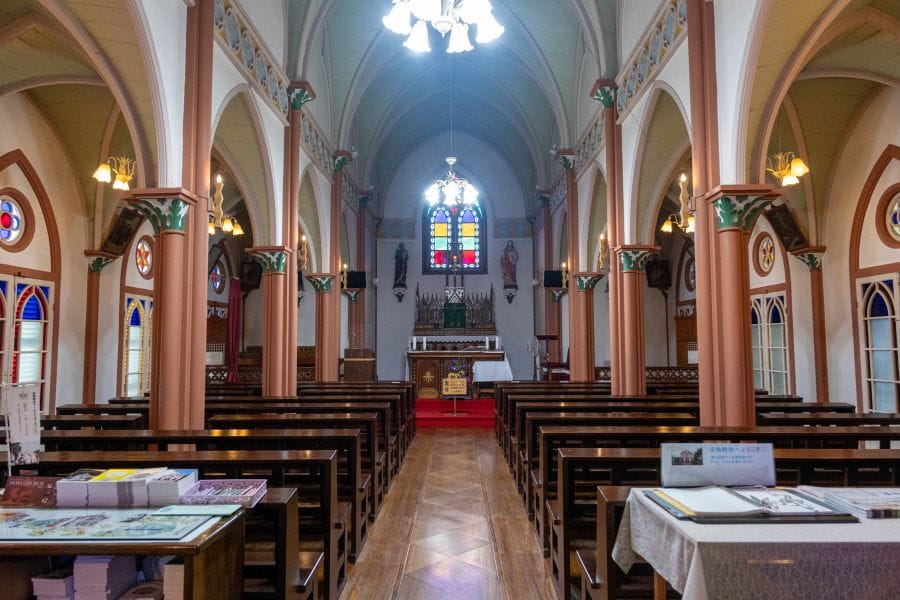
Inside, the building opens into a hall divided by columns into a central nave and side aisles, all covered by a timber rib-vaulted ceiling. Arched double doors open directly from the side aisles onto the exterior verandas, allowing ventilation and a distinct interplay of natural light. The window openings are fitted with vibrant stained glass that illuminates the interior with shifting colours throughout the day. At the rear of the nave, a dedicated choir loft sits above the entrance vestibule, accessed exclusively via an external staircase mounted to the front facade.
Constructed between 1897 and 1898 under the guidance of Father Jean-Frédéric Matrat, the building represents the architectural evolution from early disguised prayer spaces to permanent Western-style monuments. Rather than hiring foreign builders, the local parish commissioned a master carpenter from Ukujima Island who specialised in Buddhist temple and Shinto shrine architecture but had recently been baptised. This craftsman adapted traditional joinery techniques to create the complex pointed arches and structural framework required for the Gothic-inspired vaulting. The resulting hybrid design demonstrates how regional materials and local craftsmanship accommodated the returning Catholic faith at the turn of the twentieth century. The surrounding community trace their lineage back to the mid-sixteenth century when the local feudal lords permitted the rapid spread of Catholicism across Hirado. Following the total ban on the religion in 1614, local believers formed underground networks, maintaining their practices in secret as Hidden Christians for over two and a half centuries. When the prohibition ended in 1873, eighteen households in the immediate area initially established a temporary prayer house nearby before pooling resources to erect this permanent structure. Today, the building stands as the oldest surviving church on Hirado Island and is designated as a Prefectural Tangible Cultural Property.
Information
Name in Japanese: カトリック宝亀教会
Pronunciation: katorikku hoh-ki kyoh-kai
Address: 1170 Hokicho, Hirado, Nagasaki 859-5366