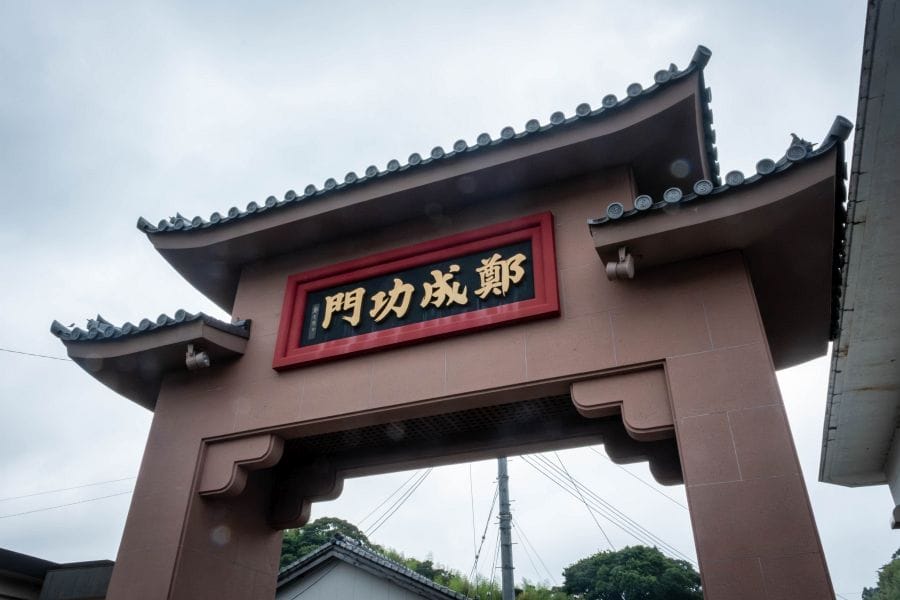
Zhèng Chénggōng Memorial Museum
The Zhèng Chénggōng Memorial Museum is a reconstruction of the childhood home of the 17th-century military leader and diplomat known in the West as Koxinga. He was born to a Chinese maritime merchant and a Japanese woman from Hirado, spending his first seven years on this coastal site before moving to China. The facility serves to commemorate his efforts to overthrow the Qing dynasty and restore the Míng dynasty, as well as his role in ending Dutch colonial rule in Taiwan. The complex consists of two main single-storey wooden structures built with traditional tiled roofs, faithfully mirroring the scale and residential architecture of the early Edo period.
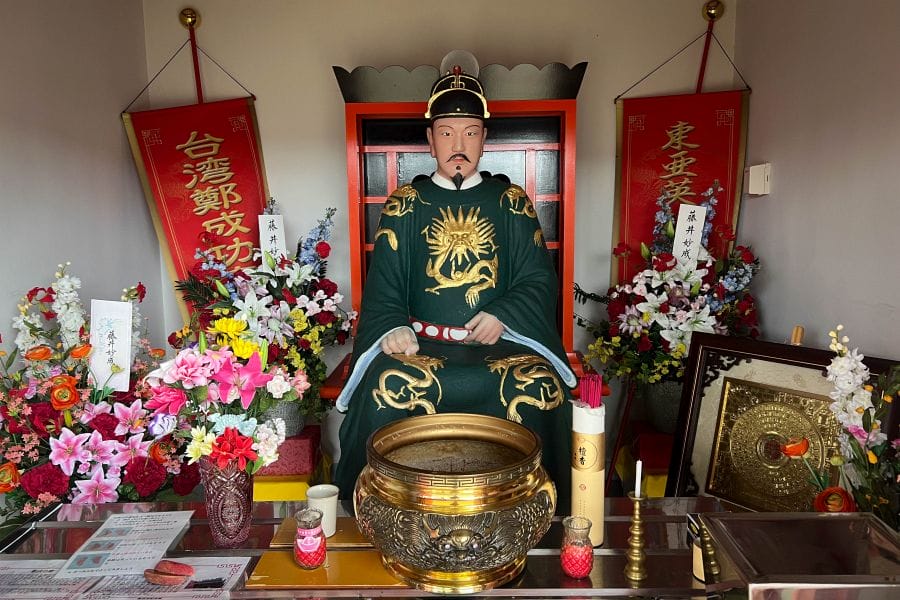
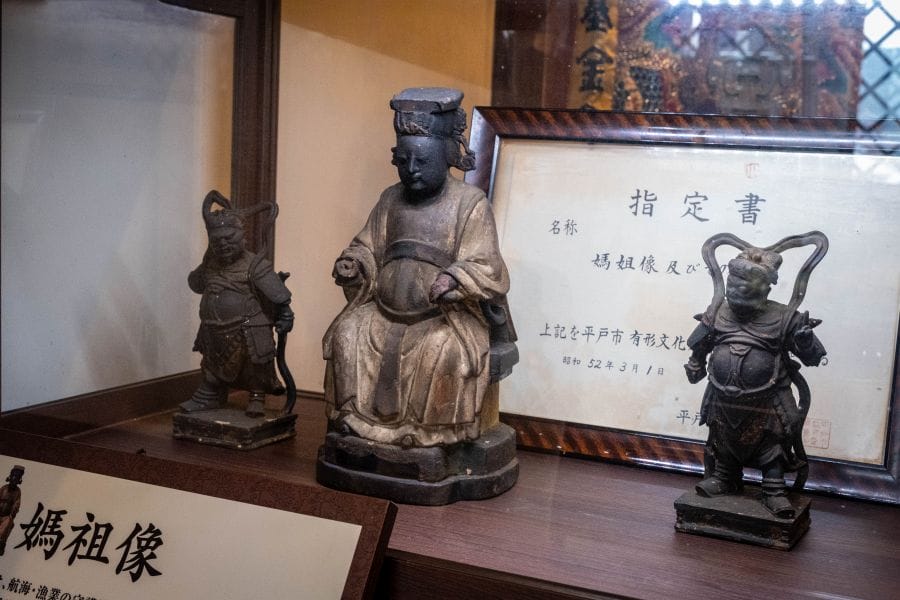
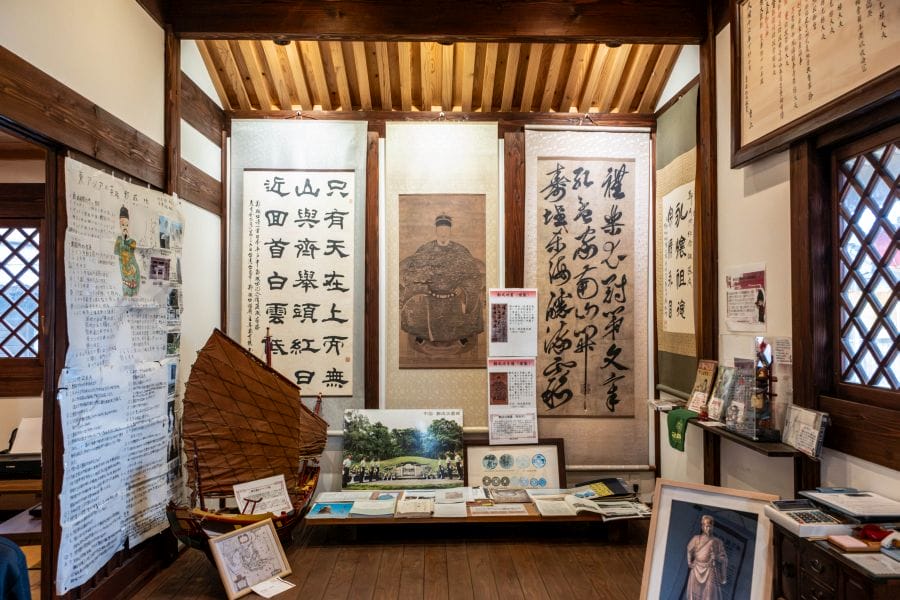
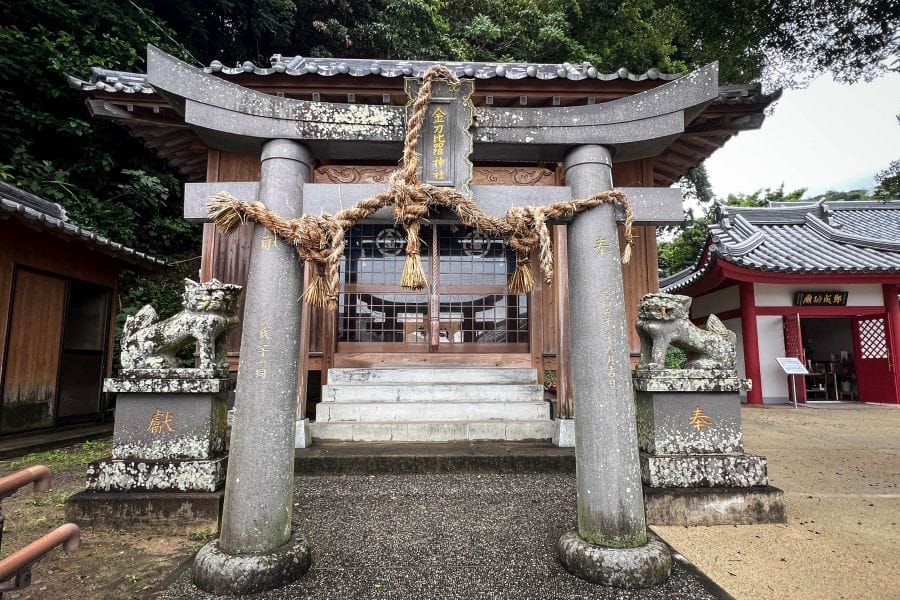
The primary exhibition structure stands directly on the foundations of the historical Zhèng residence in Kawachi town, situated on the southern coast of the Hirado inlet. Archaeological excavations at the site revealed early 17th-century trade ceramics, confirming the presence of a wealthy merchant household. Inside the reconstructed rooms, you’ll find historical dioramas depicting domestic life, period weapons, and military chronicles. The collection includes a rare, original 28-centimetre-tall wooden statue of Māzǔ, the Chinese Taoist goddess of seafaring, which is carved from a single piece of camphor wood. Zhèng’s father originally enshrined this deity, along with her two traditional guardian subordinates, on a trading vessel before moving them to a small shrine behind the house.
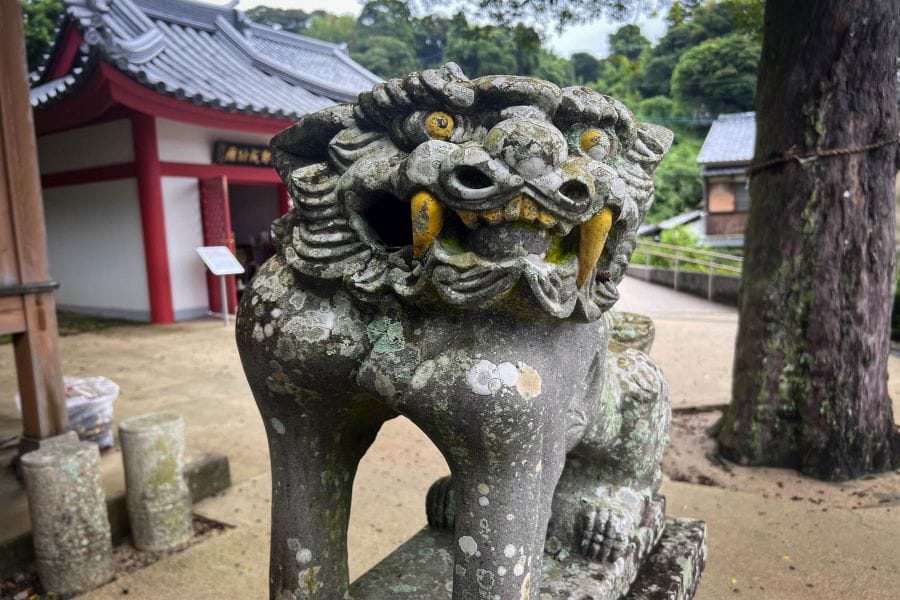
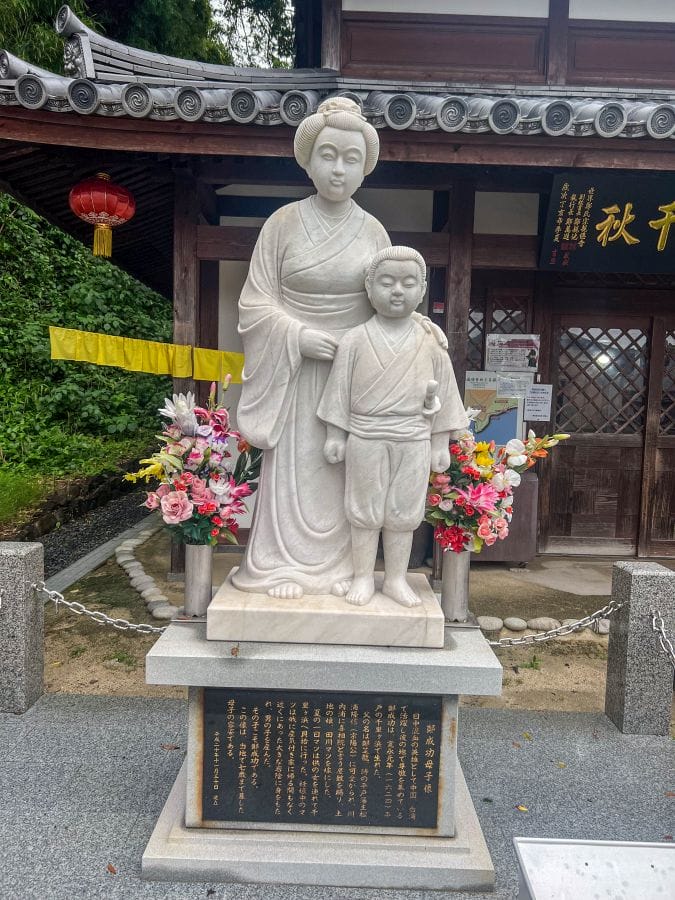
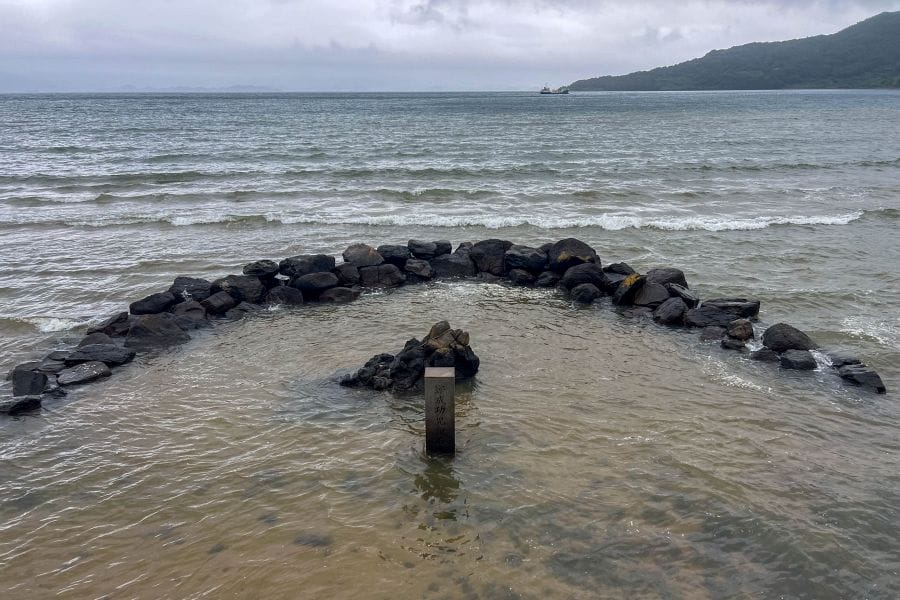
The exterior grounds feature several monument sites that contextualise the family’s presence in Hirado. Standing next to the main building is an ancient Asian bayberry tree, which local tradition states was planted by Zhèng himself during his childhood. Nearby is a stone monument erected in 1852 by the local Matsuura clan, featuring an abbreviated biography penned by a Confucian scholar after the original 5,000-character text proved too long for any available stone block. A stone statue of Zhèng and his mother, Tagawa Matsu, occupies the front courtyard, designed by an 11th-generation direct descendant of the military leader. A newly constructed concrete branch mausoleum houses a spiritual entity transferred directly from Tainan, Taiwan, in 1962 to mark the 300th anniversary of his death.
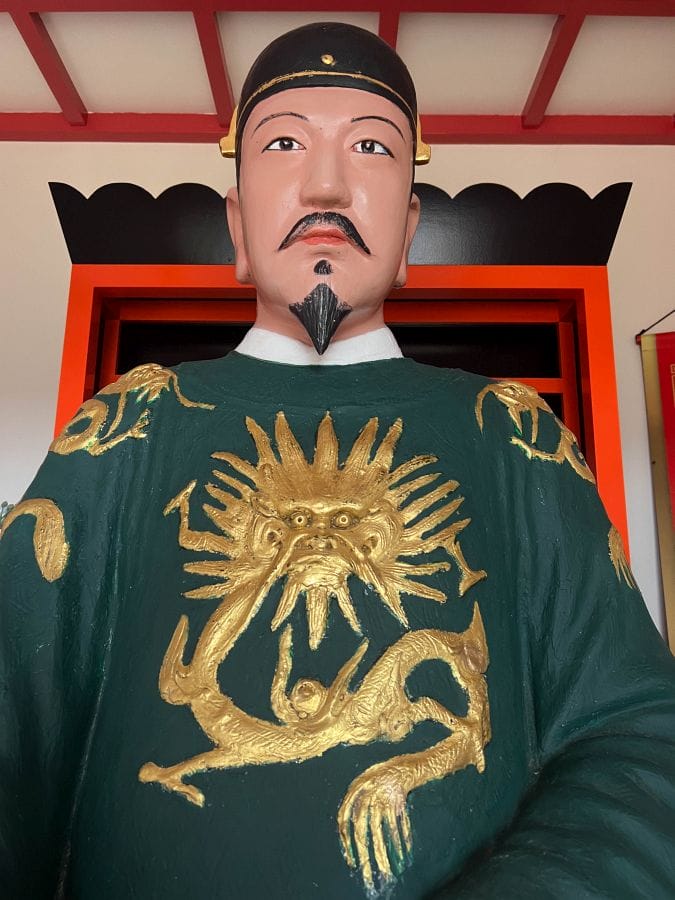
The museum aligns with local seasonal commemorations that draw delegations from East Asian territories where Zhèng remains a prominent historical figure. Every July, the museum grounds serve as the focal point for a dedicated festival marking his birth, featuring performances of the Jangara, a traditional drum dance designated as a national cultural asset. Dutch records kept from the era describe Zhèng as a man of chiselled features, sharp eyes, and medium height, a stark contrast to his stylised depiction in Japanese puppet theatre, where he was popularised as the fictional hero of The Battles of Coxinga by playwright Chikamatsu Monzaemon.
Information
Name in Japanese: 鄭成功記念館
Pronunciation: tei-sei-ko ki-nen-kan
Address: 1114-2 Kawachicho, Hirado, Nagasaki 859-5132