Terumo Shrine
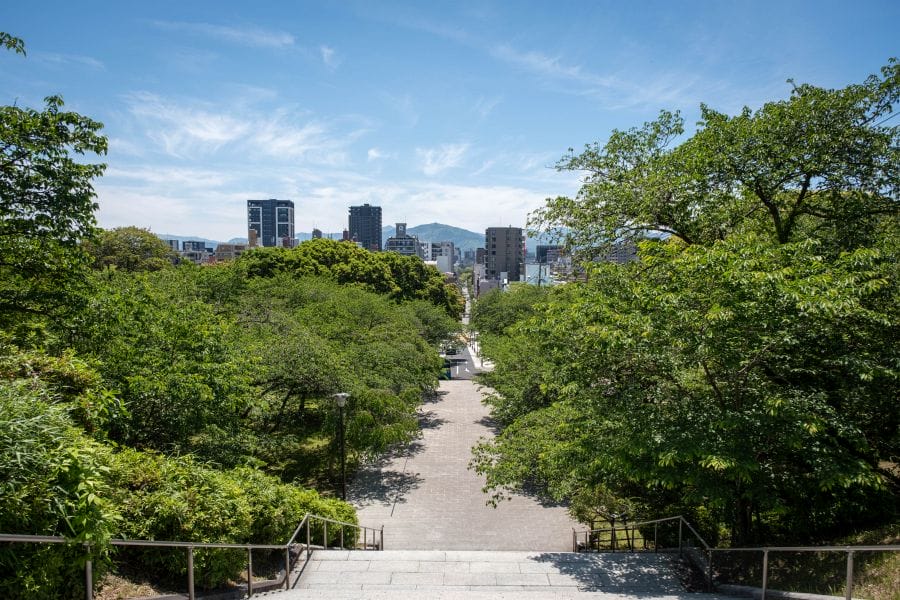
Situated on the northern edge of Nishi Park in Fukuoka, Terumo Shrine stands on a wooded hill overlooking Hakata Bay and the modern residential blocks of Chūō-ku. The shrine serves as the primary memorial to Kuroda Josui and his son Nagamasa, the foundational figures of the Fukuoka Domain. The name Terumo is a portmanteau of parts of the posthumous titles of the two lords.
The shrine’s origins date back to the early 17th century when it functioned as a private sanctuary for the Kuroda family within the castle precincts. Following the Meiji Restoration and the subsequent demolition of much of Fukuoka Castle, the shrine was relocated to its current hilltop position in 1871.
The shrine wasn’t just built for the ruling elite; the merchant classes of Hakata funded much of its relocation and upkeep, viewing the Kuroda spirits as guardians of the city’s economic stability rather than just military icons.
The shrine’s approach begins with a stone staircase that climbs through dense evergreen foliage, leading to a stone gate and a gravel courtyard. From the shrine grounds, you look out across the urban sprawl toward the port, a vantage point that historically served as a defensive lookout for the surrounding castle grounds. Unlike many shrines that face south for auspicious reasons, Terumo Shrine is oriented to face the former site of Fukuoka Castle, reinforcing its connection to the lords who once ruled the domain.
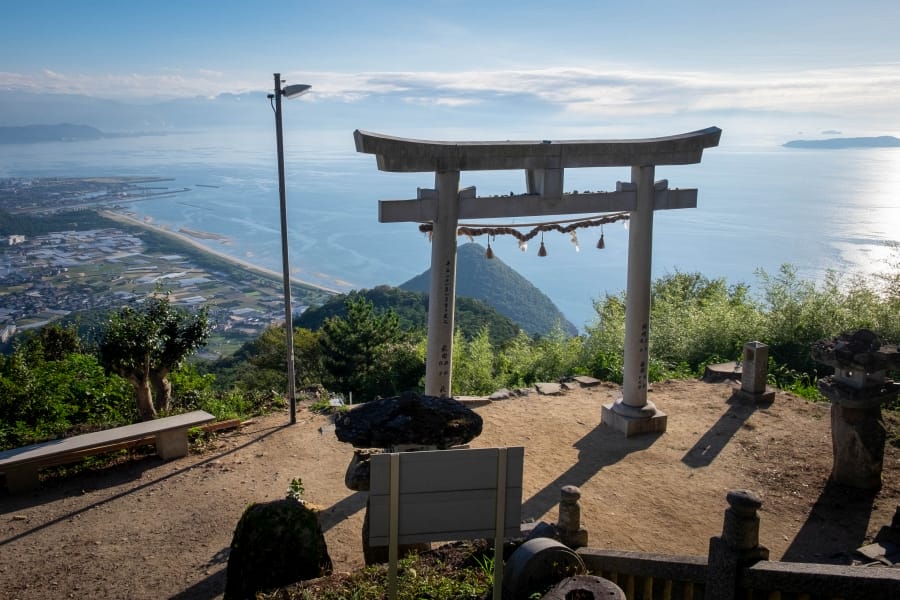
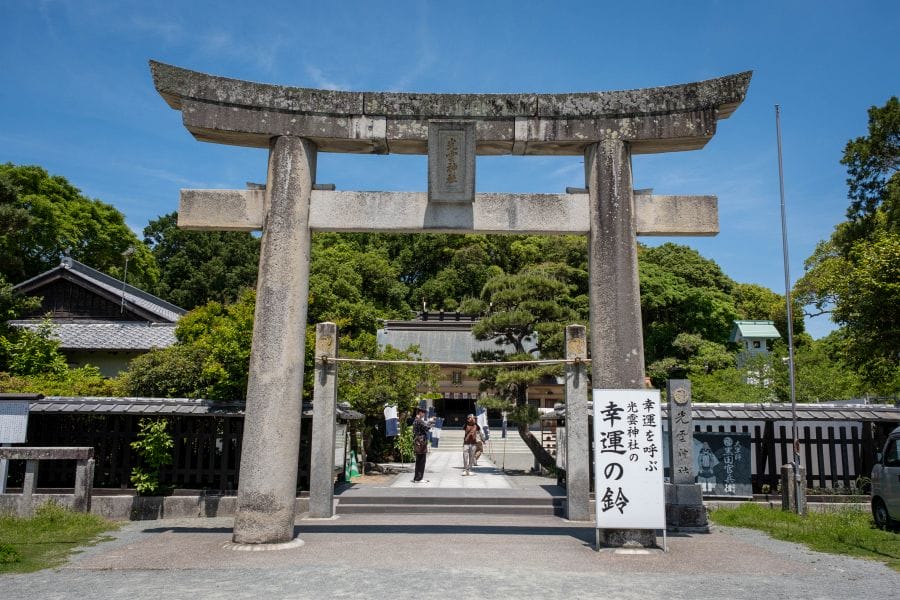
To enter the hilltop compound, you pass through a large stone torii gate, and a smaller stone gate marked with the Kuroda crest featuring three wisteria vines forming a circle. The crest is associated with the story of Kuroda Yoshitaka, who was imprisoned in a dark, damp dungeon (circa 1576–1578). The wisteria flowers outside his cell provided him with mental strength during his captivity, leading him to adopt them as a symbol of endurance.
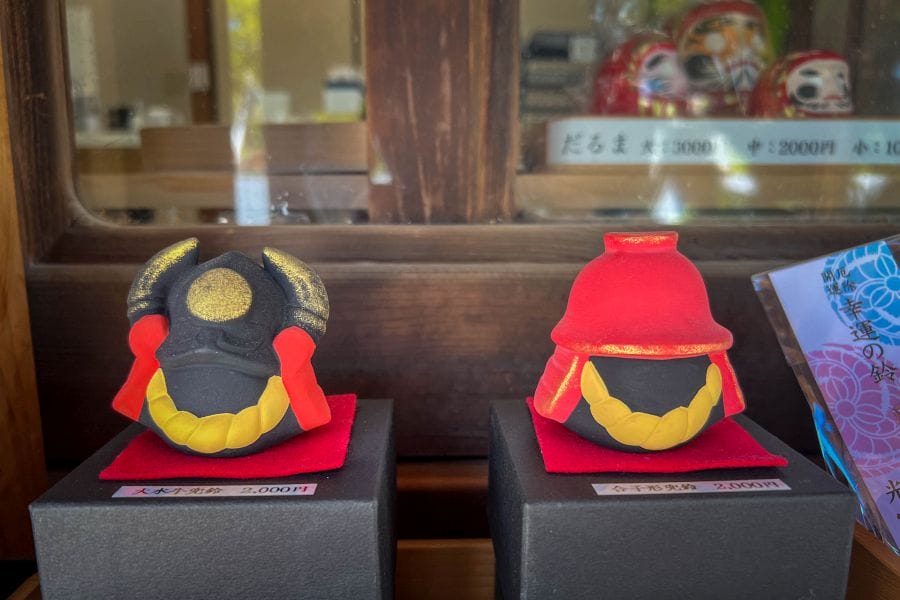
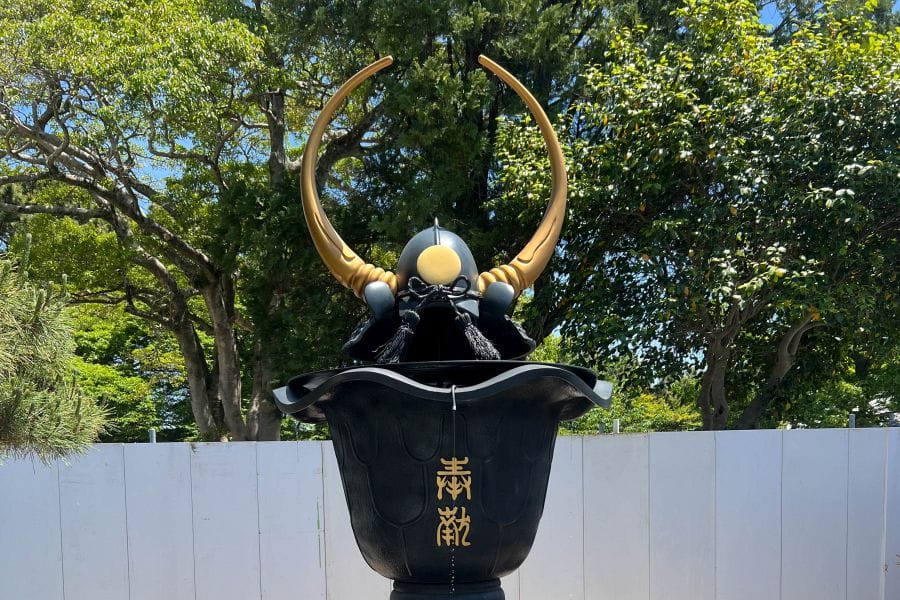
Just inside the gate to the right is a prominent water fountain in the shape of Kuroda Josui’s horned helmet. Here you can purify your hands for the shrine visit.
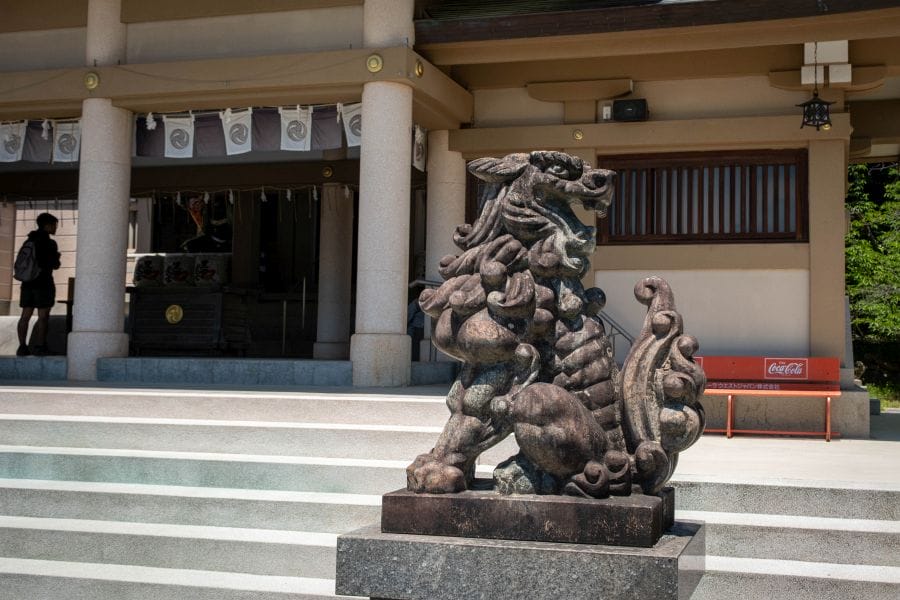
In front of the shrine stand two guardian lion-dogs, or shishi, notable for their unusual posture. Unlike the standard forward-looking sentries, these stone figures are sculpted with their bodies tensed and their heads turned around to look behind them. This design alludes to a legend involving the Kuroda family’s arrival in the region, where the protective spirits were said to be looking back toward the family’s ancestral home in Bizen.
In the portico of the shrine building is an offertory box. When you throw a coin into it, a speaker above emits the high-pitched, metallic cry of a crane. Look up and you’ll see a painting of a pair of cranes who are part origami and part naturalistic birds. This is a reference to the legend of the Crane Forest, the auspicious name given to the crane-infested site where the Kuroda clan first built Fukuoka Castle. Today there are no live cranes, but frequent planes fly low overhead on their way to land at Fukuoka Airport.
The current main hall is a reinforced concrete structure, rebuilt in 1966 after the original wooden buildings burnt down during the air raids of 1945.
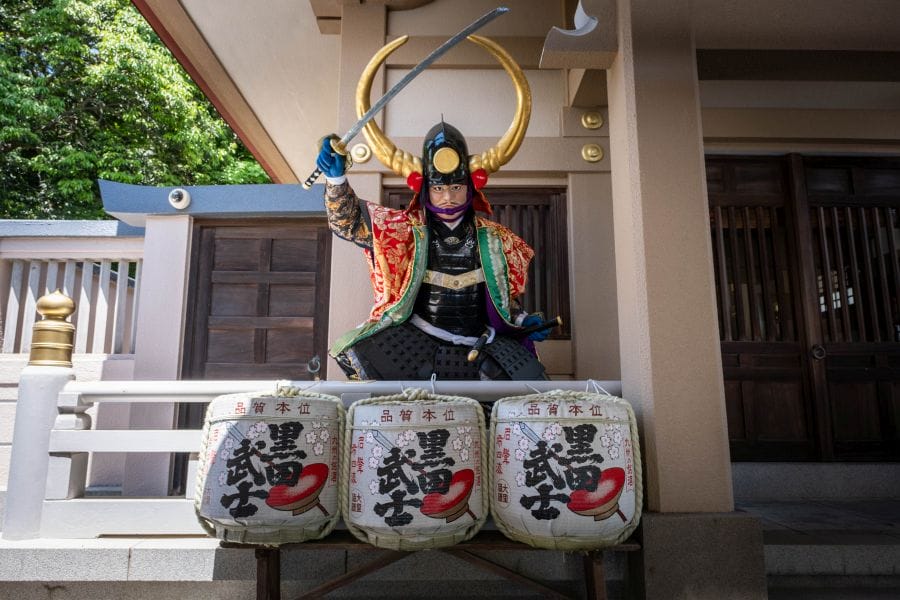
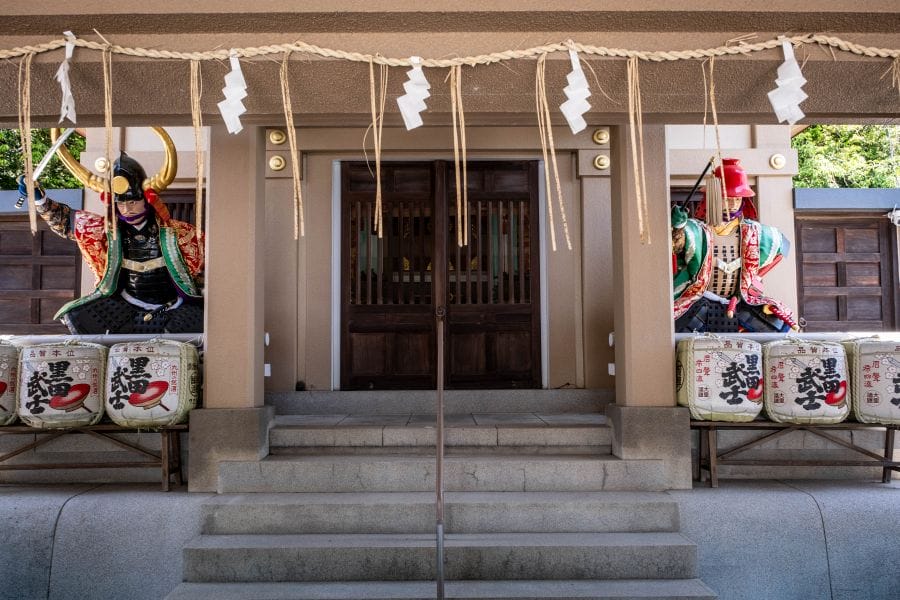
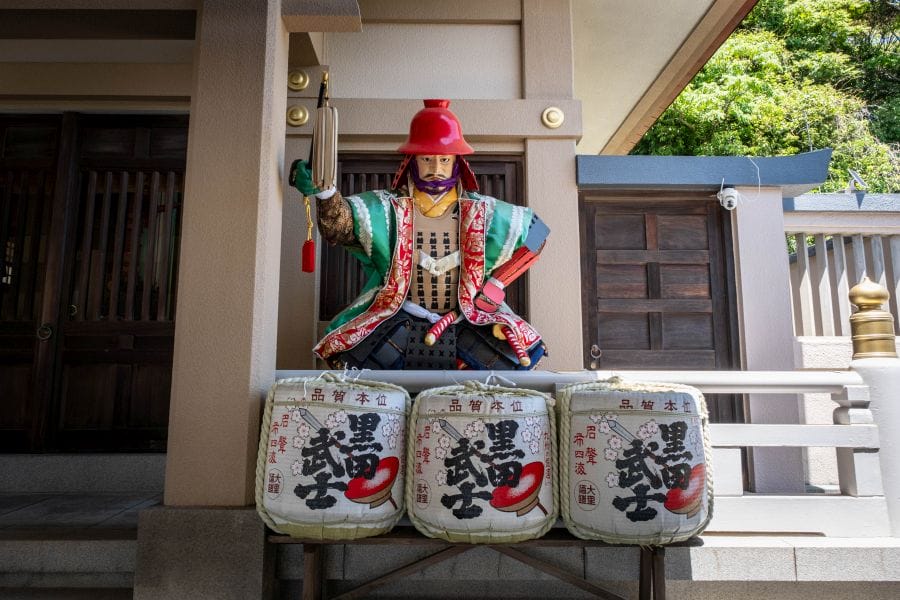
On either side of the shrine door stand painted statues of Kuroda Josui and his son Nagamasa in full battle regalia. Josui, with his horned helmet, is remembered as a master strategist who advised Toyotomi Hideyoshi. Nagamasa, celebrated for his tactical prowess during the Battle of Sekigahara, has an inverted lacquer bowl for a helmet, reflecting his interest in the tea ceremony.
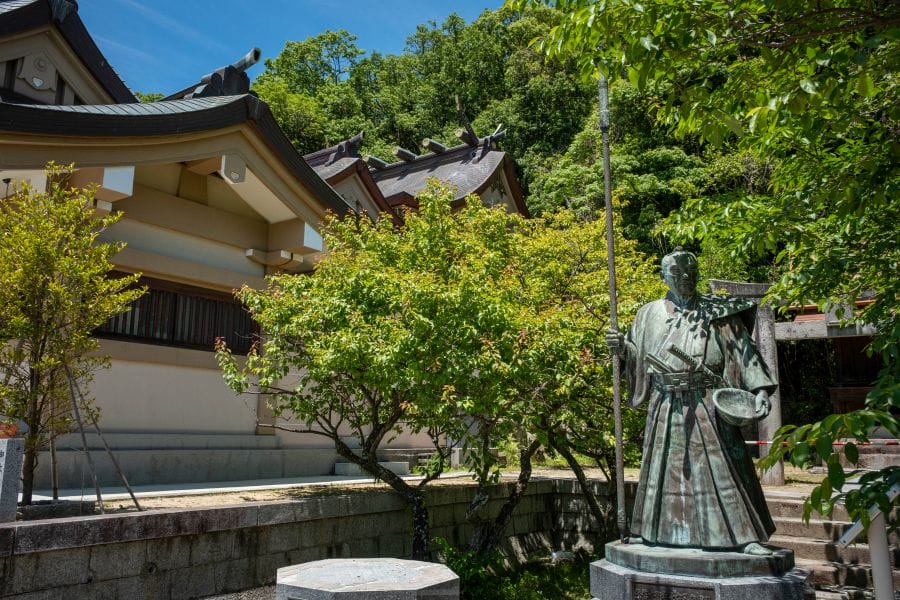
Besides the lords themselves, a prominent bronze statue depicts Mori Tahei, a celebrated retainer of the Kuroda clan. He’s gripping the Nihongō, one of the three great spears of Japan. The statue commemorates a 1596 encounter where Tahei was sent on an embassy to the rival Fukushima Masanori. Despite being a teetotaller, Tahei was goaded into a drinking challenge by a drunken Masanori, who promised any prize in his collection if Tahei could drain a massive lacquer sake bowl. Tahei downed the lot and claimed the spear, which was an imperial gift. This feat is a point of local pride, and the spear itself — notable for its length and the carved dragon winding around the blade — remains a central symbol of the shrine’s martial heritage. The statue depicts the face of a man who can clearly hold his liquor.
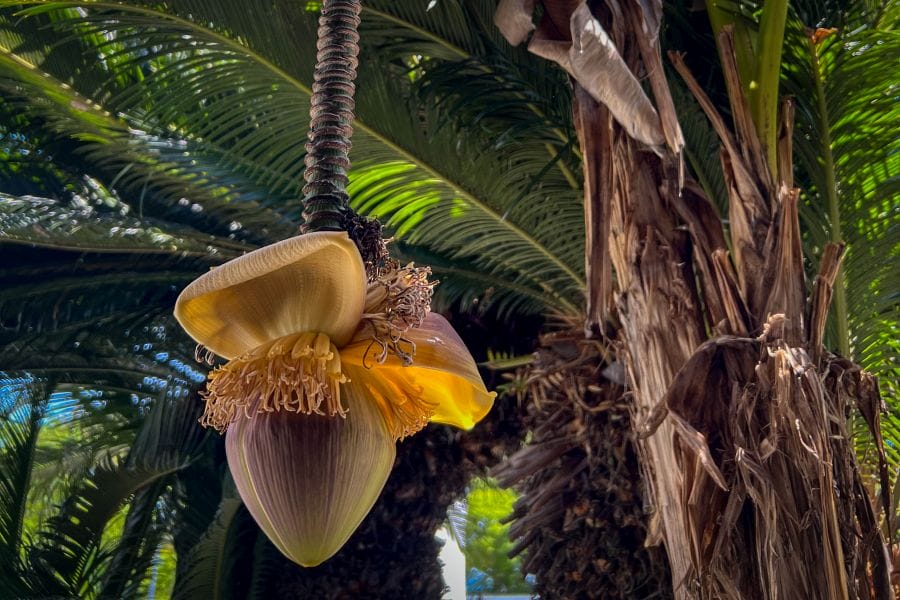
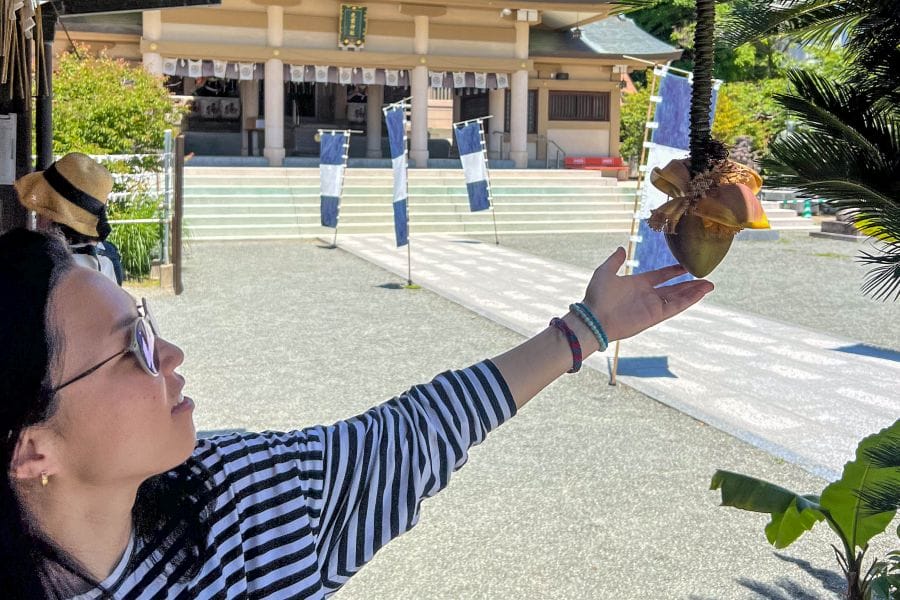
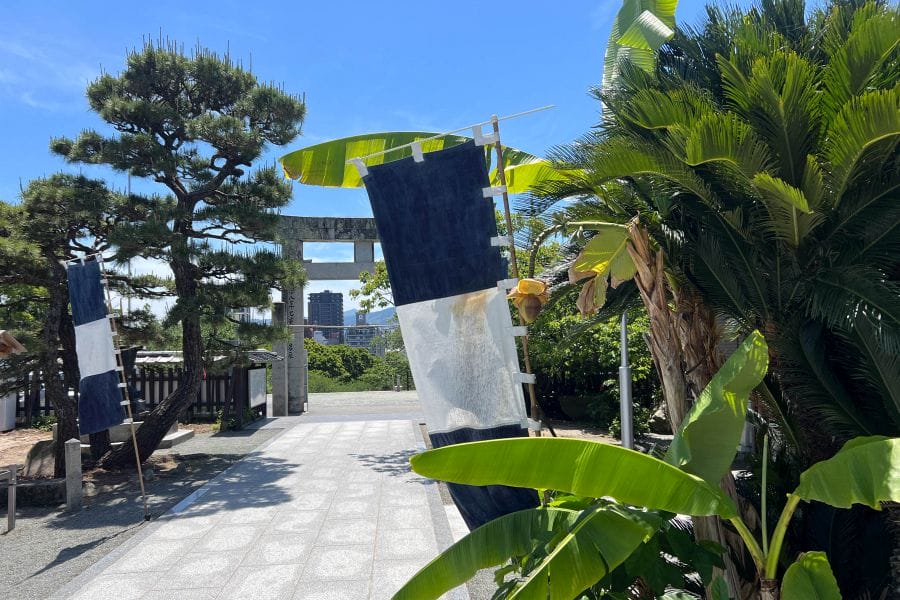
The shrine and surrounding mountain park are one of Fukuoka’s most celebrated cherry blossom spots. And the sago palms and ornamental bananas planted near the shrine office give the place a distinctly ‘southern island’ atmosphere.
Information
Name in Japanese: 光雲神社
Pronunciation: te-ru-mo jin-ja
Address: 13-1 Nishikōen, Chūō Ward, Fukuoka, 810-0061