Futago-ji Temple
Futago-ji stands on the wooded slopes of Mt. Futago in the Kunisaki Peninsula. Founded in 718, it became the central temple of the Rokugō Manzan religious system, where Tendai Buddhism, mountain asceticism and older local deity worship fused into a distinctive regional tradition that’s still reflected in the atmosphere of the temple.
What to See
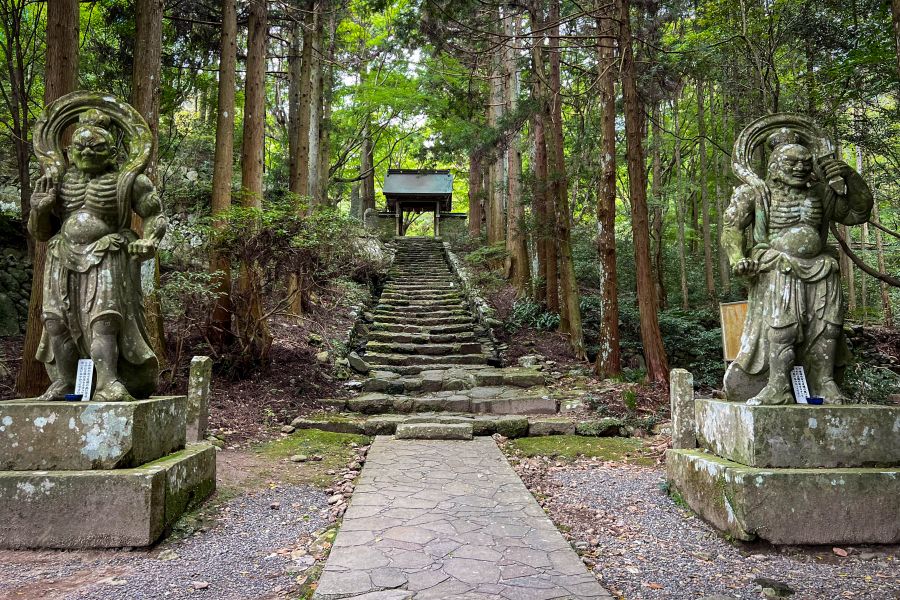
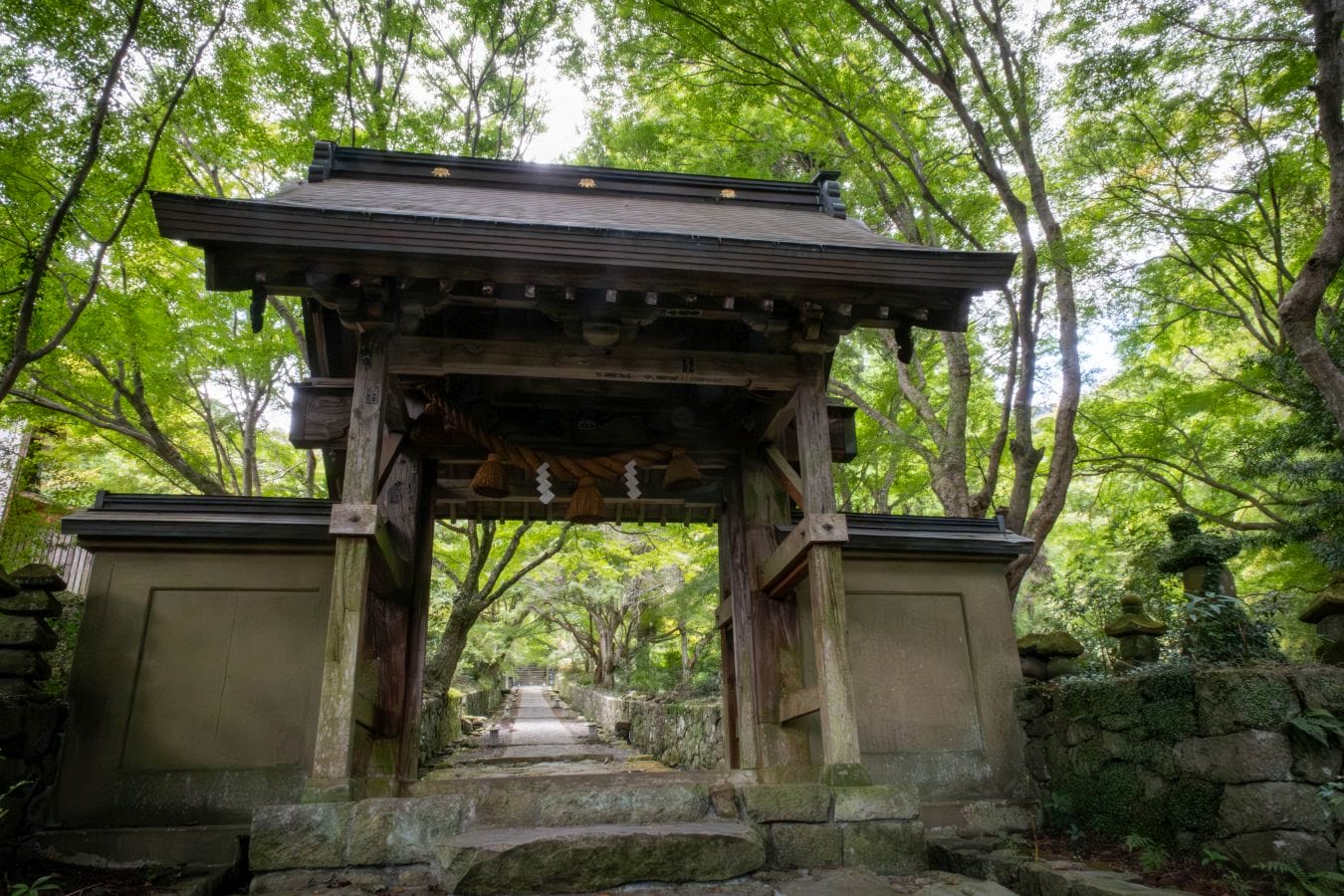
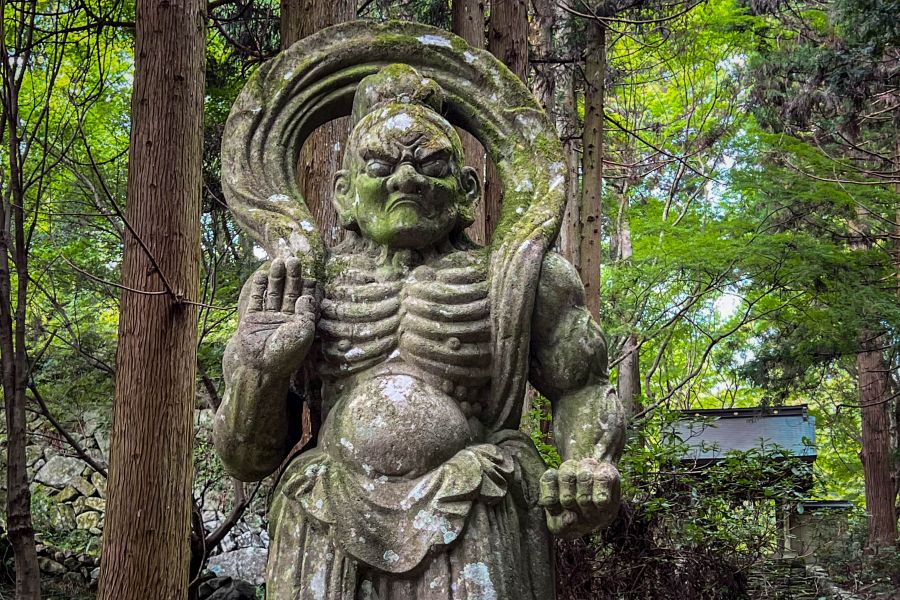
First you cross the Mumei Bridge with a Kannon statue underneath it. Crossing it is believed to awaken religious devotion. In a flat space before the climb to the temple are two freestanding stone Niō guardians, dating from 1814. Their expressions are exaggeratedly wild, matching the rugged setting. A stone stairway climbs up to the simple wooden main gate.
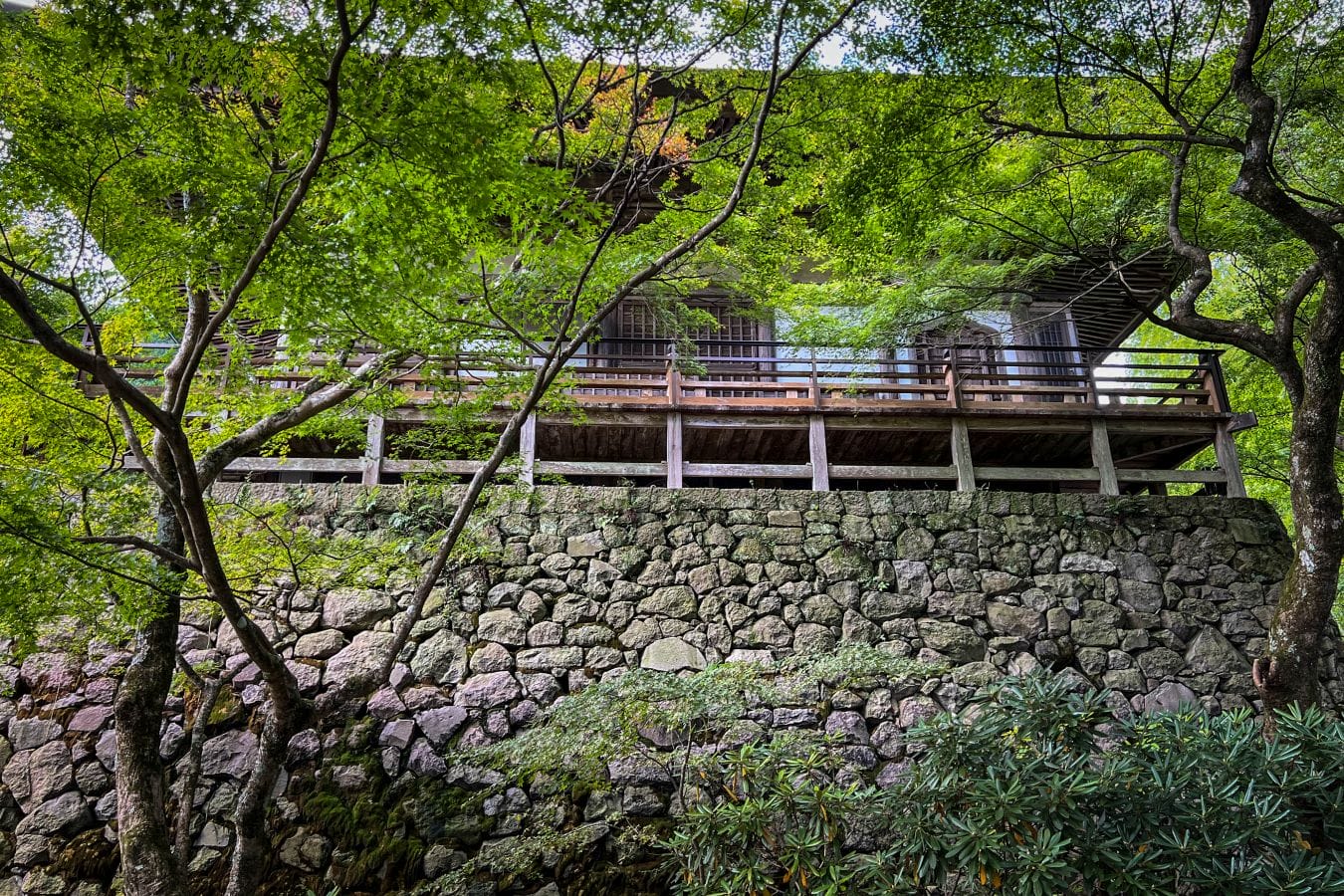
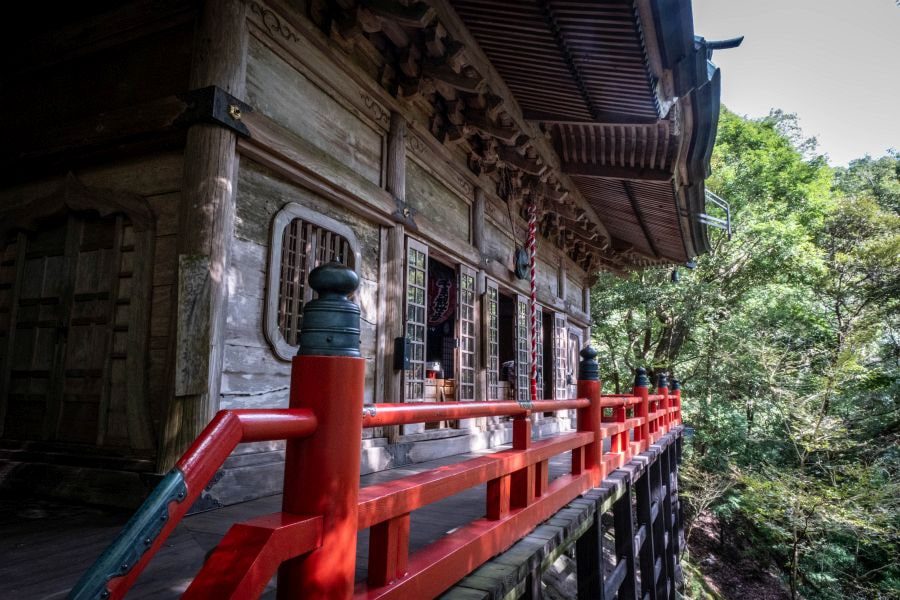
Beyond the gate, the path continues upward through dense cedar forest. Halfway up the approach is a pond on the right and the car park on the left. Up some further steps is the main temple complex in a small flat area. The most prominent building is the Goma Hall, facing the Study Hall. The Goma Hall serves as the fundamental training ground for mountain ascetic practices, enshrining the principal image of Fudō Myō-ō the immovable wisdom king, traditionally associated with mountain practice and esoteric Tendai ritual. After being destroyed by fire in 1869 over twenty years were spent rebuilding the hall to its original form, being completed in 1892. It features a square plan, fan-shaped rafters, and two layers of decorative panelling.
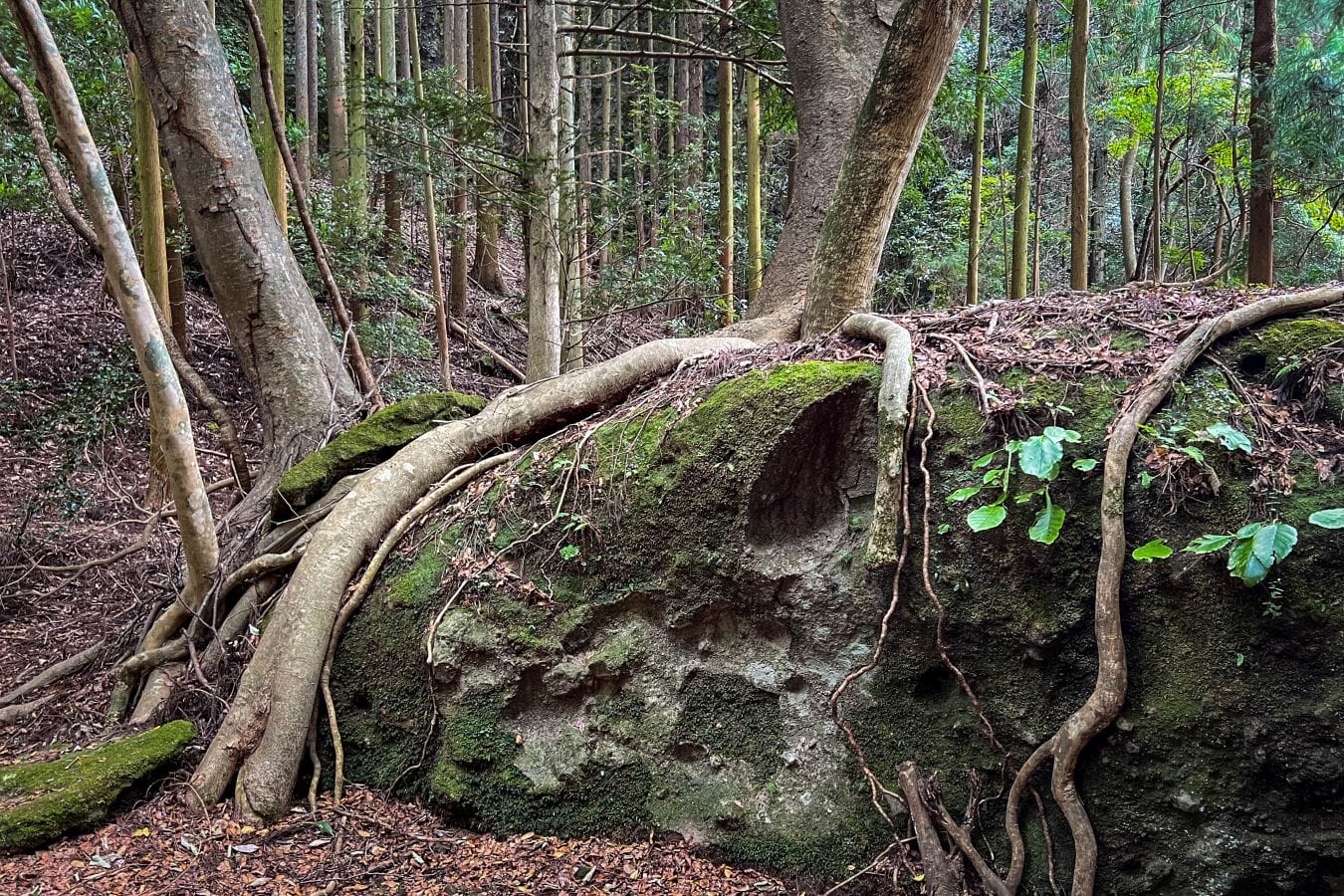
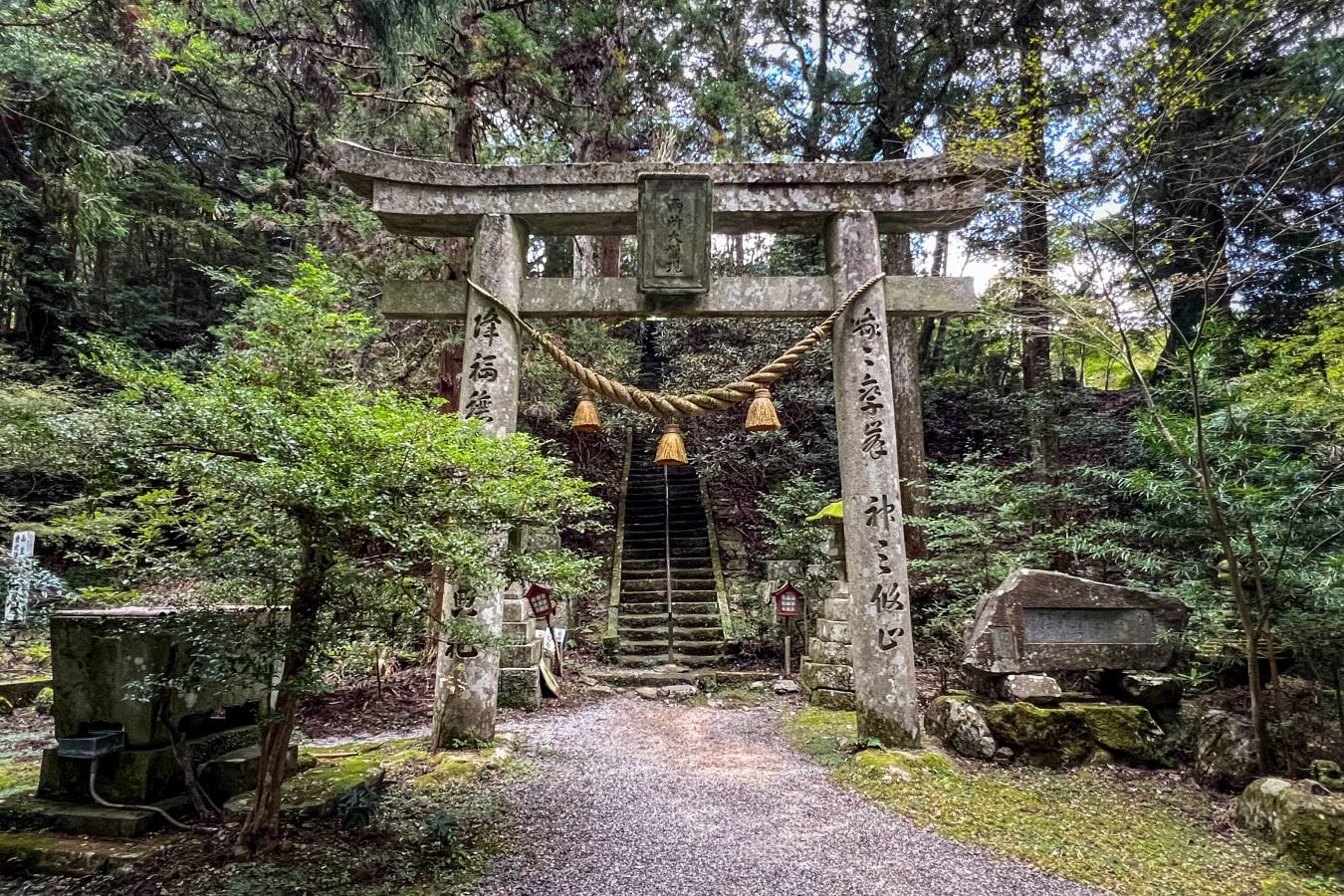
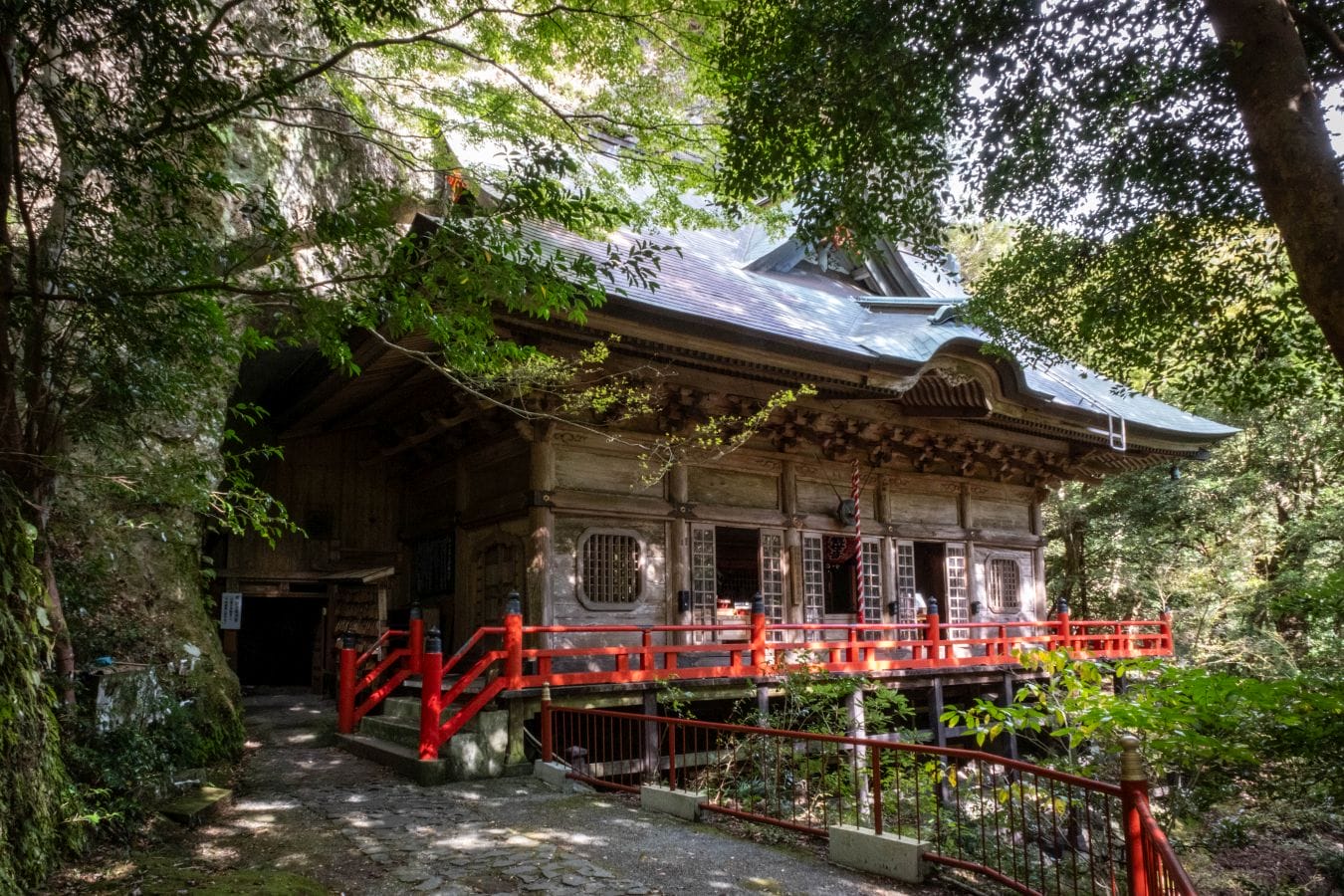
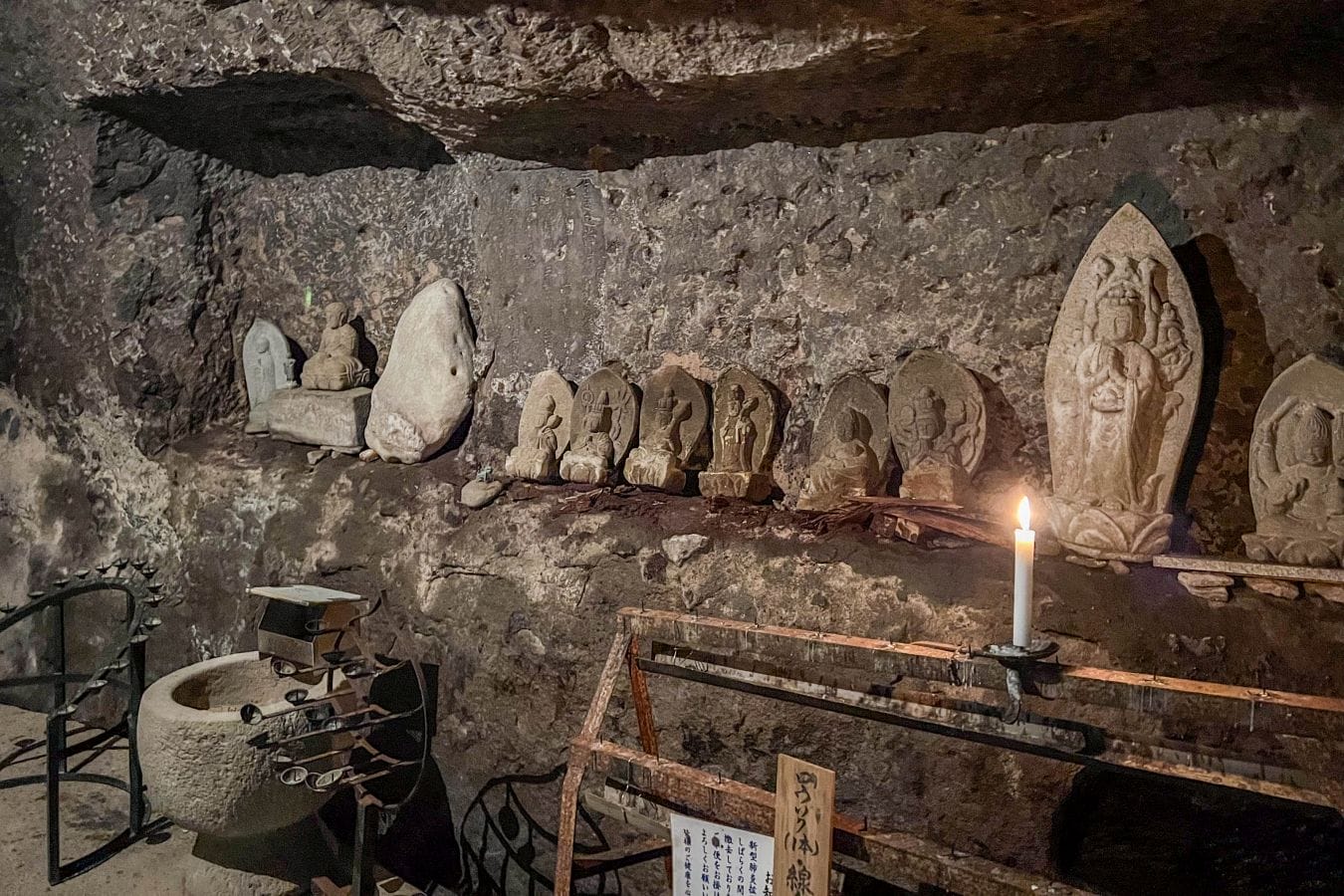
From here, trails lead further up Mt. Futago. One trail takes you past the Great Lecture Hall. Destroyed during the Buddhist suppression movement of the Meiji Restoration, it was rebuilt in 1991. You can also cross the Oni Bridge, a single slab of rock. Legend has it that long ago, a strong monk named Sentoku-bō dragged a single large stone from the mountain and used it to build this bridge. Both routes bring you to the Yamaō Shrine, marked by a large stone torii gate. From here, steps lead up to the Inner Sanctuary. The building was donated by Lord Matsudaira, the former feudal lord of Kitsuki Domain, in 1846. It enshrines a standing statue of Senju Kannon (Thousand-Armed Kannon), Ryōko Daigongen (statues of male and female child deities), a statue of Usa Hachiman, and a statue of Nimon Bosatsu. It’s known throughout Japan as a site for prayers for longevity and for granting children. There’s a tunnel through the rock beyond the wooden building.
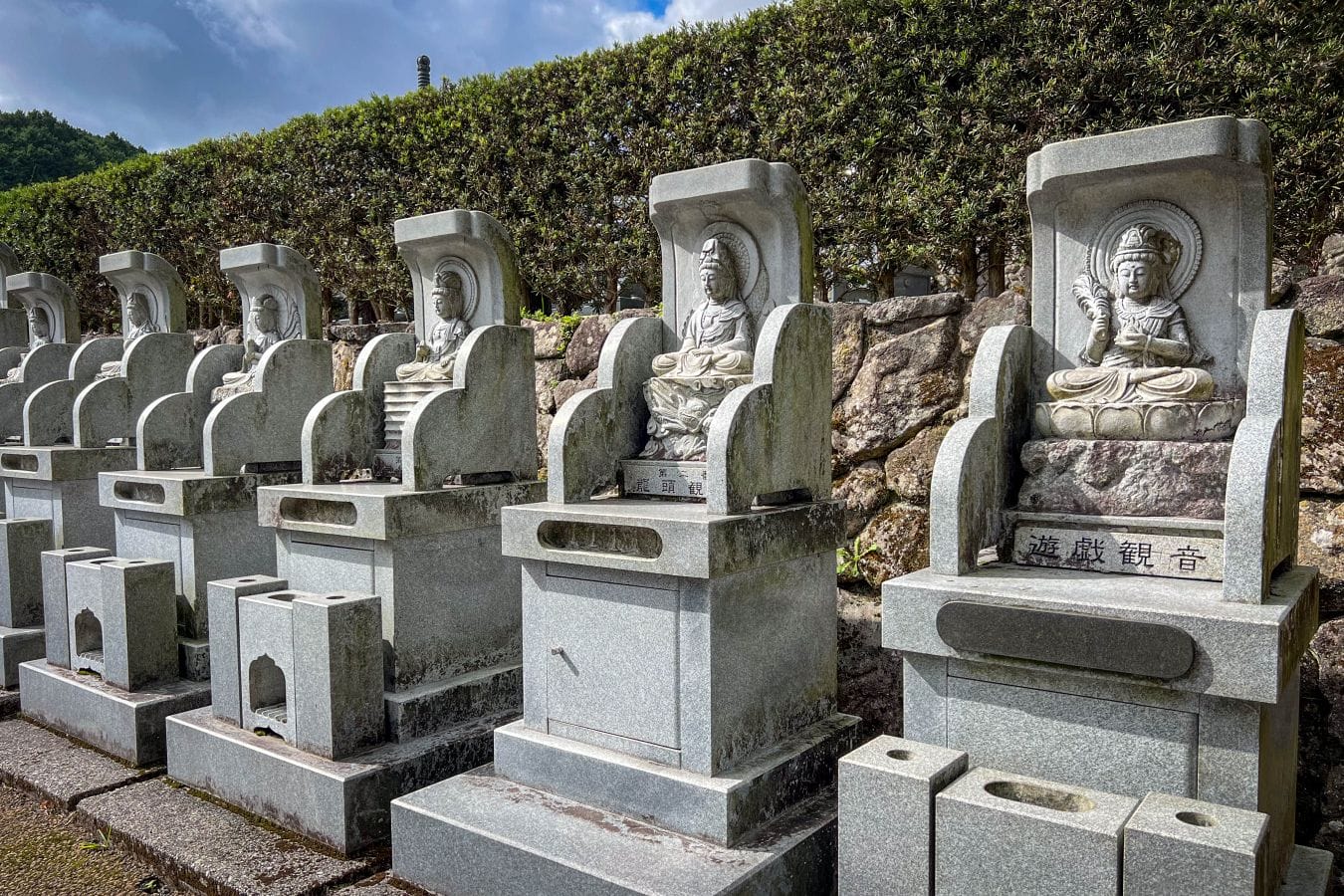
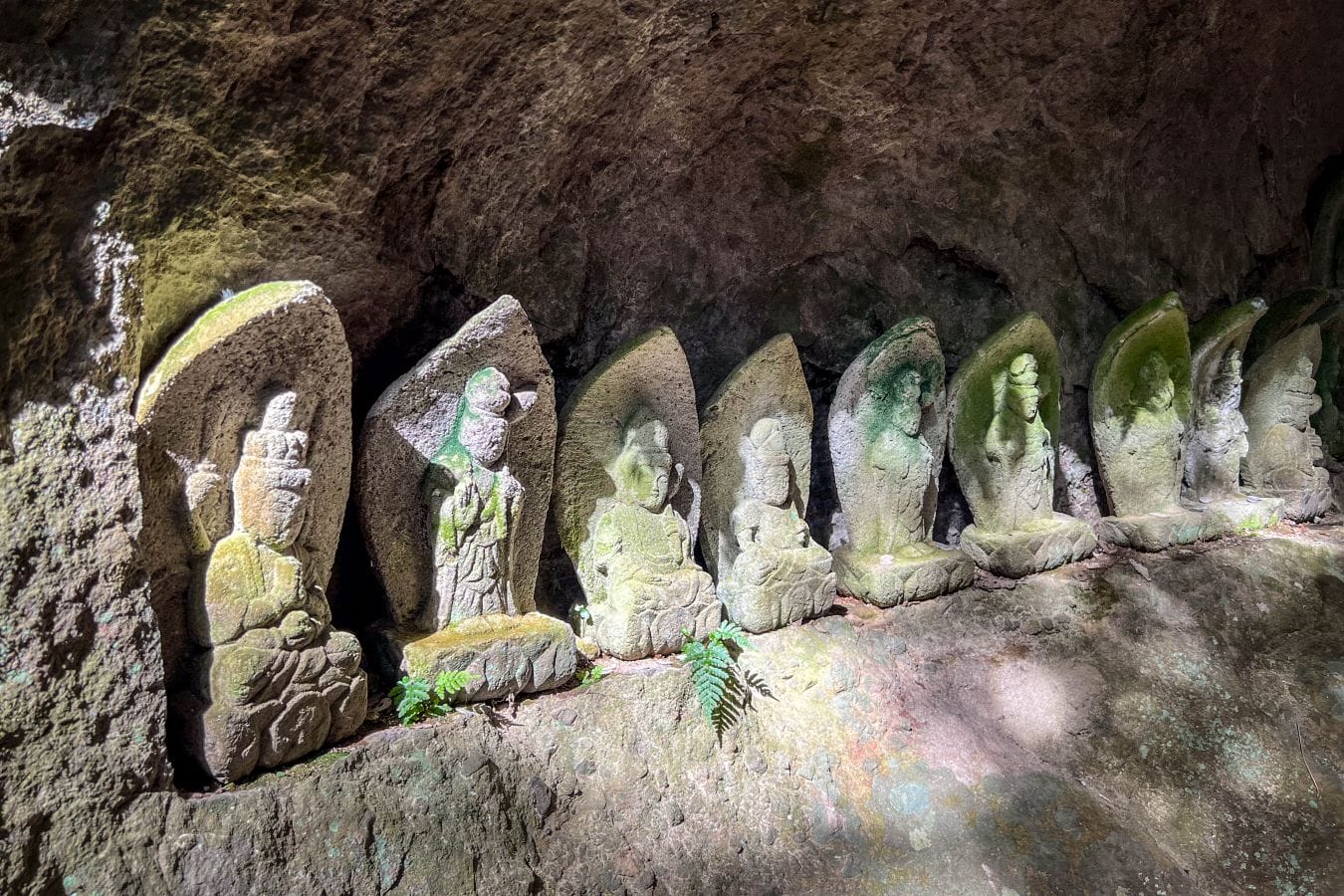
A rough trail behind the Inner Sanctuary brings you to some rocky outcrops. At the Needle’s Ear the rocks overlap, creating a gap that looks as difficult to pass through as threading a needle. Here there are many stone statues of Kannon arranged on ledges. Further on, the Oni no Se-wari are two large two large rocks. Legend has it our strong friend Sentoku-bō split them with his back to create a passageway.
Returning by the main road, you pass the Sacred Water Kannon. Here, spring water flows from beneath the Kannon statue. It maintains a constant flow year-round, and its temperature remains unchanged.
The mountain has a different expression in each season.
History
The history of Futago-ji is shrouded in mystery. Temple legend has it that it was established by the monk Ninmon in the 8th century, who systematised sacred sites across Kunisaki into what became known as the Rokugō Manzan (“Six Districts, Ten Thousand Mountains”). This network integrated Tendai doctrine with earlier mountain worship and shrine cults, creating a syncretic religious landscape unique to the peninsula. However, research suggests that Ninmon might not have existed.
From the Heian through the medieval period, Rokugō Manzan flourished as a major religious power. Temples functioned both as centres of esoteric ritual and as bases for yamabushi mountain training. Futago-ji, positioned at the base of Mt. Futago, served as the principal temple overseeing the network.
Like many mountain temples, the complex suffered repeated fires and periods of decline. Much of the present architecture dates from later reconstructions, yet the layout and ritual focus preserve its identity as a working centre of Shugendō-influenced practice within the Tendai tradition.
Legends
According to temple tradition, Ninmon encountered manifestations of sacred beings in the mountains of Kunisaki and identified Mount Futago as a spiritually potent site. The twin peaks themselves were regarded as embodiments of protective deities, and the mountain was believed to radiate power across the peninsula.
Fudō Myō-ō is said to guard the mountain fiercely, subduing malevolent forces that attempt to enter. Local lore holds that the Niō guardians at the gate are particularly effective: evil spirits approaching the temple are frightened away before they can pass between them.
Another tradition maintains that ascetics who trained on Mt. Futago acquired supernatural endurance and spiritual insight, able to traverse the steep terrain as if walking on level ground — proof that the mountain itself grants strength to those who submit to its discipline.
Information
Name in Japanese: 両子寺
Pronunciation: futago-jee
Address: 1548 Akimachi Futago, Kunisaki, Oita 873-0356