Hirado
Hirado is a municipality comprising a large island and several smaller ones at the northern end of Nagasaki Prefecture, separated from the mainland by the Hirado Strait. The bright red Hirado Suspension Bridge is the primary road link. The area has dramatic jagged coastline defined by deep-water coves on the eastern side and sheer basalt cliffs on the western side facing the East China Sea. Historically, this geography provided the Matsuura clan with a sheltered base for maritime trade with China and Korea, eventually leading to the establishment of Japan’s first European trading posts in the 16th and 17th centuries.
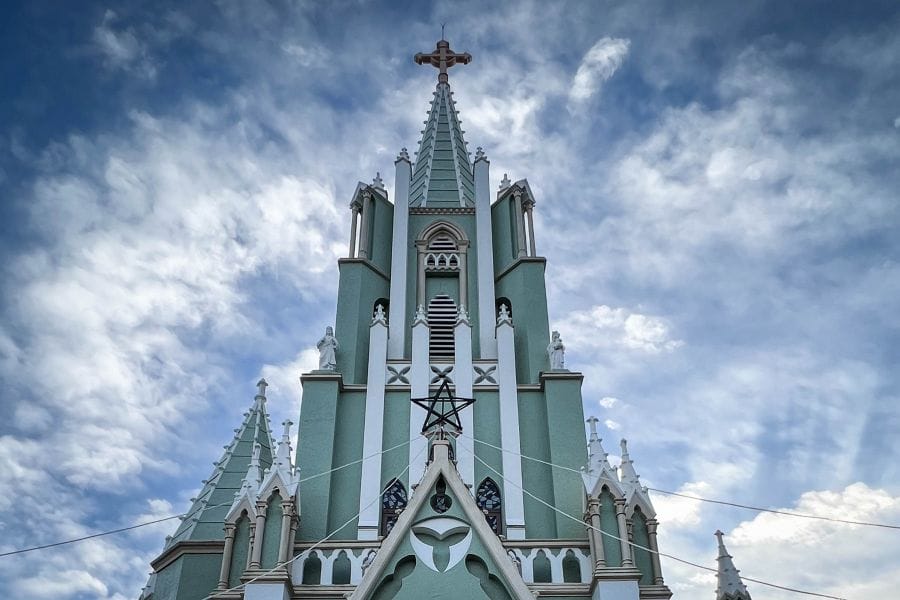
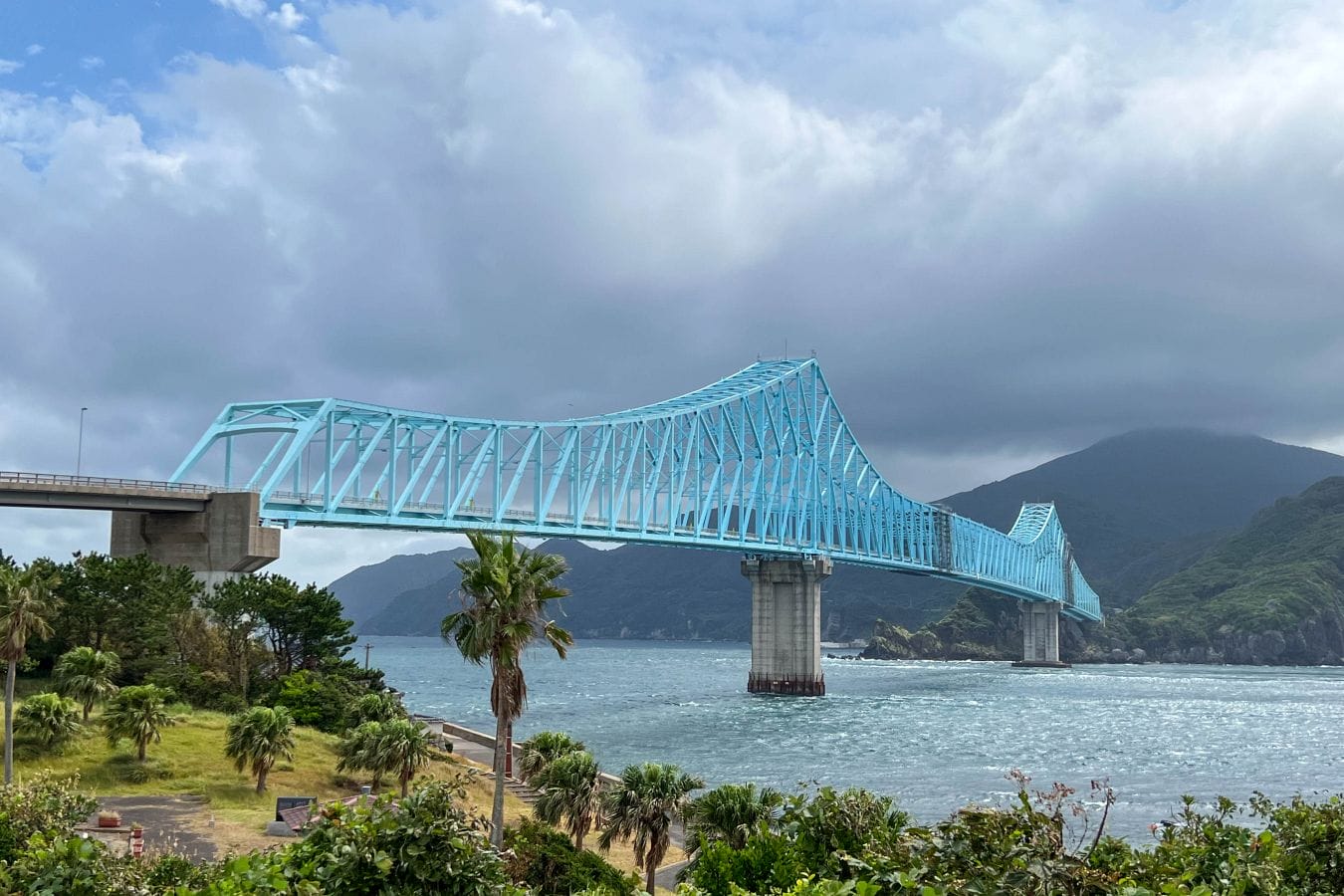
The port city of Hirado is arranged around a bay, with a vertical progression from the harbour to the ridges. Narrow stone-paved slopes climb between dense clusters of traditional, grey-tiled houses. One specific vantage point on the path to Zuiun-ji Temple allows you to see the green spire of the St. Francis Xavier Memorial Church positioned directly behind the Buddhist temple roofs. This visual layering is a physical record of Hirado’s religious history, where Catholic communities lived alongside the Buddhist institutions of the ruling lords. While the town centre is compact, the wider municipality includes the high-altitude forests of Mount Yasuman-dake and the rugged volcanic terrain of Ikitsuki Island linked by a massive blue bridge.
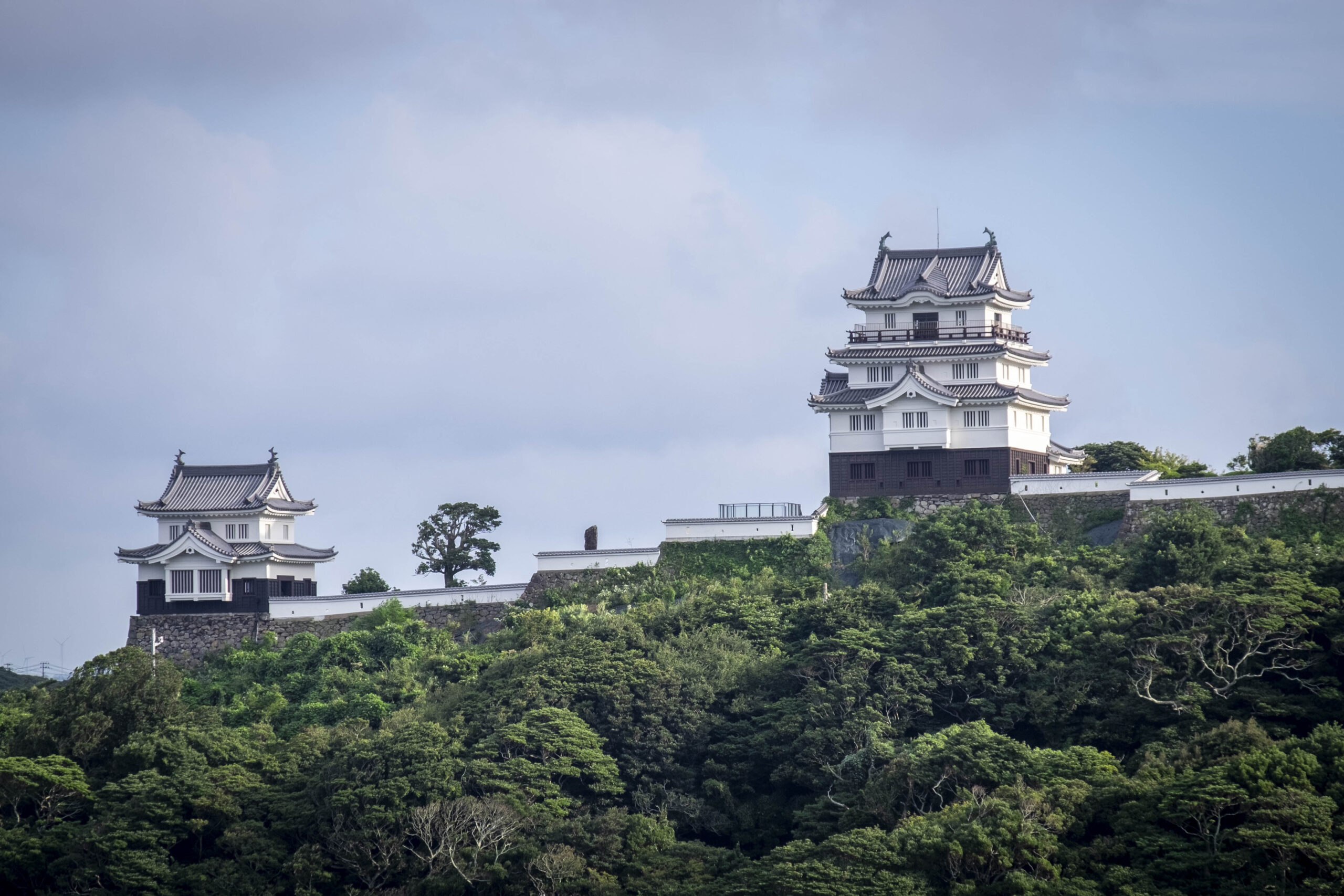
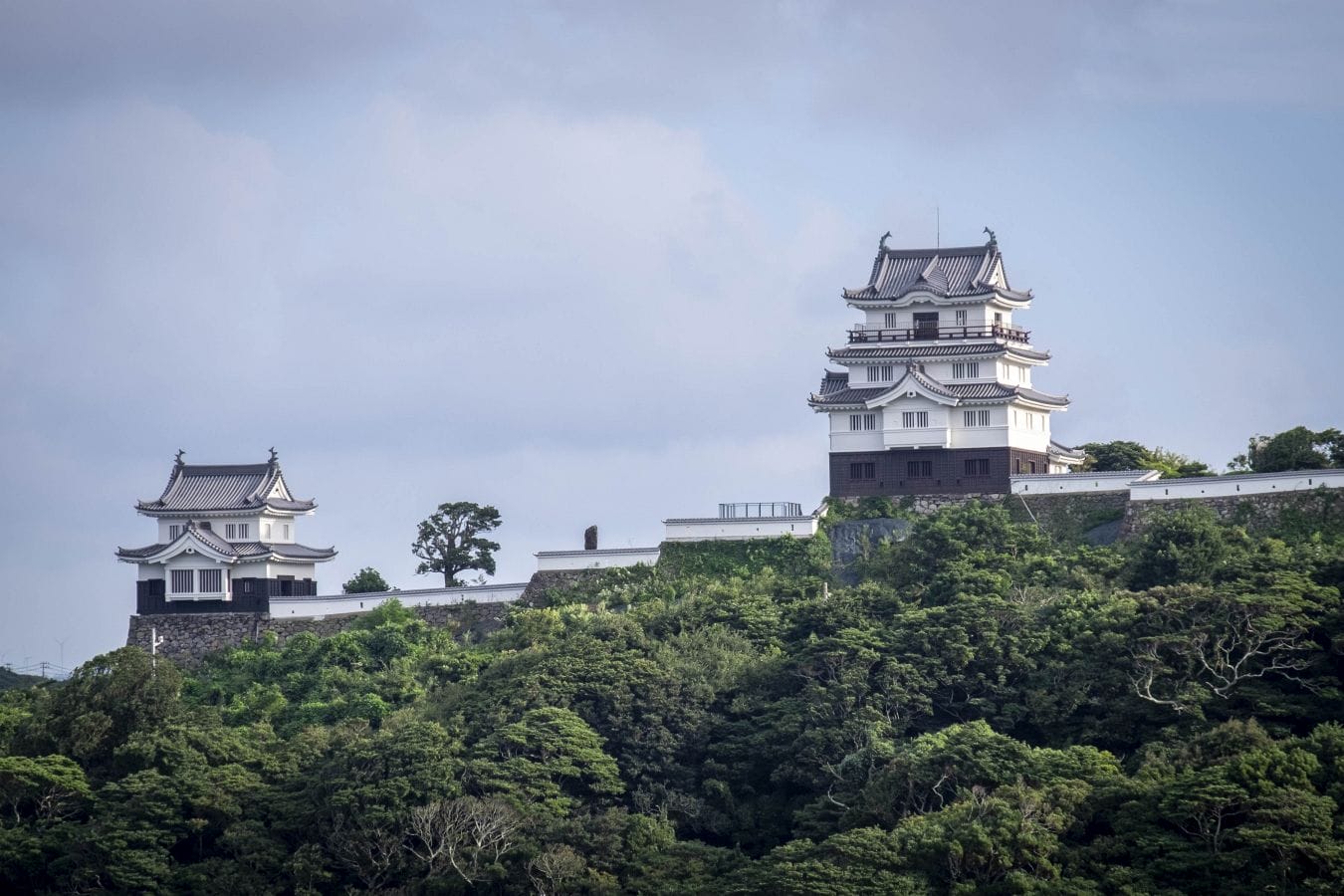
Hirado Castle
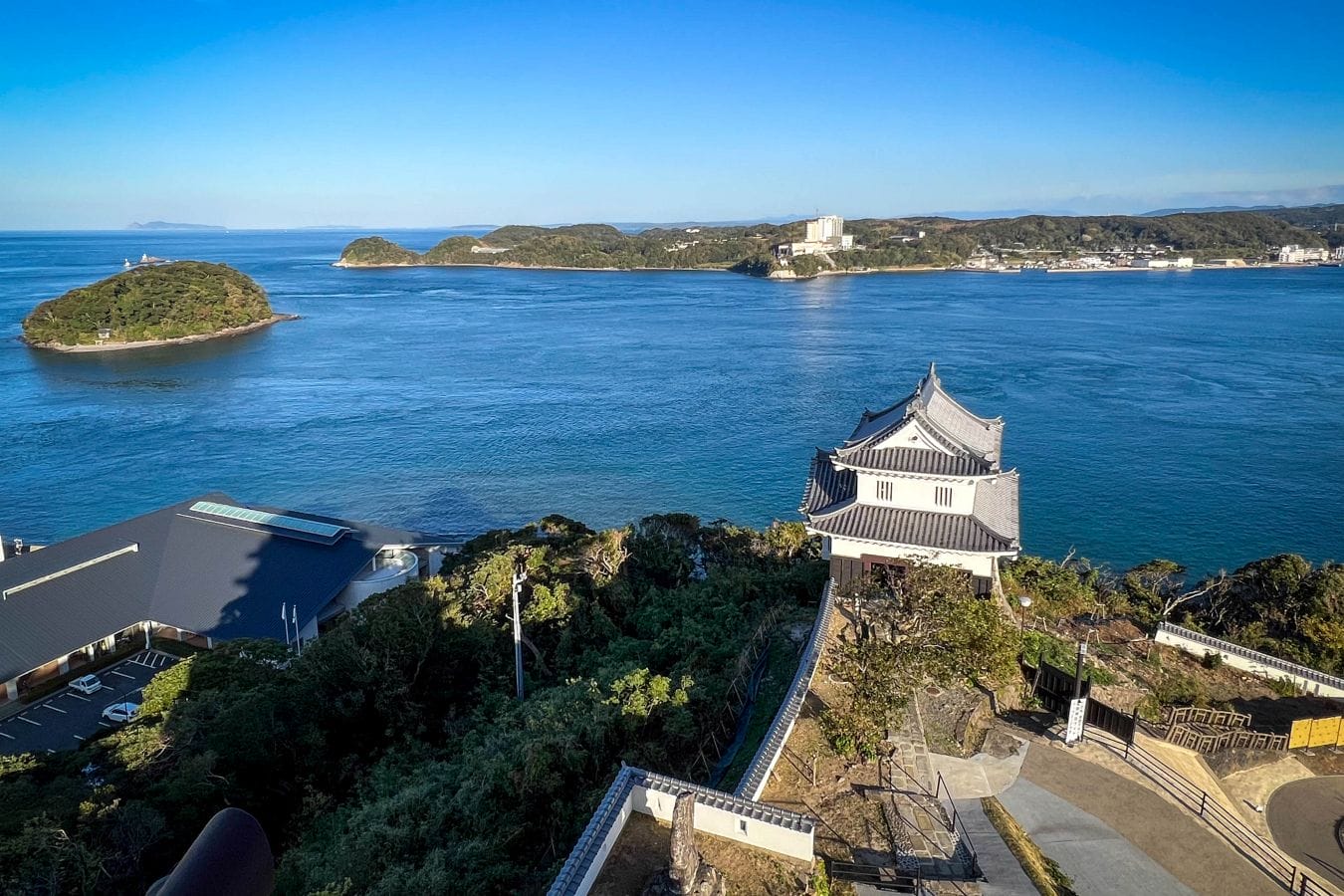
Hirado Castle stands on a promontory overlooking the strait, using the natural cliffs for defence. Most of the current structures are 1960s reconstructions, though the northern gate and the Tanuki Watchtower are original Edo-period buildings. Legend has it that the latter took its name from a family of tanuki who were permitted to maintain their den under the tower in exchange for preventing fires. Inside the keep, you can view 16th-century armour and a rare celestial globe from the Matsuura family collection. The castle’s location provides a clear view of the sea lanes that the Matsuura clan taxed and monitored for centuries.
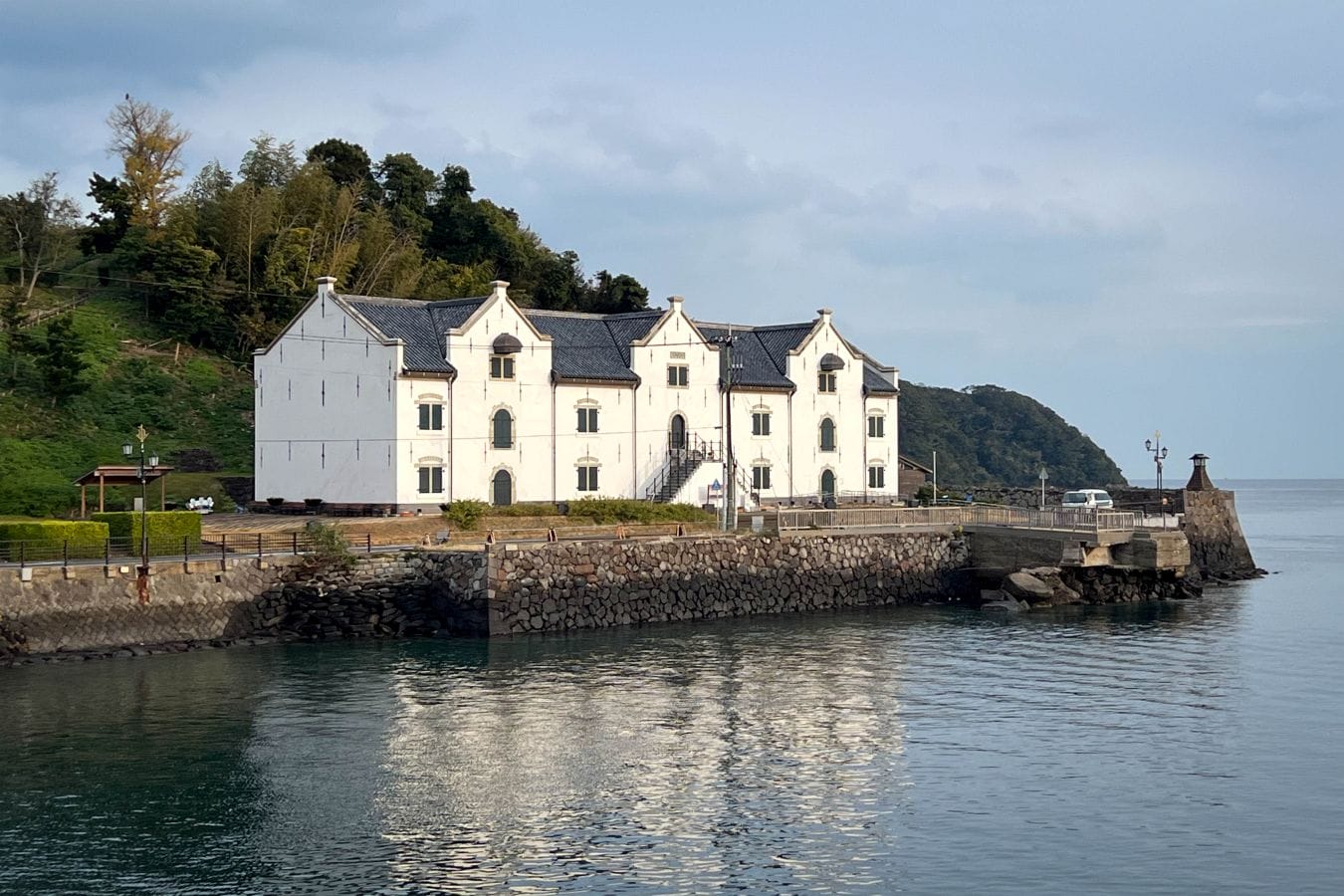
The Dutch Trading Post
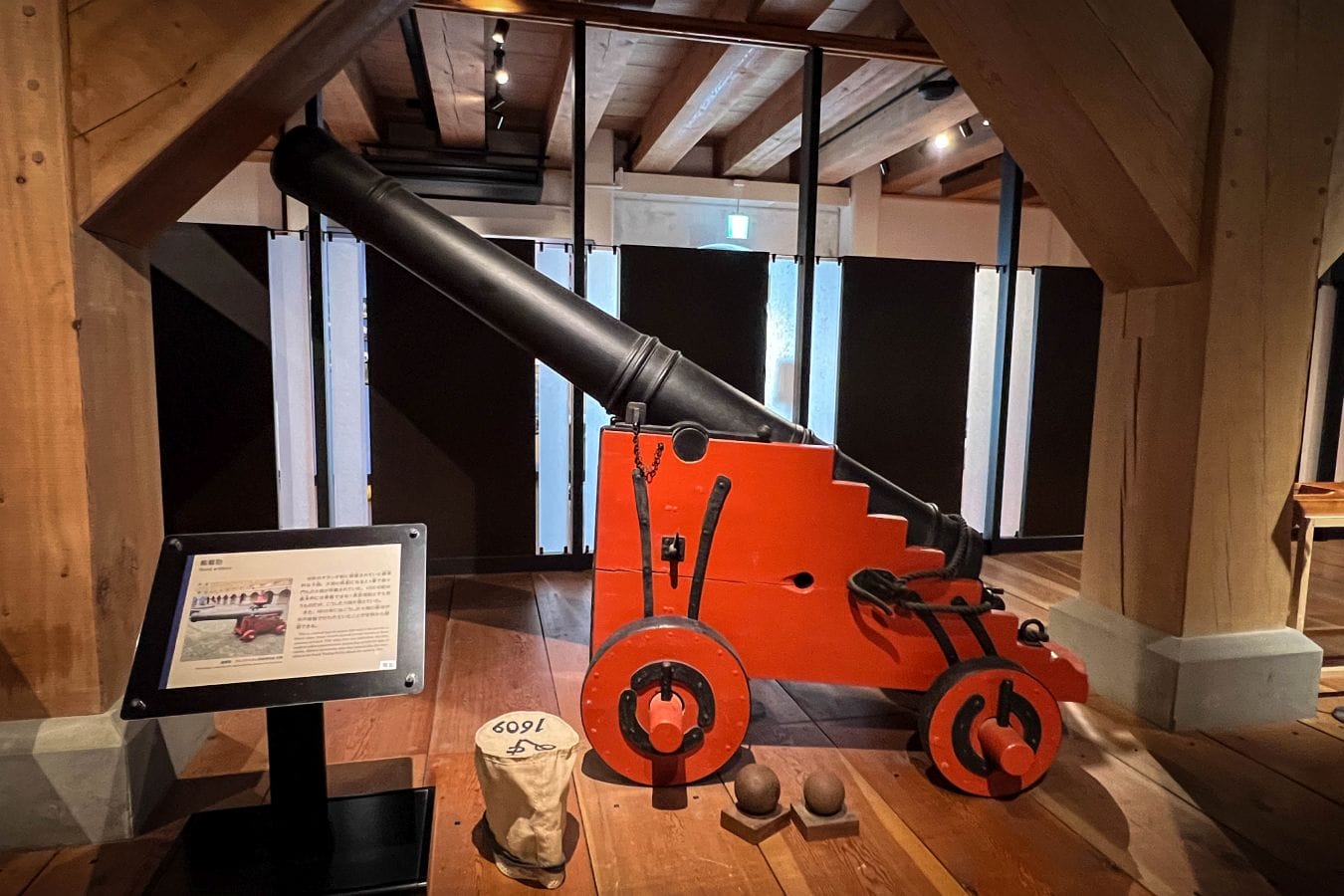
This white stone warehouse, reconstructed in 2011 to house a museum, stands on the site of the original 1639 building. It was the first Western-style masonry building in Japan. The Shogunate ordered the original structure demolished in 1641, officially because it bore a Christian date on its stonework, leading to the Dutch being moved to Dejima in Nagasaki. The walls are two metres thick, built using an interlocking stone technique designed to fireproof the valuable goods stored inside. Nearby, a section of the Dutch Wall remains—a high stone barrier built to prevent the local population from observing the foreign traders’ activities. The trading post houses fascinating exhibits about the Dutch trade.
Matsuura Historical Museum
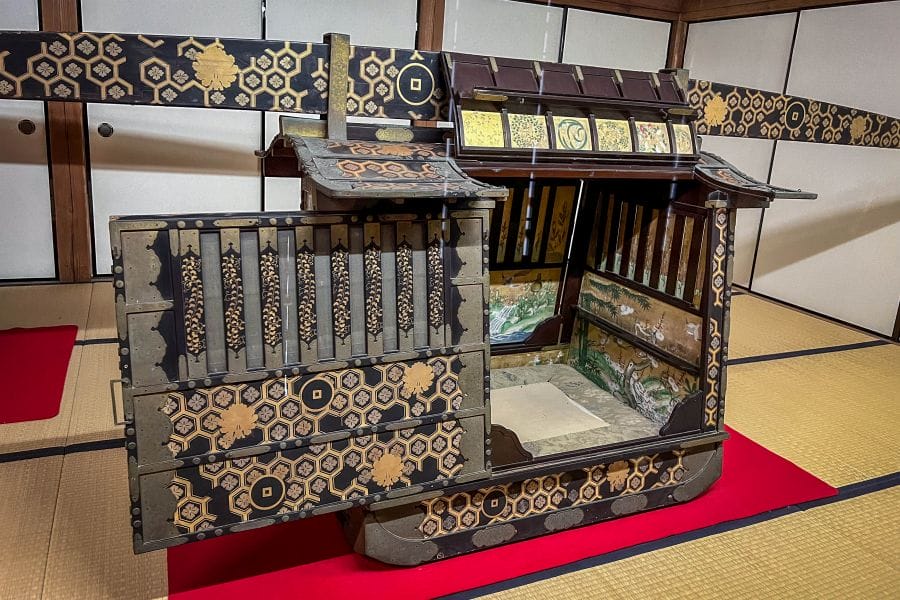
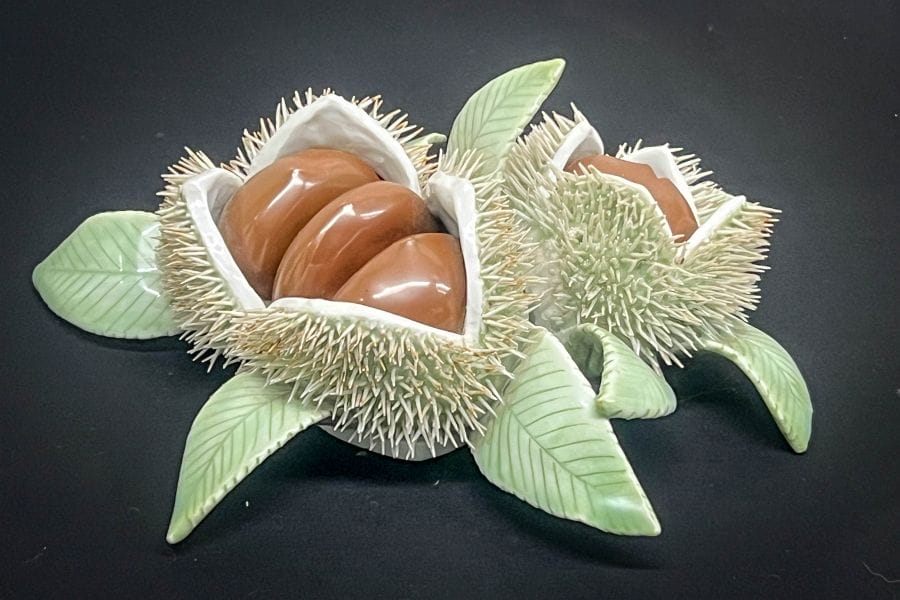
The Matsuura Historical Museum occupies the former private residence of the Matsuura clan, who ruled Hirado from the eleventh to the nineteenth centuries. Situated on a wooded hill overlooking Hirado Harbour, the estate features heavily tiled roofs and white plaster walls. Inside, the main building displays a vast collection of family heirlooms charting Hirado’s history as a hub for international trade, including early Japanese paintings depicting sixteenth-century European arrivals, Dutch trade documents, and samurai armour. There’s also an amusing Korean ceramic youth picking his nose. The collection highlights the clan’s direct involvement with European and Asian merchants and the integration of foreign technology into local life. The grounds also contain Kan’un-tei, a thatched-roof tea house built in 1893, where practitioners perform the relatively austere Chinshin-ryū tea ceremony style based on samurai principles.
St. Francis Xavier Memorial Church
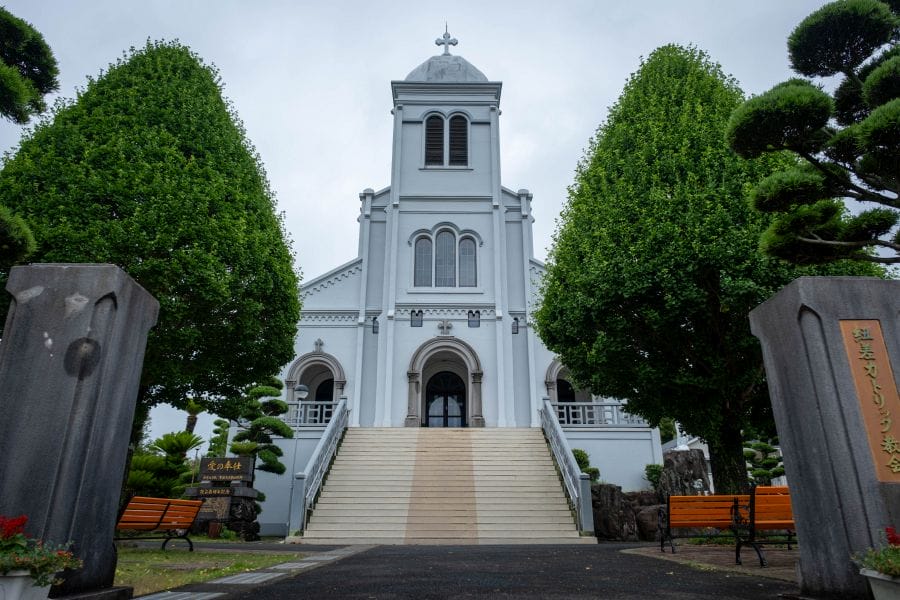
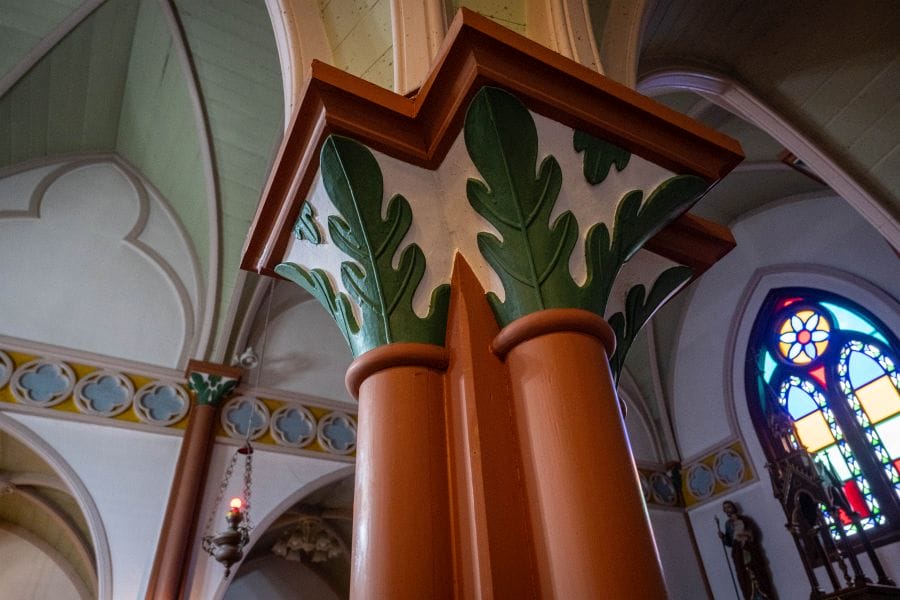
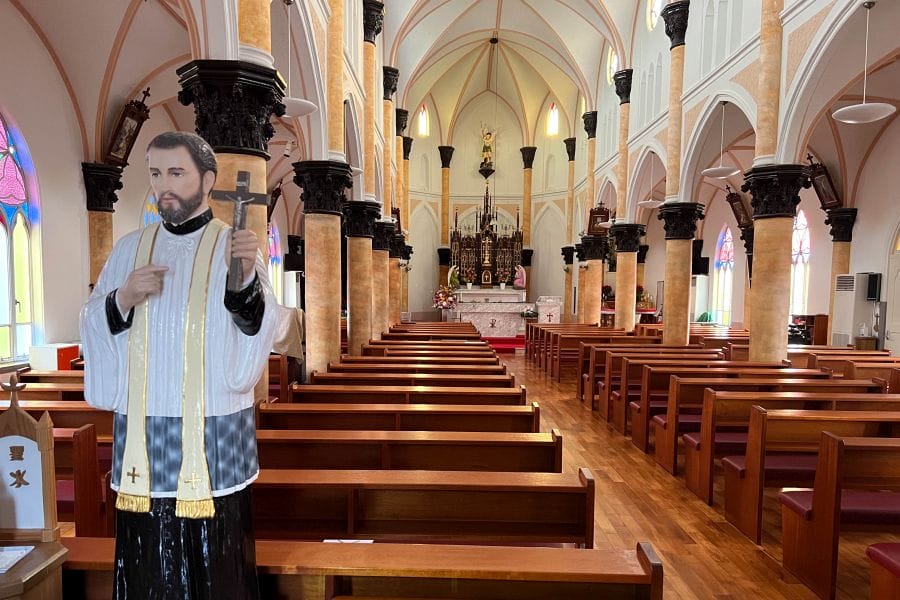
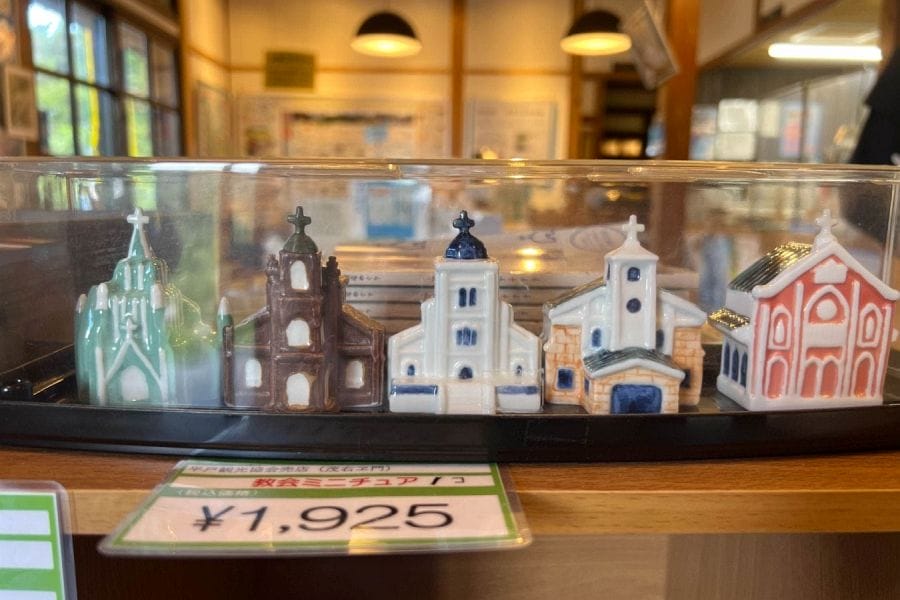
Built in 1913 and moved to its current site in 1931, this Gothic-style church is finished in a pale emerald green. The interior pillars are not marble but are wooden beams coated in a specialized plaster to resemble stone, a technique developed by local artisans to save costs while maintaining European architectural standards. It stands as a memorial to the Jesuit missionary, Francis Xavier, who stayed in Hirado three times between 1550 and 1551. The congregation consists largely of descendants of Hidden Christians who maintained their faith during the 250-year national ban.
Saikyō-ji Temple
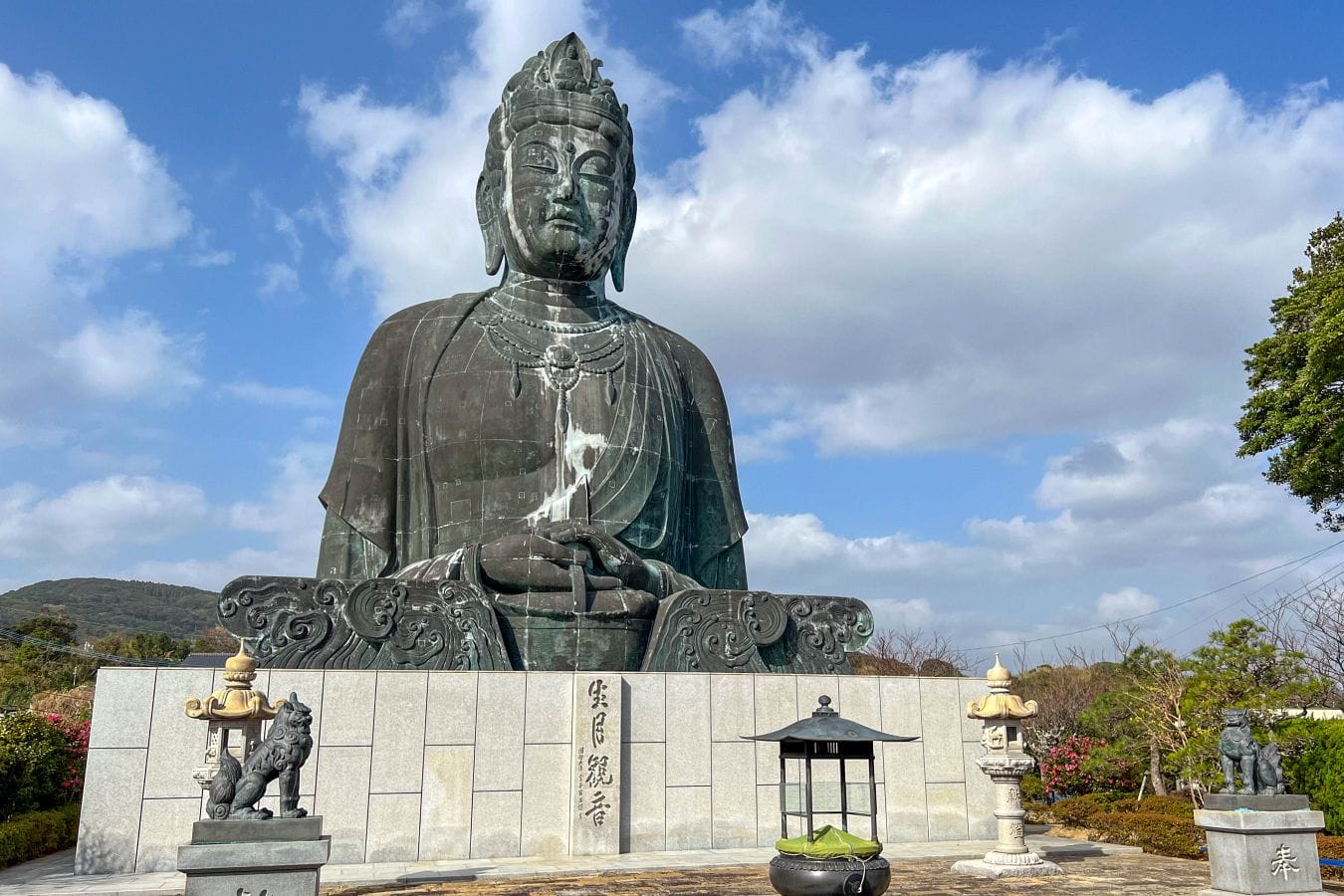
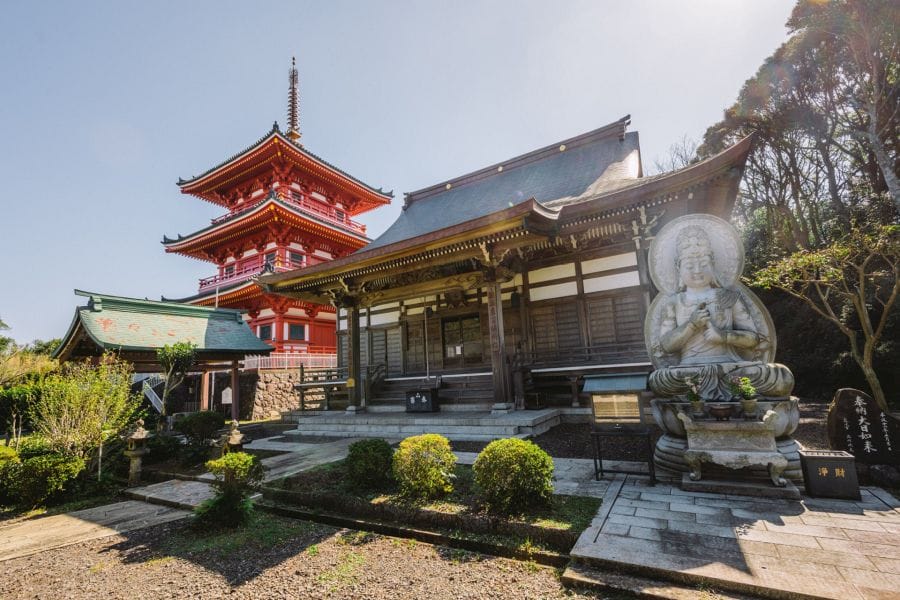
Saikyō-ji Temple is said to have been founded by Kūkai who practiced austerities here. The current temple was restored in 1607 by the area’s first feudal lord. The grounds are so spacious that they’re known as the “Western Mt. Kōya”. You can enter the three-storied pagoda, one of the largest of its kind in Japan, built in 1988. The lower floors house a museum and the third floor is an observatory with a spectacular view over Hirado Castle and the bay.
Ikitsuki-jima no Yakata Museum
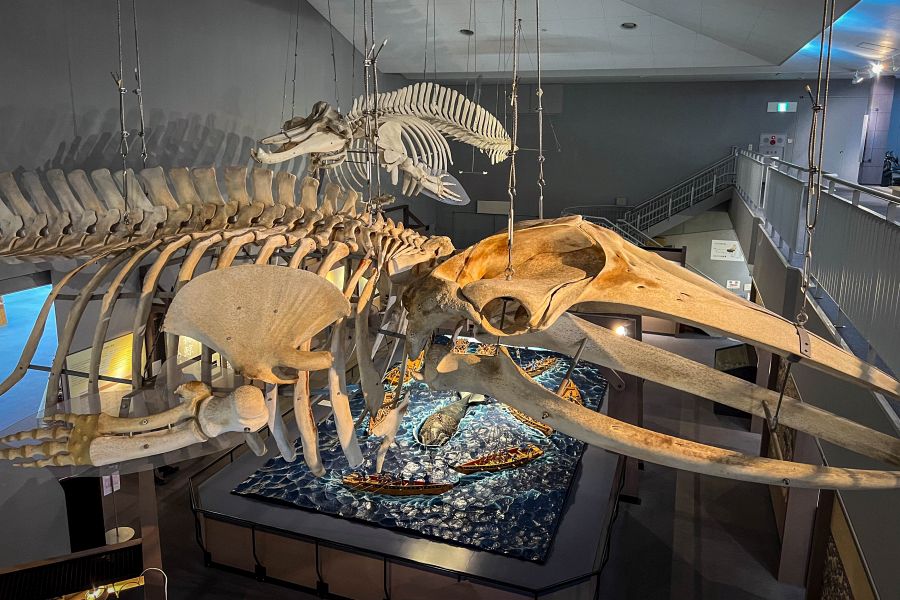
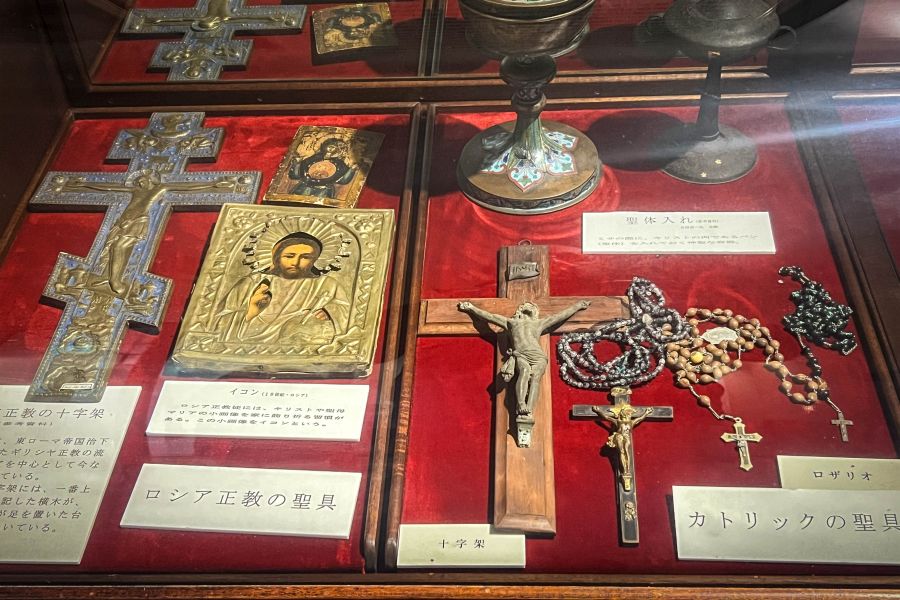
Located overlooking the Ikitsuki Bridge, the museum focuses on traditional whaling and the history of the Hidden Christians. The whaling section features a full-scale skeleton of a right whale and 17th-century scrolls and a diorama detailing the complex division of labour in Japanese shore-based whaling. The Christian section is more significant for its collection of seemingly mundane household objects—such as washbasins or kimono scraps—that functioned as secret icons. It also holds recordings of “Orasho” (Latin oratio), which are prayers that have morphed into a unique vocal style through centuries of oral transmission without written texts.
Mt. Yasuman-dake
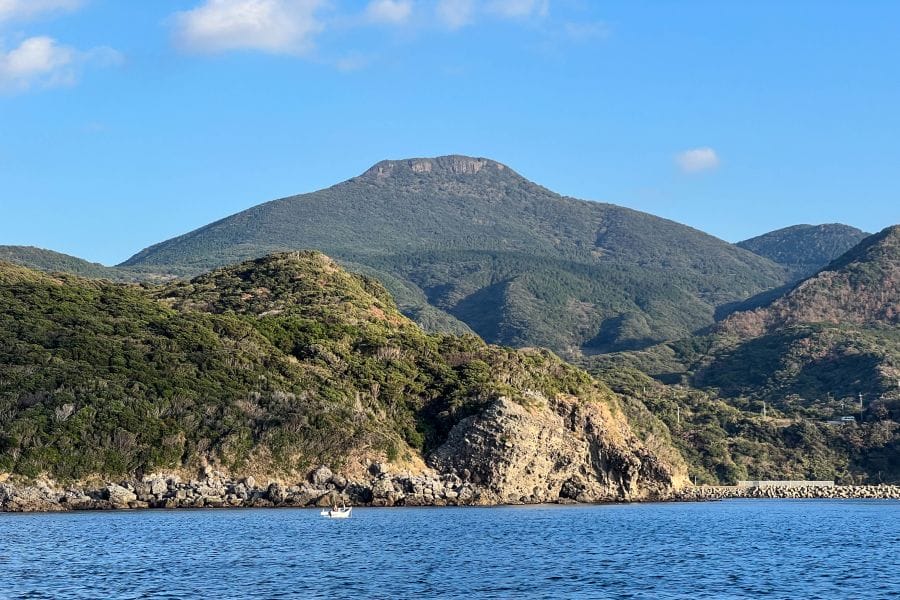
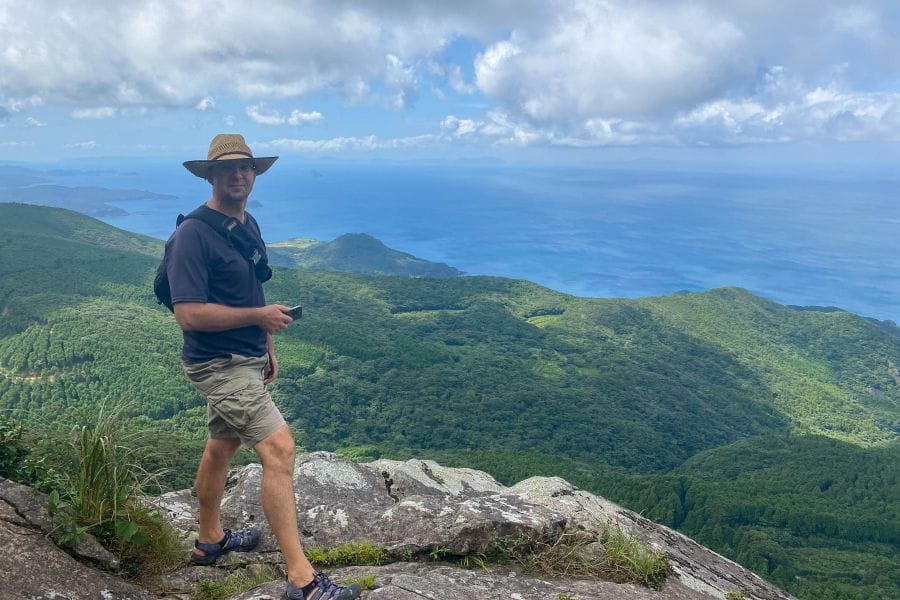
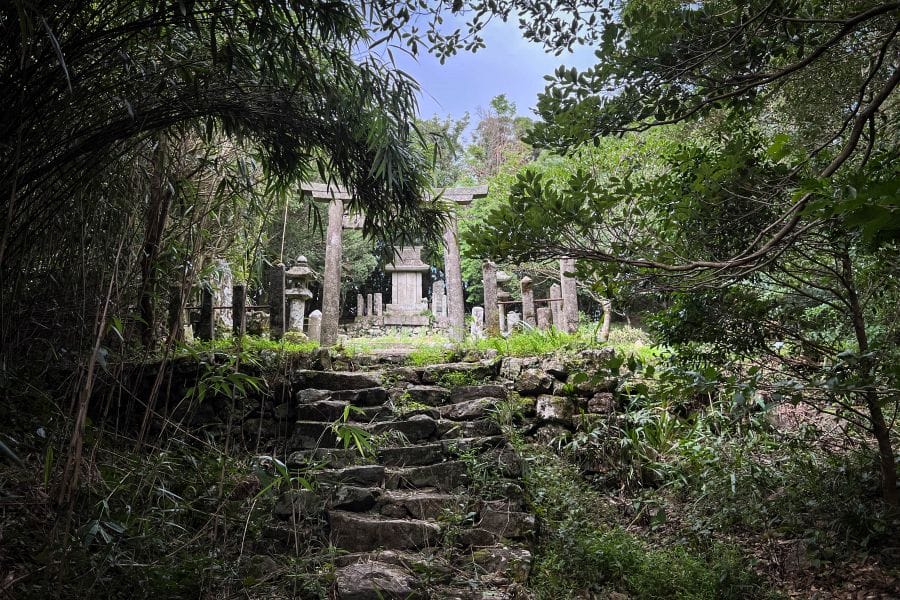
At 535 m, Yasuman-dake is the highest point on Hirado Island. The mountain has been a site of worship since the early medieval period and remains a mix of Shintō, Buddhist, and Christian sites. The forest at the summit is an officially designated natural monument because it has not been logged for centuries due to its sacred status. You can find a stone well near the peak that was used by secret Christian communities for baptisms. The mountain acts as a natural weather vane for the island. Local fishermen still use the cloud formations around its peak to predict shifts in the East China Sea currents.
Kasuga Terraced Rice Fields
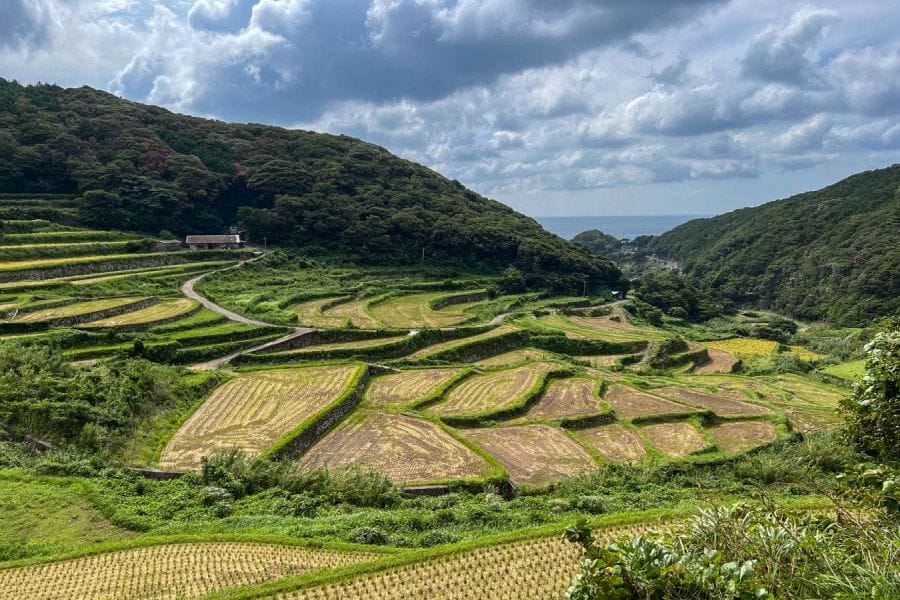
Situated on the western slope of Mount Yasuman-dake, the Kasuga district is a series of stone-walled rice paddies that descend from the forest edge to the sea. Unlike many Japanese terraced fields that were abandoned during modern land consolidation, the Kasuga fields have maintained their medieval layout for over 400 years. This preservation is a result of the local community’s history as Hidden Christians as the fields themselves were used to hide religious activity. Because the local lord could not easily monitor the steep, fractured terrain, the farmers were able to continue their rites in private dwellings and forest clearings adjacent to their crops.
The fields are fed by natural springs originating on the sacred summit of Yasuman-dake. In the local belief system, this water was considered holy, and the act of farming was inextricably linked to religious devotion. Even after the ban on Christianity was lifted, many residents chose not to return to the Catholic Church, instead continuing their ancestral traditions as Kakure Kirishitan. This choice effectively froze the landscape in time, as the community rejected modern agricultural machinery that would have required widening the narrow, hand-built stone paths. Today, the area is protected as part of a UNESCO World Heritage site, and you can walk the “Old Path” to view the Maruyama hillock, which served as a secret cemetery for believers.
The Sunset Way and Shiodawara Cliffs
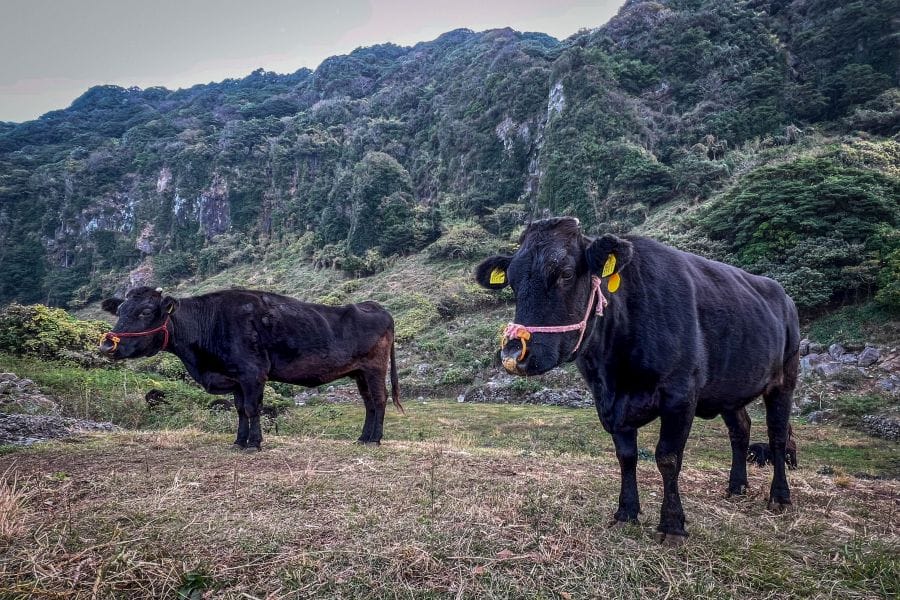
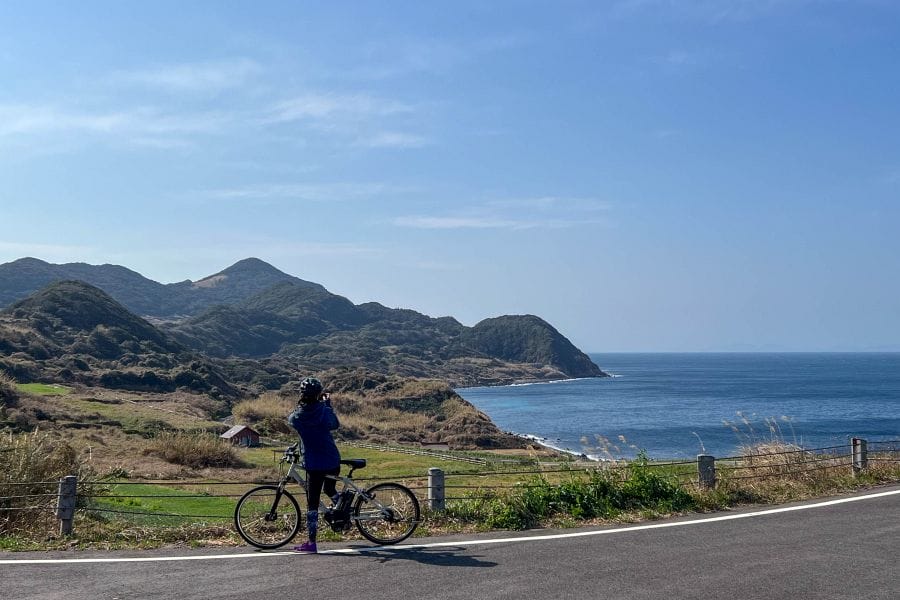
The western coast of Ikitsuki Island is a continuous stretch of basalt cliffs formed by volcanic activity. The Sunset Way is a coastal road that follows the base of these formations. The Shiodawara Cliffs are particularly notable for their columnar jointing, where the cooling lava formed vertical hexagonal pillars. Unlike most Japanese coastal roads, there are no utility poles or sea walls along this stretch, leaving the natural geology exposed. At the northern tip is the Ōbae Lighthouse, which marks the entrance to the Korea Strait and offers views of the nearby submarine-like Kujira Island, once used for whale spotting, Azuchi-Ōshima island from whence whaling was conducted, and the distant Nakaenoshima where several Christians were executed. The route is good for cycling, and you’re likely to see the beautiful black cattle that provide wagyu beef.
Tabira Church
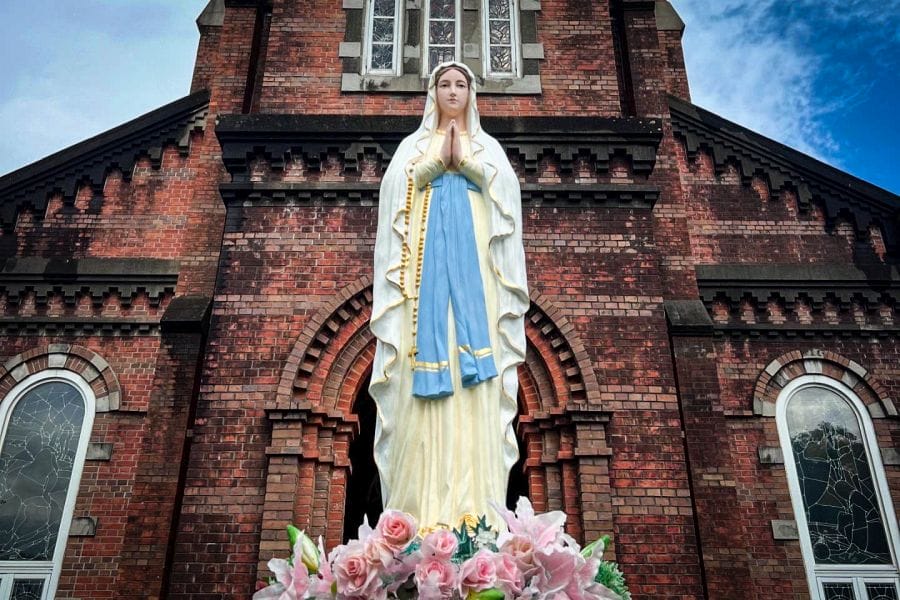
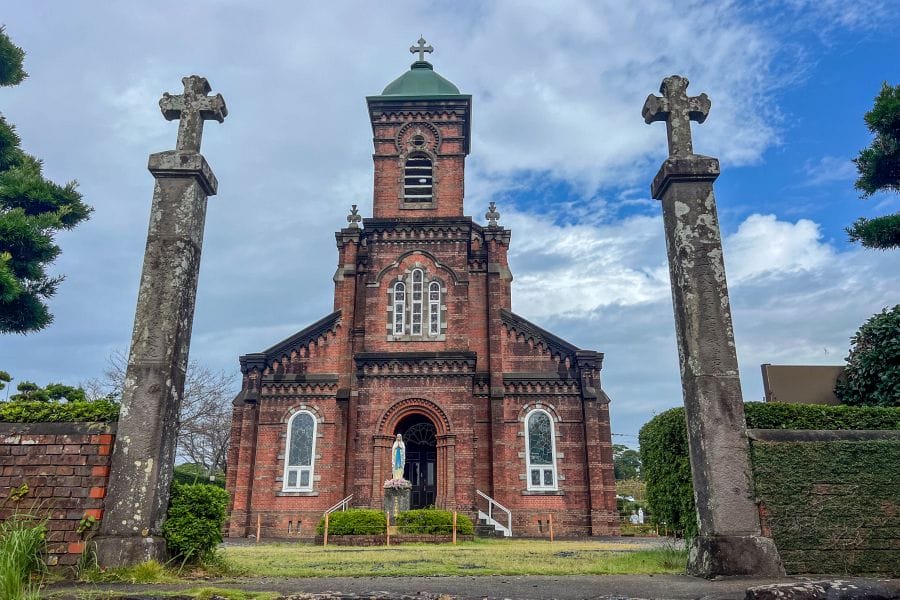
Situated on the mainland side of the Hirado Bridge, the red-brick Tabira Church was completed in 1918. It was designed by Tetsukawa Yōsuke, a prominent architect of Christian buildings in Nagasaki. The structure is built on a site where early Christians were martyred, and its construction was funded almost entirely by the local farming community. The building features an octagonal dome and intricate brick patterns. The cemetery adjacent to the church is a rare example of a rural Japanese Christian burial ground where the headstones incorporate both Latin crosses and traditional Buddhist-style stone tiers.
Information
Name in Japanese: 平戸
Pronunciation: hi-ra-do
Address: Hirado, Nagasaki